The Big Impression
Editors and co-hosts Damian Fowler and Ilyse Liffreing uncover insights and inspiration from leaders at the world's most influential brands.
Latest Episodes
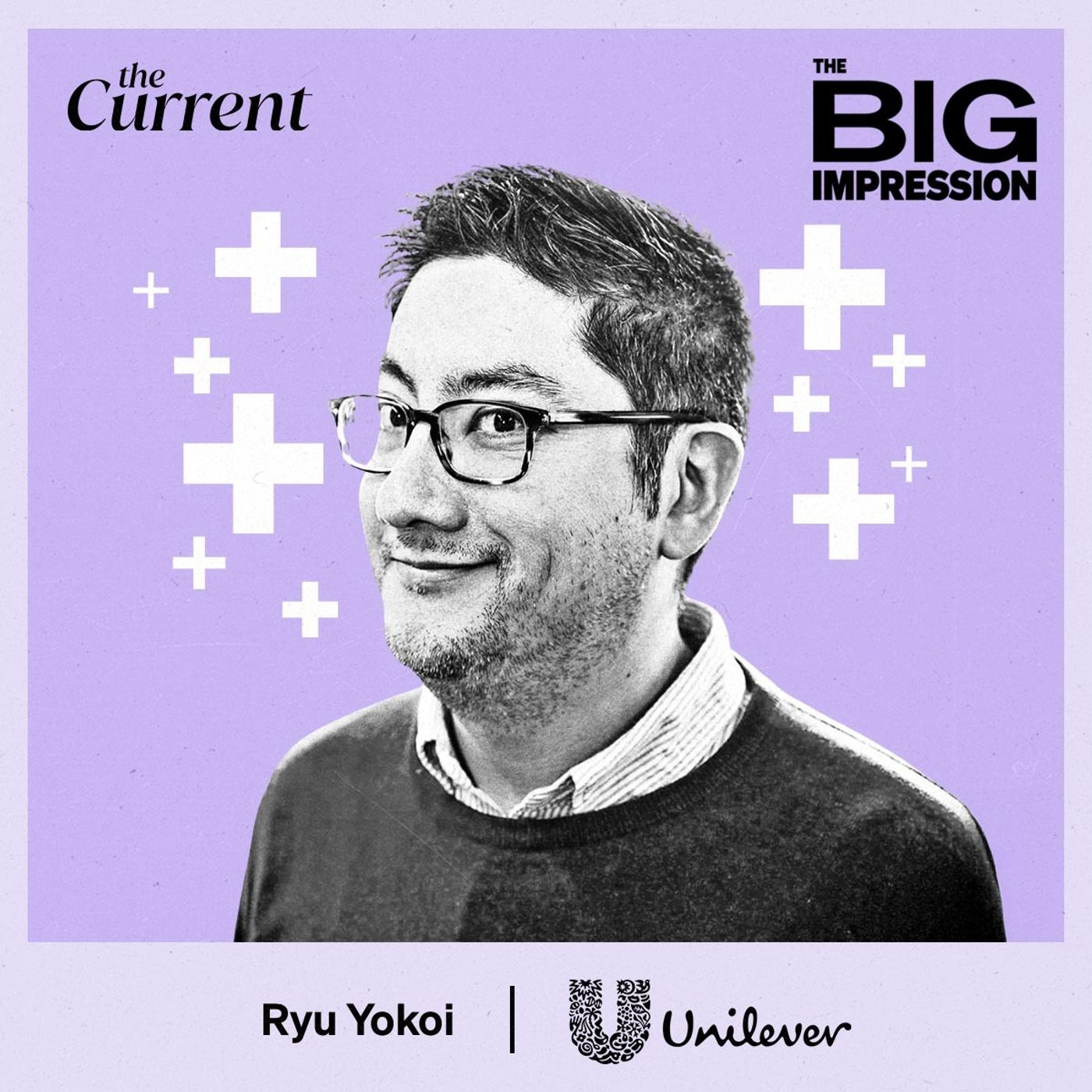
This week, we’re talking to Ryu Yokoi, chief media and marketing capabilities officer for North America at Unilever, about Dove’s “Hot Seats” campaign — a bold, culture-hacking activation that shows up where the sweat is real and the stakes are surprisingly high.
July 23, 202516 mins
This week, we’re talking to Ryu Yokoi, chief media and marketing capabilities officer for North America at Unilever, about Dove’s “Hot Seats” campaign — a bold, culture-hacking activation that shows up where the sweat is real and the stakes are surprisingly high.
Episode Transcript
Please note, this transcript may contain minor inconsistencies compared to the episode audio.
Damian Fowler (00:00):
I'm Damian Fowler, and welcome to this edition of The Big Impression. Today we are talking about how Unilever is breaking taboos, opening up new kinds of conversations and connecting with consumers in some unexpected places. Our guest is Ryu Yokoi Chief Media and Marketing Capabilities Officer for North America at Unilever. We're going to dive into DO'S Hot Seats campaign. It's a bold effort to normalize conversations around full body freshness and engage people across both digital and real world spaces. We'll be talking about how this campaign's activating across concerts, social, retail, and digital platforms. So let's get into it.
Ryu Yokoi (00:46):
It always starts with understanding our audience and also try to make our products really relevant and desirable in that context. And so the hot seats are originated from social listening within the community. And in particular, one of our, actually her name's Dana Pucci, who leads our PR and influencer work on Dove for North America is a big Charlie XCX fan. And she noted that the Incredible Sweat tour, which was driving and kind of owning the culture last summer in the brat summer, that was
(01:21):
Unfortunately the Sweat tour smelled not great. And it turned out that Charlie and Troy Sivan were going to be performing in Los Angeles the week before the launch of our new whole body deodorant. We kind did a takeover putting our product in the bathrooms. We sent in creators to sort of experience what a show is like when you can make sweats smell great. And the results were kind of magic because we got just unbelievable. The UVC on this and the Delight with folks attending a concert that actually smelled great was really fascinating, just fantastic response. And that week we had a really great launch of the product, first hitting the digital shells on Amazon and doing great.
Damian Fowler (02:02):
That sounded like a very fast activation for a campaign.
Ryu Yokoi (02:06):
It happened literally within 10 days.
Damian Fowler (02:08):
What was the war room like for that 10 days? How did you strategize to get that done?
Ryu Yokoi (02:14):
We always emphasize we want to build worlds instead of chasing moments. So when you have an idea of what you're trying to build with the brand, how you show up, then it becomes a lot easier.
Damian Fowler (02:25):
And tell me a little bit about the tone. I mean, one of you mentioned the humor element of it. Why is that real talk, that humor so key to Dove campaigns?
Ryu Yokoi (02:34):
Well, I think there's a real authenticity that the brand has earned. We say, oh, it's an authentic, it's only authentic if people believe it. The brand is really comfortable in its own skin. We have a sharp understanding. I think that goes beyond a positioning statement to really understanding what this brand stands for, how it shows up in real life, what it would be like if you were to meet it and still be consistent in our building of that brand means to people.
Damian Fowler (03:00):
Yeah, I mean, I've got to say I live in New York and I've noticed the campaign on the New York, out of digital, out of home subway screens and it just totally cuts through and I noticed it. And of course you're standing on a New York City platform in terrible heat, humidity, and everyone's sweating. It's like a perfect placement.
Ryu Yokoi (03:19):
Well, I would say the subway work you've seen is really telegraphing that benefit, right? If you're blessed to be next to somebody who's wearing dove on the subway, then wow, this is a good ride. We've sponsored Charlie's spring tour and we're also showing up at other festivals like Lollapalooza, which have just provide another canvas for us to tell the story.
Damian Fowler (03:38):
Is it a case that once the campaign's out there in the wild, it builds its own momentum? Or are you actively trying to find new events, new points of pop culture? Kind of.
Ryu Yokoi (03:47):
That's exactly what we're trying to find, right, is we understand that if we're able to actually become part of the discourse, we're not just broadcasting ourselves in, but actively playing a role and helping people. And we had a similar case where the first weekend of Coachella people were again, lamenting unfortunately didn't smell great, and in this case somebody not us posted saying, well, I wish Dov would come and help here. We really had a lot of fun with it. We flew a plane over Coachella the second week saying, the cavalry's coming help is on the way we hear you need.
Damian Fowler (04:24):
That's good.
Ryu Yokoi (04:25):
Some help. And we're going to be there. We lined up folks around the entrances so that folks could kind of get freshen up on the way into the show or get freshened up, and more than a thousand people took advantage of that.
Damian Fowler (04:35):
Now, I wanted to ask you about some of the key signals or early reads on the campaign. I'm sure you're paying close attention as you evaluate the impact. What do you look for on your dashboard, as it were?
Ryu Yokoi (04:47):
Right. So I think first and foremost, you're right. Measurement is the most important
Damian Fowler (04:54):
Thing.
Ryu Yokoi (04:54):
But first and foremost, we did this the week before we were launching the product. So the first signal was did we turn well? And we
Damian Fowler (05:02):
Did.
Ryu Yokoi (05:02):
And the ramp on the product was really terrific. But I think to your point, it's really important no matter what the channel that you're playing in, what are the leading indicators that we can correlate with performance? In this case, it was one where things happened so quickly and we knew there was literally nothing else happening when we did this, and so we were able to isolate that way.
Damian Fowler (05:23):
Are there other channels that you are kind of thinking about or could be targeted for the campaign?
Ryu Yokoi (05:31):
In principle, I want to be able to capture signal everywhere. For me it's just around understanding where are people discussing whatever it is that we're trying to get into the discussion on and being authentic there. So for us, Reddit is a channel we haven't used as much in the past. Certainly now I find it increasingly of relevance for us. So we're trying to build up a skillset there,
Damian Fowler (05:55):
Especially
Ryu Yokoi (05:55):
Given how important it is with ais. Right.
Damian Fowler (05:58):
What about audio? Is that
Ryu Yokoi (06:00):
Podcast? Absolutely podcast. So
(06:03):
I would say, again, this was highly before it became something that we were rolling out in real life. Oh my goodness, the word is spectator events. Before it became something we were doing in real life as spectator events, it was a highly music driven campaign because we had decided to reboot this classic hip hop song from a few decades ago. And so it was already sort of music oriented and had played that way. But yeah, so for us it's exactly to your point. If we're talking about something that we're doing that's focusing on music or spectators, obviously audio is going to have relevance. Where are Charlie's fans actually discussing this? It turned out it was happening on Reddit. We go there, where are they discussing their experience at the concerts? We were seeing a lot of chatter on TikTok around that. And so we moved there. So we try to be nimble and agile and really be where the discourse is happening.
Damian Fowler (07:07):
So we're going to zoom out a little bit and just look at the big picture of the landscape beyond the campaign. But as you think about where culture is heading, whether it's wellness, inclusivity, or body confidence, what does the campaign kind of tell us about where Unilever wants to go with its brands or its kind of messaging wants to put out into the marketplace?
Ryu Yokoi (07:27):
We're all about building desire for our brands at scale. So we want to engage with communities wherever they are. It's about having a deep understanding of who our shopper is, what is driving desire for them, who influences them, and how we can really engage with them and create a discourse where we can try to move towards many to many communication.
Damian Fowler (07:49):
One of the big challenges for Marcus is balancing the long-term brand building with the short-term sales results. And do you think that there's a tension there right now in a marketplace that's very much dialed into performance?
Ryu Yokoi (08:01):
Listen, I think that it's really important that you have the right measurement in place and that you can understand both the short-term and long-term effects of the investments that you're making. That's something we really pride ourselves on. We want to be the most outcome oriented advertiser in the marketplace. But the other thing I would say is that more and more data signals and shopability are making it so the funnel is collapsing and we're nearing places when it comes to QR or having true shopability in stream where even executions that in the past would've been considered the most upper funnel can actually drive a transaction in that moment. And I think a future of that's really exciting.
Damian Fowler (08:40):
So finally, we're going to get into some of these hot seat rapid fire questions here.
Ryu Yokoi (08:44):
Okay,
Damian Fowler (08:44):
So you ready?
Ryu Yokoi (08:45):
Yes, let's go.
Damian Fowler (08:46):
Alright. What's one thing you're obsessed with figuring out right now?
Ryu Yokoi (08:50):
We've been talking about how much we've built out resources in this area and all of the interconnections that the data allows us to make. That implies campaigns that become more and more complex and much more complicated to just flight even. And so one of the things that I'm obsessed with is how we simplify that. There's so much change happening to accommodate all of this stuff. So really my big focus right now is on how we make working in this digital landscape easier for everybody involved in it because the amount of choices that we have and the richest is never ending. And so just making that more sustainable.
Damian Fowler (09:32):
I love that. That's a great answer. What's missing from the media and marketing marketplace that you'd like to see?
Ryu Yokoi (09:39):
From a Unilever standpoint, we have a few direct to consumer brands that are able to sort of track the media journey all the way through to conversion, but in the bulk of what we sell in traditional, fast moving goods are moving through retail. So what's missing is some way to penetrate that clean from a data standpoint so that those of us brands that aren't doing DTC can have that all the way through. We manage that well today with leading indicators and fast signals, but there's I think even more richness out there for us if we're able to correct that.
Damian Fowler (10:15):
To bring this kind of full circle outside of CPG, is there a brand that you think is doing a great job connecting with culture right now?
Ryu Yokoi (10:22):
Yeah, so I would name two. One that we really admire is Lego. I just see the way that they have both made their products, both a vehicle for other brands to build their worlds while also building incredible worlds for themselves. So they've become kind of this almost currency within the way that so many other brands are trying to build their IP in the world. So whether it's like a Formula One drop a Star Wars drop a Harry Potter drop, these things each have so much hype around them and they've learned while doing that so that they're able to propel their own ip, which is really impressive to me. So the other, I would say we had a fantastic opportunity to work with this year as crumble cookie. They were dove soaps, deodorant, lotions that were fragranced inspired by crumble flavors. And so in partnering then we were able to build off of that and make our soaps, our body washes, our deodorants, one of the drops of the winter. We struggled to keep it on shelf. So I'm a big admirer of the work that they've done too.
Damian Fowler (11:27):
That sounds cool. And then final, final question here. So in Unilever kind of portfolio of brands Dove Ben and, and the goal has always been to spark conversations, that's how we started this conversation. I guess I'm wondering if you could share a moment that reminded you of the importance of that brand led cultural impact that you can have.
Ryu Yokoi (11:51):
Oh wow. There's so many, but I'll give Dove so that we can show the other side of the coin because we've been talking about a campaign as I was saying, that shows a more playful side, the humorous side of the brand, but one of the areas the brand has focused over the past few years, and we just celebrated 20 years of the Dove Self-Esteem program, and Dove is one of the leading providers of self-esteem education in the world. I think actually we give the most annually self-esteem workshops. And one of the areas we focused recently is body confidence in sport. And so we partnered with Nike a few years ago to do research on the topic of young women in sport. And what we discovered along with them was that young women as they reach their teen years, are dropping out of sports at an alarming rate relative to guys.
(12:41):
And the chief reason is body confidence is feeling comfortable in your own skin wearing the kinds of outfits that you're wearing when you're playing sports. And so we set out to, together with Nike, actually develop a curriculum for coaches, which is the Body Confidence Sport curriculum that literally teaches coaches how to talk to young women about their bodies in ways that are positive and not discouraging. And so we've now been leveraging almost Trojan Horse, our participation across the big game. Our role as a sponsor of March Madness, we activated it last year with em, Navarro at the US Open really across major sports temples. We've just signed our first kit sponsorship of Gotham FC in the New York, New Jersey area of the Women's Professional Soccer League. And we're partnering with them also where they have a program called Keep Her in the Game. That's all around keeping young women in the New York, New Jersey area, staying, playing soccer. And so all of this focused again on trying to create a platform where we can talk about this and encourage people to go and learn about this curriculum. And the most encouraging thing. A really long-winded answer to your question,
Damian Fowler (13:58):
That's great.
Ryu Yokoi (13:58):
What struck me was we were looking back at the research and our spots in the big game have generated really good discourse the past couple of years. Really positive response from folks who've been inspired, not just by the ads themselves, but also I think this year we were one of maybe only a handful of brands that delivered a purpose message in the game. The really encouraging is the group with whom it resonated the most was Girl Dads, right?
Damian Fowler (14:26):
Yeah.
Ryu Yokoi (14:26):
The very guys who are probably coaching on the weekend who probably need to know more about how to speak to these young women and keep them comfortable and inspired playing. So it's stuff like that that makes me see all the time. As I was saying earlier, for us it's around how can we show up, how can we add value? How can we actually help the community? And when we do that, then we build trust and then we can have different kinds of dialogues with people and they really know who we are.
Damian Fowler (14:54):
And that's it for this edition of The Big Impression. This show is produced by Molten Heart. Our theme is by Loving Caliber, and our associate producer is Sydney Cairns. And remember,
Ryu Yokoi (15:03):
I think there's a real authenticity that the brand has earned. We say, oh, it's an authentic, it's only authentic if people believe it.
Damian Fowler (15:12):
I'm Damian, and we'll see you next time.
Dive into more insights and inspiration from leaders in ad tech: https://www.thecurrent.com/
Hosted by Simplecast, an AdsWizz company. See pcm.adswizz.com for information about our collection and use of personal data for advertising.
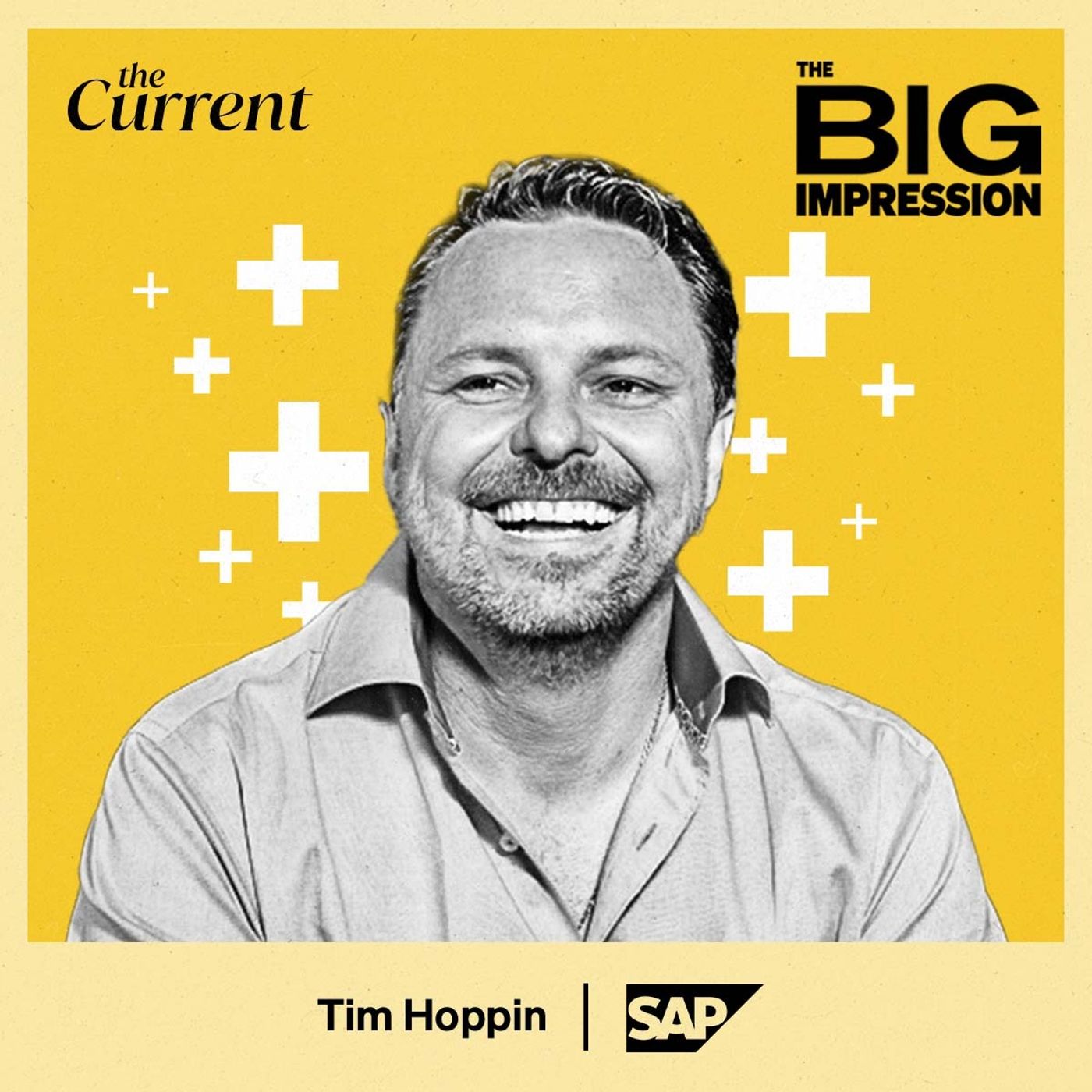
B2B marketing has long been stuck with a somewhat boring reputation: rational, buttoned-up and forgettable. Tim Hoppin is on a mission to change that. As chief brand and creative officer at SAP, he’s helping one of the world’s largest software companies embrace big creative swings — and prove that business buyers are humans too.
July 16, 202518 mins
B2B marketing has long been stuck with a somewhat boring reputation: rational, buttoned-up and forgettable. Tim Hoppin is on a mission to change that. As chief brand and creative officer at SAP, he’s helping one of the world’s largest software companies embrace big creative swings — and prove that business buyers are humans too.
Episode Transcript
Please note, this transcript may contain minor inconsistencies compared to the episode audio.
Damian Fowler (00:00):
I'm Damian Fowler.
Ilyse Liffreing (00:02):
And I'm Ilyse Liffreing. And welcome to this edition of The Big Impression.
(00:09):
You might be wondering, wait, what? Isn't this The Current Podcast? I'm here to listen to brand marketers talk about the highs and lows of their brand campaign. I know I am. Well, rest assured, we've just had a little bit of a brand refresh. We're now the big impression, and
Damian Fowler (00:27):
That's official shout out to our creative team for the new name, which I really love actually.
Ilyse Liffreing (00:32):
So without further ado, let's kick off this new season with a great guest.
Damian Fowler (00:39):
And today we are delighted to be joined by Tim Hoppin, the chief brand and creative officer at SAP.
Ilyse Liffreing (00:45):
Now, SAP makes software that helps big companies run everything from payroll to supply chains, all in one integrated system. It was recently hailed by brand Z as a 23rd most valuable brand on the planet.
Damian Fowler (01:00):
And no doubt, some of that's thanks to Tim. He's a brand builder who spearheaded the tech company's recent B2B campaign, unstoppable, which was shortlisted at this year's Cannes Lion, and that's where we sat down with him. So we're going to start out with this sort of philosophical frame. Ryan, you have said that a brand must influence everything a company makes, says and does. Could you explain that philosophy a little bit?
Tim Hoppin (01:29):
Yeah, sure. I think a lot of people even just kind of reduce it down to branding, like the colors and things like that and maybe the expression a little bit. But the way I think about a brand transmits meaning to people, and it does that through lots of different formats. So when I say what a brand is, what you make, you're actually affecting the service or the product that you're actually delivering to the world. So my classic example is Harley Davidson. Those motorcycles don't use plastic and they do that very specifically because they want the brand to be expressed a certain way in products. And then when I say a brand is what a company says, that's your marketing, your communication, and then what you do is your activations, your choices on what kind of companies you're going to invest in and so on and so forth. But it's all three.
Ilyse Liffreing (02:25):
Yeah. Can you walk us through your recent SAP campaign, which I believe is called Unstoppable?
Tim Hoppin (02:31):
The campaign was built to communicate a new way we're going to market with our products, which is bringing together all the different parts of the software that we make. We tie together, we call it the SAP Business suite, and we're dramatizing it with sort of metaphors that bring it to life. For instance, sometimes if you're in business and you're in charge of something, like being head of it could feel like you're literally underwater. So we recreated what literally happens when the entire office goes underwater. So we filmed the entire office submerged underwater, and people are trying to go about their business. And of course at the end we introduced our product, which kind of drains it and gets things back to normal. And another example, sometimes when you're trying to innovate, it's like an uphill battle. So you start off and the entire building tilts on its side and we kind of go in this metaphor world where the COO is trying to march up a hill and things are coming at her and she's trying to dodge it. So they're all metaphors that we can kind of associate, but they're also very real stories. Every one of 'em is based on an actual customer story.
Ilyse Liffreing (03:47):
Very fun. What would you say are the key consumer business insights behind this campaign?
Tim Hoppin (03:54):
Yes, because purely B2B, our research is a little bit, you have to be more precise in getting those insights. So a lot of it has to do with doing interviews because there's not like a survey you're going to send out to a bunch of CFOs or CEOs and they're going to respond. They're pretty busy people. But we can do other things like get some individual interviews. We do quant studies as well as well, but it's easier to get real insights when you actually talk to real people. So more like anthropology research, I'd say, than sort of traditional marketing broad surveys.
Ilyse Liffreing (04:35):
Some people might say that emotional storytelling and B2B business campaigns are almost like a oxymoron of sorts. Is that at a conundrum would you say,
Tim Hoppin (04:51):
How many times have you seen a piece of content that's using just stock imagery talking about functional stuff and you just ignore it? And so there's this perception that that's what everybody wants and does. We are seeing a renaissance in B2B where emotional, strong, insight-driven work is what works. And so I think you're going to see more and more of that as people realize that it actually is more effective.
Damian Fowler (05:22):
It's interesting to me that the B2B is being put out on what you might consider consuming channels. I'm just curious to hear your take on why that was important and basically how did you activate this campaign and where did you want to put it?
Tim Hoppin (05:38):
Yeah, so our media team and working with their agency took the brief that we're trying to do two things. We're trying to both lead people that are maybe in market ready to buy, lead them into our ecosystem and get in touch with our salespeople. But we also recognize that SAP as a 50 plus year old company has some perceptions out there and we need to constantly reeducate the marketplace about who we are, what we stand for, and then also present ourselves to the next generation. 71% of all B2B buyers are either millennials or Gen Z, 71%.
Damian Fowler (06:20):
Wow, that's a amount.
Tim Hoppin (06:22):
Yeah, it's a lot. So to become and stay relevant, even as the world's largest enterprise software company, you can't rest on your laurels. So some of those media tactics, like being in airports or some television buys in very targeted ways is designed to get broad enough reach so that we can get people familiar with us and start to understand what we stand for so that when they're ready to buy, they're not just hearing about us for the first time. And then of course we're looking at the real data, what's happening out there? Happy to say that all of our creative work has got five stars, or hybrid is the highest you can get the system one, we're beating every industry benchmark. And then in market, the performance that we're seeing in the market is also way above all of our benchmarks. So we're excited because as we like to say, if creative doesn't work, it's not working.
Ilyse Liffreing (07:14):
Was there an insight that you say you took away?
Tim Hoppin (07:18):
I had a strong hypothesis that there would be some disruption just from visually the way the campaign is presented, especially the films. I think the thing that's really surprised me as we did our research, what a chord. It's striking with people. There's one comment that came through just from the qual study that we did where people were saying, you finally get me. Not only is the content visually arresting, but emotionally resonant, people really feel seen. And to your comment earlier about like, Hey, B2B is seen as traditional and there's such a, I'd say a traditional and sort of safe approach to just use business people doing businessy things and boats and cars moving fast and satellites flying by the camera and putting a logo at the
Ilyse Liffreing (08:14):
End. I've seen that one. Yeah.
Tim Hoppin (08:15):
Yeah, I've made that one unfortunately. But to really take this risk and tell interesting stories that are based on real human insights and have emotion and are disruptive and have the very people that we're trying to reach go, thank you, thank you for seeing us, telling us a story that's different. I have this saying, if you want to be disruptive, you actually have to disrupt. And so there's also sort of a hungered SAP, we have to reinvent ourselves. We are in our product and our go-to market. And so the brand platform that we created over the last three years, now this is the next level, is taking the campaign higher. So I think we're on this momentum of transformation, and so it just felt natural to do it. And the way we're investing the does part's also coming true, frankly, the way we're investing in AI and kind of transforming what's possible from a 50 plus year old company. It's exciting.
Ilyse Liffreing (09:12):
Let's talk a little bit about ai.
Tim Hoppin (09:14):
Yeah, sure.
Ilyse Liffreing (09:15):
On that note, how are you guys investing in AI and what do you foresee
(09:16):
Damian Fowler (09:23):
Creation play? Yeah, as a creative person, do you feel threatened by it or
Tim Hoppin (09:26):
Not at all.
Damian Fowler (09:29):
Jump on your question. That is the question.
Tim Hoppin (09:31):
Yeah, it's the question of the week. Big question. It's come up so much. Actually, I was talking about this the other day.
Ilyse Liffreing (09:35):
You're probably tired of people talking about it.
Tim Hoppin (09:38):
No, I actually think what's been really refreshing is two things, always the first part of your question, which is as a company, we are basically transforming into a data and AI company. I think pretty much anybody who's going to survive has to do that. So we've made software for 50 years, but what all the companies that run on our platforms, it's the data that's the most valuable part, of course. And so the AI that we've developed is allowing people to run their businesses completely different ways. So we're investing in that as a creative person.
(10:14):
We're also starting to experiment with ai, for instance, trying to understand how people might react to our messages. I don't think that AI is going to replace creatives, but I think creatives are going to have to change. So you're going to have to act more like a director than a executor. I remember when I started in the business a few years ago, 25 ish, I remember the people who were still laying down typography by hand and everything. Every piece of printed material was proofed. The proofs would come into the agency and people were looking at it. And so all those people's jobs changed. And that's all this is. Human creativity will not and cannot be replicated, but it will require us to get better at being creative and know how to use these new tools.
Ilyse Liffreing (11:10):
Yeah, that's a great answer. We've transformed so much in 25 years. It's kind of baffling
Damian Fowler (11:18):
Completely. Yeah.
Ilyse Liffreing (11:19):
So you're an agency guy. It does seem that B2B is getting better. Is it because of all these agency folks moving in? How?
Tim Hoppin (11:30):
Yeah, I think so. We're seeing, look, the agency world has changed and is contracting in some ways and it's really tough, but also it's creating opportunities for those same creative talents to move. And so it becomes a, I'd say rebalancing. I remember early in my career if you worked in a in-house agency, it was sort of looked down on like you're just not good enough for a real creative job, which was totally mean and not nice. But that was the perception. And now it's completely not that Some of the best work that's being produced is coming from in-house agencies. So you're seeing a migration from, and frankly, it's caused by clients. So clients are reducing what they're willing to pay agencies, which puts economic pressure on the agencies and they have to downsize. And then those great talented people need to pay their mortgage and put their kids through college and they're coming in house. And so my team is almost exclusively on my creative group, our exag agency people. And that's what I am too. And so that actually makes us better clients so we can work with our agencies and we know how to work with them and who they are, and sometimes we even know them from past lives. So it just makes the work better all around.
Ilyse Liffreing (12:52):
Is there anything in the creative realm that you're looking at or data about creativity that you think brands should co-op for B2B campaigns?
Tim Hoppin (13:05):
Yeah, I absolutely, interestingly, as we've seen this sort of spike in the AI chatter and everybody talking about it and sort of wringing their hands about what it's going to do for our jobs, there's been sort of a pushback in a really healthy way where people are saying, actually no humanity and really putting AI in its place, which is, it's just another tool. Yes, it's going to disrupt jobs. That is a true statement 100%, but it's not going to replace human creativity. And so as I said before, that reality is getting people back to what's important, which is storytelling, human storytelling, creativity, finding those interesting combinations that only humans can do. And that's where you're starting to see that come to life in B2B marketing is that, I said it earlier, I think it's a bit of a renaissance and a not cheesy way.
Ilyse Liffreing (14:05):
We have some last minute Rapid, rapid and fire, fire.
Tim Hoppin (14:08):
And this is your home
Damian Fowler (14:08):
Stretch. Oh yeah, stretch. Stretch. Is there anything, Tim, that you're obsessed with figuring out right now?
Tim Hoppin (14:17):
Yeah, how to keep getting better. It's like I love seeing what people can do and I want to use new tools and new solutions. And so I'm trying to figure out where's all this AI stuff going to go and where's it going to be helpful? And how do you avoid the pit of generic communications that is a real threat from ai?
Ilyse Liffreing (14:44):
Did you have a favorite Cannes moment that made you stop and say, wow?
Tim Hoppin (14:49):
Yeah, I was in line for a session and there was a group of young lions, and this one kid, he had to be maybe 18, maybe 19, he still has his braces on, and he was so excited, so excited to be there and to go in. And I've been really worried that our industry doesn't have the next generation coming up. And I saw this kid and I was just so relieved that this kid was as excited about the start of his career as I was when I started. I mean, I would fall asleep with award animals to learn how to do this stuff better and that you could feel the energy from this kid. It was awesome.
Damian Fowler (15:39):
I'm so happy that a lot of students come to Cannes.
Ilyse Liffreing (15:43):
It is great. It fills your heart. Yeah, it does. It does.
Damian Fowler (15:48):
Last one.
Ilyse Liffreing (15:49):
So who beyond SAP, who else is doing B2B brand work very well in your view?
Tim Hoppin (15:56):
Well, GoDaddy won the Grand Prix for, I thought, a really fun piece of work, and it's targeted to small business, so I think you can be a little bit more courageous than sometimes we get to, but I just loved it for its wackiness and just audacious. And then also the way that they really just kind of carried across different mediums. The thing that was the best about it was they're trying to make the case for starting a small business, and they literally did that with a celebrity. It was brilliant.
Ilyse Liffreing (16:41):
And that's it for this edition of The Big Impression.
Damian Fowler (16:44):
This show is produced by Molten Hart. Our theme is by Love and caliber, and our associate producer is Sydney Cairns.
Tim Hoppin (16:50):
And remember, 71% of all B2B buyers are either millennials or Gen Z.
Damian Fowler (16:57):
I'm Damian. And I'm Ilyse,
Tim Hoppin (16:59):
And we'll see you next time.
Dive into more insights and inspiration from leaders in ad tech: https://www.thecurrent.com/
Hosted by Simplecast, an AdsWizz company. See pcm.adswizz.com for information about our collection and use of personal data for advertising.
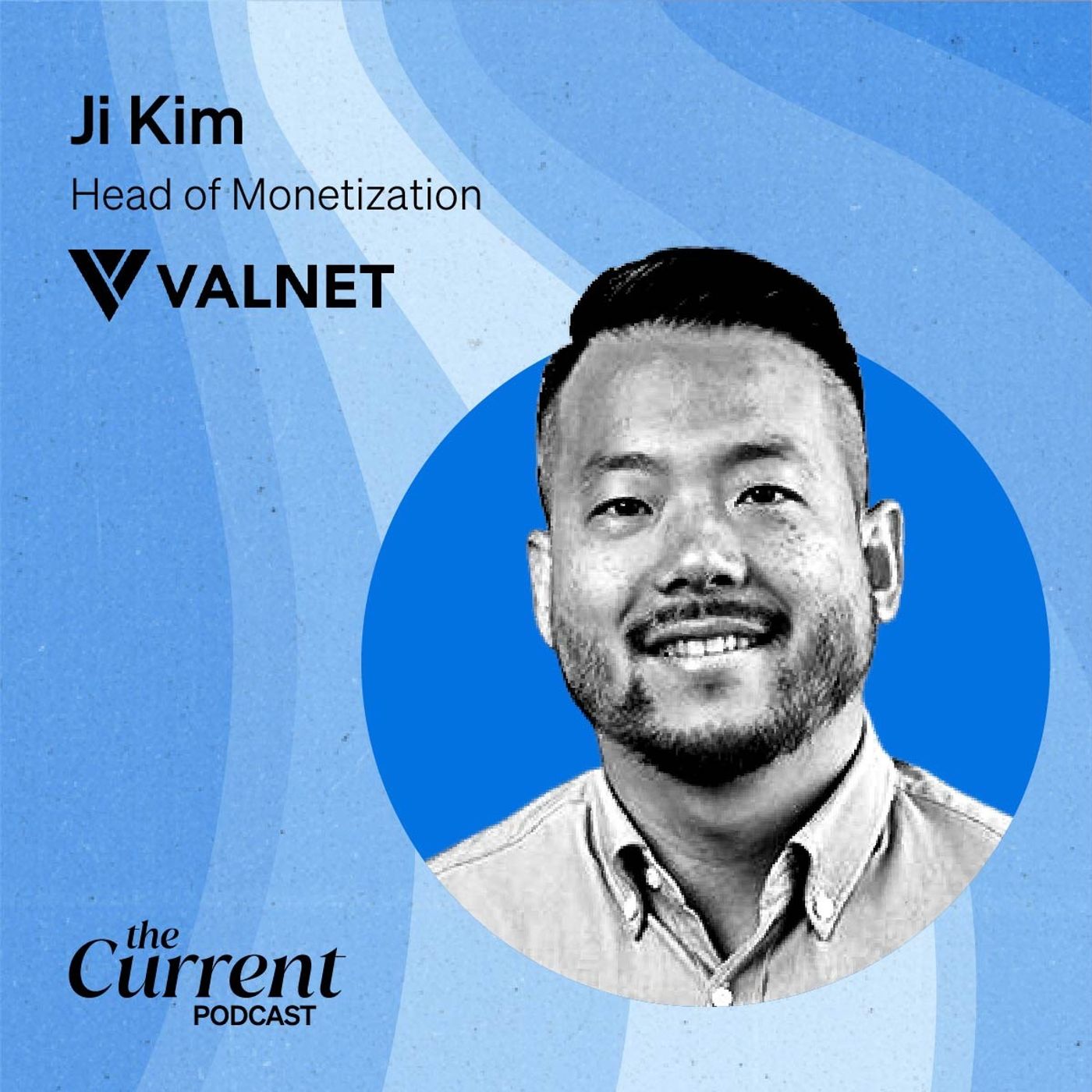
Valnet’s Ji Heon Kim explores how the publisher encouraged users to authenticate themselves. Kim, the head of monetization, also talked about how he balances advertiser value, user experience and performance.
June 19, 202529 mins
With websites covering topics like entertainment (ScreenRant), gaming (Polygon) and automotive (CarBuzz), Valnet caters to users across a wide array of interests.
But according to Ji Heon Kim, Valnet’s head of monetization, Valnet realized it could create more value for its users by encouraging them to subscribe or authenticate themselves.
Maybe a “mass scale” of users wouldn’t sign up for their websites, but perhaps 10% would. And, as Kim puts it, that “10% would still be valuable, and we can do a lot with that 10%.”
“We created more value to [those] users, more exclusive content and high-quality content,” Kim says. “All of that became an initiative on the content side for us to deliver a premium model and give users an incentive to sign up.”
Kim further talked with The Current Podcast about balancing advertiser value, user experience and performance, which he says are “always affecting each other.”
Episode Transcript
Please note, this transcript may contain minor inconsistencies compared to the episode audio.
Damian Fowler (00:00):
I'm Damian Fowler, and welcome to The Current Podcast. Today we're talking to one of the biggest digital publishers. You might not know by name, but you've definitely read their stuff. I'm talking about Net. The company behind Screen Rant, the Gamer, Kaleida make use of, and a bunch of other sites that rack up hundreds of millions of sessions every month. Joining me today is Ji Kim Valnet's, head of monetization. Ji'S been leading the charge on everything from supply path optimization to first party data to figuring out how to drive real revenue without compromising the reader experience. We'll get into some of the big shifts they've made in their tech stack and how they're bringing newly acquired brands like Polygon into their ecosystem and what other publishers can learn from their approach.
Ji Kim (00:52):
At Valnet, I'd like to think of us as a publishing powerhouse. We started very small. Our motto is humble and hungry. We like to remind ourselves that it's always good to keep a humble mindset. I've been at NET for 10 years and we've grown tremendously. We've went through a lot ups and downs, but even as we grow, we like to think that we're small and agile and the publications we range from automotive, gaming, technology, entertainment, but entertainment has always been our flagship, but we've been kind of branching outside of that and trying to expand more and more. And then we have some lifestyle brands as well as sports.
Damian Fowler (01:35):
Let's talk about a moment that changed the game for Net. Can you walk us through your, I guess we're going to talk about supply path optimization at first anyway, which is a hot topic around these parts and what work you did around supply path optimization, like cutting resellers and boosting direct inventory. Could you talk us through that a little?
Ji Kim (01:57):
It's an ongoing process. It's certainly, I think most people agree that SPO is not an easy thing to achieve. You can commit to it one shot, but that's much harder to do considering that there will be a revenue impact. So for us, we tried both ways. We took a few sites and we took the direct approach and we saw a pretty decent stability, and then some other sites did not, and then we have to kind of revert back to it. SPO, it was always a topic that was talked about but not well enforced. And tradedesk took a big initiative to push publishers towards it. And then we started working closely with Jounce Media as well, with Chris Kane started kind of talking through some of the ideas, how should we go about it? How do we retain the value and still achieve removing the resale alliance and keep our inventory as clean as possible?
(02:51):
But initially our outlook of SPO was about making our inventory as clean and transparent as possible. Net considers ourselves as a premium publisher and we want to make sure that the advertisers see that as well. So we were heading in that direction. But ultimately, I think the biggest challenge with SPO was it's impossible to do an AB test because you have one A TXT file and you can't test one setup with the resell alliance, one setup without. So that's been pretty challenging to understand where's the value going, where is it coming from? And even with the Resell Alliance, when you talk to the SSPs with Resell Alliance, they'll go, oh, these are PP deals. These are not just rebroadcasting and all this stuff. So trying to understand the granularity and all that details of what each resale align means was very difficult. But ultimately we know we have to go in that direction, but we know it's not going to happen overnight, so we're kind of just taking a step at a time.
Damian Fowler (03:51):
That's great. What would you say was the kind of catalyst or moment that sparked that shift?
Ji Kim (03:57):
We always talked about advertiser value. It is important to yield as much value as possible and get the performance that we need. We always think that advertiser value is important, and when we think about that, it's like you go through stages. You go, okay, viewability needs to be important. Let's get viewability up to above standard, above average, make sure our CTR is good, but it's high quality clicks. It's not just users just clicking on stuff. Then you go through the lines and eventually you get to SPOs. Make sure that advertisers know what inventory they're getting access to, what they're buying, and make sure that they're getting insights. The transparency is there. Then we've increased the value of our inventory.
Damian Fowler (04:46):
Yeah, I mean that's the key, right, obviously. And speaking of that, having made these changes, are you in a position to be able to see the kind of impact that they've had from a revenue
Ji Kim (04:58):
Perspective? Honestly, I don't think I can everything, especially with these kinds of stuff, what I've learned is it doesn't change overnight. Let's say we remove all the reseller lines yesterday. Today, likely the performance is going to drop initially and maybe things recover over time, but there's so many moving parts that it's hard to associate the value towards SPO, and that's a lot of things that we do in this industry. But I think that's when we like to look at it as, you know what? Ultimately we are improving the quality of our inventory, so we will get rewarded at some point. And that's how you move forward. But with SPO, I think the other side is that it's not just about removing reseller lines. You also have to market yourself and tell the advertisers that, Hey, we have gone in this direction. We have removed the reseller lines. All of our inventory is direct. It's clean. And that part is also hard to do. We haven't spent a lot of time or resources into marketing ourselves, and that's why we talked about, people may not know net, but they know our brands. It's the same thing. It's like we are now making a big push to let people know who Val net is, and that's going to go in hand in hand with this stuff.
Damian Fowler (06:21):
In terms of that messaging around the surgery as it were you're doing on the supply path, does that land well with advertisers?
Ji Kim (06:32):
I think it's always positively looked at when you tell them, it's like everybody, it is never negative, but I don't know if actually if it's meaningful for them because at scale, they're buying at scale. So yeah, we're a big publisher, but they're also buying at multiple publishers. Maybe only small portion of their budgets come to us. So it's positive, but I don't know if it's all that meaningful to them. At least that's what I've felt.
Damian Fowler (07:04):
So in addition to the SPO, what other tweaks or changes are you as head of monetization looking at to basically bring in those ad dollars and keep readers satisfied, I suppose?
Ji Kim (07:17):
Yeah, so there's three things. So we looked at the advertiser value, but then there's the user experience and then the performance side. So always those three things, there's constantly affecting each other. Ad density is probably one of the biggest part of advertiser value and performance and user experience. So we are constantly trying to reduce our density, and we look at this metric impressions per session and request per session. So we look at that and injections our injections based on content length, a paragraph breaks and all that stuff. So we'll try to work with the content team to create optimal breaks. I'll have a little sit down session with the content team. The leads say, okay, this is how the admin injection works, and how you break out your content really does impact, because we won't break a paragraph in half to inject an ad. So there needs to be natural breaks for the ads to inject. So if you have massive paragraphs, we're going to have less ad injections, which is fine if the content works like that, but they also need to think about how all this stuff works.
Damian Fowler (08:26):
That's really interesting. I mean, I think that sweet spot between not being the Vegas strip, but also ads have to populate at the right time to have value.
Ji Kim (08:35):
For net, we've focused mostly on open market programmatic spend. We have a small direct initiative. This is something that we've been trying to grow, but when you don't have huge direct sales initiative and direct spend coming in, you kind of need the density because the CPMs that you get from open market is much lower. So we want to try to move away from that as much as possible. I don't think found that will ever be a publisher where we drive like 50% of the revenue from direct sales, but we want to grow it to maybe 15, 20%. And once we do that, we can yield higher CPMs, which allows us to reduce the density, which would be better for advertiser value, better for user experience, and we'll still get the performance that we need to kind of go forward.
Damian Fowler (09:24):
So it's a balance.
Ji Kim (09:25):
Yeah. Yeah. I think if we can drive higher CPMs, we would love to reduce density, but it's always the constant battle between the two of, okay, well we reduced density. Oh, we went too far. Okay, we got to bring it back a little bit.
Damian Fowler (09:38):
How difficult is it to kind of innovate in ad tech? This is a broader question, I guess given how fast things are changing, especially on the programmatic front,
Ji Kim (09:47):
It's been very, very difficult. Rapidly changing environment is definitely one of them, and you have to adapt quickly. For example, the video definition of having instream outstream, and then now there's a third definition of accompanying that stuff. When it happened, the enforcement happened quickly, so we had to adapt quickly, and that's difficult. But innovating is, I think, much more difficult than just adapting to the new policies and new rules. So many different ways to innovate pre, for example, you have the open source code, you build that, but there's so many customizations that you can do and even a single customization, you interpret how you should approach that topic and how you should build your tech. So you kind of have to talk to your developers and walk through. And our biggest challenge I would say was bridging the gap between developers and ad ops. I was like, because I am an ad ops guy, I understand programmatic landscape very well, but our developers do not. And I'm not a developer, I'm not a technical guy. Obviously through 10 years I've learned a lot of stuff, but still, if I needed to build something, I'm not going to be able to tell them exactly how to build it. So you need somebody in the middle that understands both sides,
(11:03):
And that was the most difficult part. And eventually we did find resources that they were able to bridge that gap and were able to build stuff. But ultimately, there's just so many different ways to build your product and you want to make sure that product that you build or tech stack that you build is going to keep that balance that you need between the user experience, the performance, and the density, everything that pertains to page speed as well. If you build it to be too slow, everything gets affected as well, and that's harder to tell. So yeah.
Damian Fowler (11:37):
So how have some of these technical changes influenced your broad and monetization philosophy?
Ji Kim (11:43):
Yeah, so I guess one of the things, if we talk about authentication, we talk about cookie deprecation and why authentication became so important to majority of the publishers. And I remember our thought process around authentication was pretty pessimistic, I would say. But eventually we said know what? We can create content or value for the users that's going to want them to sign up and want them to get authenticated. And we said we got to start somewhere. Ultimately, maybe we've become a little bit more realistic about what critical mass of a value would be if we're at, if we're expecting 50% of users will log in, that's not going to happen, but 10% is still very meaningful. So it was about our philosophy was changing, about our expectations changing and still understanding that 10% could be very valuable and we can do a lot with that 10%. So we created more value to the users are more exclusive content, high quality content, high quality videos. All of that stuff became an initiative on the content side for us to deliver the premium model and to give users the incentive to authenticate a sign up on.
Damian Fowler (13:03):
That's really interesting. I think one of the things that also I'm hearing is that you kind of have different audiences, but you're getting to understand your audiences. I mean, this strategy gives you more insight into who's coming.
Ji Kim (13:15):
Yeah. We also created what we call threads. They can talk about the article, talk about topics that we're discussing, and that really improved our engagement.
Damian Fowler (13:30):
As you look to the future, how do you think about, as it were, locking in some of these changes and this value that you see from this audience?
Ji Kim (13:40):
So I want to go back a little bit about innovating and how difficult it is. So I went through the stages of, okay, what am I focusing on to optimize to yield more value? And initially it was demand. Okay, we want to work with as many high quality as P as possible, but then you do work with all of them. There are going to be going to be one or two that come here and there, but generally speaking, they're not going to create incremental value. They'll just take a piece of pie that was taken by somebody else, not meaningful value. Then you work on ad tech innovation, all that stuff, and that we'll continuously work on that, but that also has lots of limitations, and you eventually reach a plateau point of say, you're not going to find a lot low hanging fruits. So now we come to premium inventory, which we need to learn our users, we need to learn who they are so we can offer these users to our advertisers to grow our PMP programmatic direct, as well as your conventional IO based direct deals that's going to yield as higher CPMs.
Damian Fowler (14:53):
Yeah, I mean, talk of premium inventories is characteristic of the moment we are in when it comes to programmatic sales for publishers.
Ji Kim (15:02):
Yeah.
Damian Fowler (15:04):
Let's draw back and look at the big picture and some of the kind of industry context. I guess think I'm correct in saying Valnet reach has more than 400 million sessions a month across its network. That's correct. And how do you think about that, that kind of scale when every property has its own audience profile and publishing rhythm?
Ji Kim (15:30):
Yeah, it's sometimes a bit overwhelming how much reach our sites have, but I always try to look at it as our advantage, and this is the opportunity that hasn't been tapped into, is that okay, we're 95% of our inventory is sold in the open market, and we have so much data that we could collect and leverage in order to drive higher value. And it's just looking at it, it's overwhelming, but you start to see the real value that hasn't been tapped into, and that's exciting, but it's also very, very difficult to manage all that information, manage that data, and use it properly. So yeah, I mean it excites me, but also I know how challenging it can be to create value through that. So we're taking one step at a time, even first party data collection. I wouldn't say we're crazy sophisticated, but we're keeping it a level that we know how to manage and understanding it well first and then starting to kind of grow a step-by-step.
Damian Fowler (16:45):
Yeah, I mean, I suppose the whole back and forth about third party cookies may have provided a spark. I know it lit a fire under the industry. Speaking of first party data, so that is a focus for you?
Ji Kim (16:56):
Yes, yes. But I believe when it was really a huge focus for the industry was when Google had first announced that they're going to deprecate third party cookies, and we had the initial moment of, oh, you know what? We also need to look into this, but we didn't want to panic. Our outlook was, I'm sure everybody went through the initial panic. We did too, but we didn't want to stay in that moment. And we said, okay, what's realistically going to happen for publishers like us? How much first party data can we collect and really sell because we don't have a huge direct sales initiative? And at that point we had none. And you can't grow direct sales overnight. It's a highly competitive environment, and you're entering that new market. You have to build relationships, you have to have crazy amount of salespeople that are constantly going out there representing balance inventory.
(17:55):
And we weren't set up for that, and we weren't willing to just fully invest everything into growing that at the time. So we said, well, maybe first party data isn't as important. Collecting first part data isn't as important as just understanding how to go about direct sales. So that's what we worked on. We've hired salespeople, we enter that space. I was very naive about how direct sales worked, and now we have a better understanding. We have good salespeople that understand our values as well. We don't want to just go out and sell anything and everything. We want to understand the creative types that we're also selling isn't going to impact user experience horribly and negatively. The high impact guys, the site scans when they're done, right, it's great user experience, but it could also go the other way. So we wanted to build a baseline first, and that's what we did the last few years. And now we can go after the first party data in a more sustainable way for us.
Damian Fowler (18:56):
Let's talk about your acquisition of Polygon from Vox Media. Speaking of inventory that expands the real estate, how does that property fit into what you're doing?
Ji Kim (19:07):
So Polygon, obviously, we go through a lot of due diligences. We look at different opportunities, and Polygon was an easy one to go through because we knew Polygon has great content, it has a great foundation of creating high quality content. But the difference was that Fox has a lot of direct sales. I can't remember the exact number, but it could have been 75%, 80% of their revenue was generated, direct sold inventory, and then 20% was open market. And for us, it would've been the other way around, flipped around even less. Maybe 95% open market, 5% directive. Initially when we acquired it would've been a hundred percent open market, but that's also why it excite us because it's a premium inventory that doesn't get seen in the open market. Open market buyers don't see the bid requests coming from that website as much. So we're super happy, but we knew this was a high quality inventory, high quality website, and we knew that there was a very small chance that it was going to go poorly.
Damian Fowler (20:20):
Interesting. When you buy a property like that, you're actually buying an audience to a certain extent.
Ji Kim (20:25):
Yeah, absolutely.
Damian Fowler (20:27):
Do you think about audiences as discreet to the publications or do you see crossover?
Ji Kim (20:34):
Crossover? Yeah, lots of crossover.
Damian Fowler (20:37):
Yeah. Alright. So I guess the big question here is for other publishers looking to upgrade this strategy that we're talking about, especially in this very complex environment, which is something you clearly understand very deeply, what's one piece of advice that you might offer?
Ji Kim (20:54):
I think you have to think about realistically what you should go after, what opportunities you should go after. So many things that come up right now, I think the big thing is curated media. And on our end, a lot of the SSPs and DSPs are doing the work for us. They going out and curating our inventory for us, and that's fine. But if you were to go after that and trying to grow it, but you don't really have the resources, it's easy to just kind of see everybody, what everyone else is doing, like, oh, I want a piece of that too, but it's not going to yield the value. Same value if you don't have the right resources in place if you're not focused on that opportunity. So my advice would be to understand which opportunities realistically are you able to get and have the right resources who are going to be passionate about that. Take accountability. That's huge, the accountability part. And that's not something you can just kind of force people. You have to believe that this person that's taking on this project can be really passionate and sink their teeth into it. If you got that, then go after those things. But it's too hard to go after every single opportunity there is. Even if seemingly it seems like a low hanging fruit. Nothing is really that simple in this industry.
Damian Fowler (22:15):
That's for sure. So finally, we're going to wrap this up with some what we call hot seat questions. So what's one thing you're obsessed with figuring out right now?
Ji Kim (22:27):
How to yield more value? No, no, no. I'll give a better answer than that right now. For me, it's how to grow direct sales sustainably and scale it in a way that we don't get too bloated. Because through acquisitions, one of the most valuable things that I get is insight. I get to see under the hood of a lot of publishers, small to medium to large, how they operate, what is their strategy and direct sales. I've learned some of the big publishers do it extremely well. It's a well-oiled machine, it's not bloated. They generate a ton of revenue, but some have a huge cost, and that's what we were afraid of. And right now it's very hard to do. So you need the right sales team, you need the right operational guys, you need account representation, you need reporting guide and all this stuff. And right now I am trying to find a way to scale it, but without having massive costs, just kind of take over and then expect this to yield value in the next year or two. I want that line to kind of grow together. And that's not an easy thing to do, obviously. And I'm looking for the right resources. I'm looking to build relationships with agencies with limited guys, just hustle through it and offer them our inventory, charm them, whatever it may take. But yeah, that's what I'm currently obsessed.
Damian Fowler (24:01):
Okay. What's still missing in the ad tech stack that you wish someone would build?
Ji Kim (24:07):
I don't know if this would fall under their ad tech stack, but I think we could really benefit from a bit more standardization around, it could be reporting and creatives. Maybe I'm speaking out of line because I'm on the inventory side, so I don't know everything that goes on the buy side and the creative side. But what I see is that there's so many different creatives that just either break the page, the creative's broken, it's too heavy, it slows down the page, and it's hard to target those and remove those. It can come through so many different channels. So if there is a bit more standardization around what kind of creatives are acceptable, I'm sure there is some or a standard already, but it needs to be honed in a bit more maybe.
Damian Fowler (25:00):
What's one thing advertisers misunderstand about monetizing Publish it inventory today?
Ji Kim (25:08):
So I thought about this and something that it's more of my frustration around advertisers perspective. I understand it, but a bit more frustration because it's hard to create context around it, which is brand safety. I understand the brand side. I advertise side on why they wouldn't want to associate their brand with certain content, but brand safety is police by keyword list and it's very restrictive. And some of the,
Damian Fowler (25:37):
It's one tool
Ji Kim (25:38):
And it's like, okay, and we have gaming sites that will, a lot of gaming, natural will talk about shooting, but some of the game developers won't want to associate with those articles. And it's like, hang on, hang on. Now you bet you guys also have games that are first person shooter or whatnot. You don't want to associate with those type of articles. There's a bit of a mismatch, and I think it's just hard to manage that. So they go with a broader approach and I get it, but I think it's just there needs to be more about understanding the context of certain articles. And it's like the word shooting can be anything, everything. Right?
Damian Fowler (26:22):
Yeah, I like that. I've been hearing more about a shift from brand safety to brand suitability, which brings in the concept of context. What's something unexpected you've learned from reader data or behavior recently?
Ji Kim (26:39):
So I wouldn't say it's recent, but it's something that's surprises me how the smallest change that I, from my perspective is like, is that really going to do anything? But at our scale, the numbers changed so drastically. Recently we were playing around with the video size because our outstream unit will float once the user are scrolling and the size of that unit. Obviously we want to give advertiser value, so we want to make it as big as possible. But then user experience wise, it could be very bothersome because as they're trying to read, there's a video playing. So we want to keep mindful of that. And we're constantly testing the size of that unit and we decreased by 10% and 10%. While it's significant, if you look at the actual size of the unit to the naked eye, you really wouldn't be able to tell what the difference is. But the CTR of that video unit changed drastically. It was cut in half, actually. And that's the thing is like, okay, users are really sensitive to these things. And to me it's not, maybe I'm looking at it too often, but that's always, that boggles my mind and it always catches me by surprise when I see the numbers is like, wow, I did not expect that. I did not expect users to behave this way.
Damian Fowler (28:00):
That's amazing. The details really matter.
Ji Kim (28:02):
Yeah, Big time.
Damian Fowler (28:03):
And that's it for this edition of The Current Podcast. We'll be back next week. The Current Podcast is produced by Molten Hart. A theme is by Love and Caliber, and our associate producer is Sydney Cairns. And remember,
Ji Kim (28:21):
I like to think of us as a publishing powerhouse. We started very small. Our motto is humble and hungry. We like to remind ourselves that it's always good to keep a humble mindset.
Damian Fowler (28:34):
I'm Damian, and we'll see you next time.
Dive into more insights and inspiration from leaders in ad tech: https://www.thecurrent.com/
Hosted by Simplecast, an AdsWizz company. See pcm.adswizz.com for information about our collection and use of personal data for advertising.
In this episode of The Current Podcast, hosts Damian Fowler and Ilyse Liffreing sit down with Amy Lund, VP of integrated marketing and corporate communications at E. & J. Gallo Winery, to talk about Barefoot’s bold move to become the official wine sponsor of the NFL.
June 11, 202531 mins
In this episode of The Current Podcast, hosts Damian Fowler and Ilyse Liffreing sit down with Amy Lund, VP of integrated marketing and corporate communications at E. & J. Gallo Winery, to talk about Barefoot’s bold move to become the official wine sponsor of the NFL.
Dive into more insights and inspiration from leaders in ad tech: https://www.thecurrent.com/
Hosted by Simplecast, an AdsWizz company. See pcm.adswizz.com for information about our collection and use of personal data for advertising.
In this episode of The Current Podcast, we’re joined by Rob Bradley, SVP of digital revenue, strategy and operations at CNN International Commercial. He shares how CNN has evolved far beyond its broadcast roots — and how it’s now helping brands tell more impactful stories across everything from connected TV (CTV) and free ad-supported television (FAST) channels to TikTok and LinkedIn.
June 4, 202529 mins
In this episode of The Current Podcast, we’re joined by Rob Bradley, SVP of digital revenue, strategy and operations at CNN International Commercial. He shares how CNN has evolved far beyond its broadcast roots — and how it’s now helping brands tell more impactful stories across everything from connected TV (CTV) and free ad-supported television (FAST) channels to TikTok and LinkedIn.
Episode Transcript
Please note, this transcript may contain minor inconsistencies compared to the episode audio.
Damian Fowler (00:00):
I'm Damian Fowler.
Ilyse Liffreing (00:01):
And I'm Ilyse Liffreing.
Damian Fowler (00:02):
And welcome to this edition of The Current Podcast.
Ilyse Liffreing (00:09):
This week we're thrilled to be joined by Rob Bradley, the senior vice rresident of Digital Revenue Strategy and Operations at CNN International Commercial.
Damian Fowler (00:18):
Now, Rob has played a key role in CNN's evolution over the last 10 years from a broadcast powerhouse into a cutting edge digital platform
Ilyse Liffreing (00:26):
That includes launchpad, CNN's AI powered advertising tool that's been driving smarter, more targeted campaigns for nearly a decade
Damian Fowler (00:35):
From global banks to tech giants like Samsung and even government launchpad has helped brands show up on CNN's platform in ways that are both innovative and effective.
Ilyse Liffreing (00:45):
So in this episode we'll explore that journey, how launchpad got its start, what it's become today, and how CNN is helping advertisers navigate a complex digital world using deep audience insights and data at scale.
Damian Fowler (01:00):
So let's get into it. So Rob, let's start by talking about Launchpad. Not everyone's familiar with it, but it's been designed to help brands market themselves to CNN's audience. So I know it's eight years old. Can you talk about the tool and how it's evolved to this point?
Rob Bradley (01:19):
Yeah, I mean, to take a step, media companies and news brands today need to be so much more than just a platform where someone can serve a traditional ad to reach an audience. Of course we do that and embrace that, but our audience exists in a multitude of different environments. Now, of course, o and O, which can be TV to digital assets, websites, but of course Fast and CTV now. And of course they're all across social, which means that when we're working with brands today, we need to have tools that enable us to reach audiences in all of those environments. Essentially our clients expect that from us. So we have to innovate to be in those places. And also of course, by utilizing areas our audiences exist in today such as social, it means we get a broader reach. So we try and of course a lot of brands are nervous about social, and of course we do compete somewhat, but I like to flip it on its head and think about how can we use audiences on off platform environments to our advantage?
(02:16):
So launchpad essentially is a good example of that. It's an in-house social media agency, essentially utilizes latest talent. I would say. I think people do come first that really understand the latest technology to help us understand our audiences both on and off platform. That did launch really just reaching audiences in places like Facebook, but now it's across all the meta platforms, YouTube, LinkedIn, TikTok, and more. And over the years that team, through utilizing technology, have automated processes. We understand sentiment of what people are consuming, how they feel against our content that we distribute both on and off platform. And then we use those insights to indeed empower the next piece of creative, let's say. And it feeds into our brand studio, which is called CNN Create, which actually touches about 70% of our campaigns now. So it's all about the way we go to market is really about selling stories and content and then utilizing the impressions and volume of scale we have around that in a smart way.
Ilyse Liffreing (03:15):
And today, CNN Parent Company, Warner Brothers Discovery has only massively grown since the launch of launchpad and has so many touchpoint and audience insights. You have the entirety of the Harry Potter world and DC comments to seen in news. How do you make sense then of all that data and how does it come together to benefit a launchpad campaign?
Rob Bradley (03:41):
So first of all, I'd say there's still a job to do and an opportunity of gathering all that together because there's so many touch points that both can power the marketing of movies that say as well as the targeting of campaigns. And those targeting of campaigns can of course be owned and operated environment. So again, we can push audience insights into social platforms to target through tools like launchpad, but ultimately by understanding who our audiences are means that we can do three things. We launched a product called WBD AIM basically, which was actually born out of CNN, used to be CNN aim, and it stands for Audience Insight Measurement. And really it means that of course we talk about targeting quite a lot, that's where the rubber meets the road. But really as a severe successful media company today, you need to go to market with insight led sales.
(04:29):
So use that data to inform sales to the clients, proving upfront why you've got the right audience and why they should trust you. And then of course there's the targeting the audience piece, and then there's the measurement of proving what you have done has worked. And so that aim piece all comes together as one kind of data play. And where we have had success of bringing that together so far internationally is CNN Eurosport D plus in the UK and TNT Sport in the UK now exists in one platform. And also of course that's really good for programmatic as well. We can push those audience insights, put them into the marketplace and enable brands to buy programmatically against that. So very much in the programmatic space, we're aiming at the more premium PG programmatic direct marketplace.
Damian Fowler (05:16):
Can I just ask you off the back of that, do you see news as part of that whole package or it's not a sort of siloed separate piece of what you are offering?
Rob Bradley (05:27):
Yeah, that's a really good question. I think if you are a brand that wants an engaged audience and you want to be part of a conversation that's happening today or drive a conversation, news obviously makes sense. But of course I wonder if this is where you're going. News environments are challenged at the moment in some respect. There is a prevalence of I think, unfair news avoidance in the industry, particularly with very blunt keyword block lists that are being used, which is pretty well covered in the press and that is a major challenge. However, sports has a similar issue, right? Because words like shoot and shot and attack are used all the time just as though are news. So actually sometimes if people think of news straightaway, but there's a broader issue with that. And the reason why I mention that because actually news and sports is both live, it's what's happening today, it's audiences certainly where we sell it can be sports enthusiasts across both platforms at the broader end, it can be business decision makers, it can be C-suites, it can be high net worths bringing those audiences and ultimately linking it to what WBD has an abundance of is very premium, very trusted, very brand suitable environments you could say.
(06:39):
And that marketplace of WBD and WBD Connect is the programmatic marketplace will keep growing.
Ilyse Liffreing (06:47):
Now you talked about how your bridging basically social to programmatic. Have you seen one success in that so far and interest from the brands you've been working with?
Rob Bradley (07:00):
I think it's basically it was quite an early adopter of programmatic in the belief that it enables the human led work media owners to grow. And that has been proven in embrace technology to do what it does well, highly scaled targeted impressions that started on the website that say ever increasing on CTV and FAST for us, joining all that together, putting our own data into those environments, trying to work at the premium end of it so that we get the yield up and really embracing the technology to do that married with what only we can do best, which is linking directly with a brand, understanding a brand on their agency. In many markets we go brand direct though really understanding what their challenges are and what stories they've got to tell. And then coming up with this multi-platform strategy that can include programmatic maybe at the mid funnel or the performance end, but also linking it to a full multi-platform strategy, which may include CTV, fast Web and tv. And actually 80% of our direct campaigns include all of those platforms and include that social piece. And I think the reason why I've sort of spoken about social in is I think people often wonder about how we can utilize it to make money, but actually it's a really important part of our business where we're kind of using the best of what programmatic can offer, the best of what social can offer and then the best of storytelling.
Ilyse Liffreing (08:27):
Yeah, perhaps I would love to hear about a brand that perhaps you guys have been working with and how you are really measuring that success. I'm curious if any platform or audience perhaps outperformed your expectations.
Rob Bradley (08:43):
Sure. Well, I spoke about linking CNN storytelling that could have social impact in some way or drive conversations or change opinions. And that is when we have a really strong partnership with the brand, that's what we do for them. Really it's about how can we change perhaps a view or input a view into someone's mind that they may not have had about a brand based on facts or something that brand is really genuinely doing to try and make the world a better place beyond just perhaps selling a product. So CNN Embarks on a really bold program with Samsung recently, it was exactly a campaign that I said truly multi-platform include tv, digital, social, so use launchpad for off platform distribution and it really highlighted how Samsung technologies are being used to make the world a better place. Everything from the way they t trawl the ocean to dig up fishing nets and some of those fishing net parts are used in their mobile phones to a great story around how their TVs add access for the heart of hearing where we had a gentleman that was on stage with Beyonce who was doing sign language while she was performing, who went viral because he's an incredible character that really can literally make you hear the song using his hands.
(09:54):
It's amazing with his
Ilyse Liffreing (09:55):
Movements
Rob Bradley (09:55):
And he uses a Samsung TV at home, he feels it gives him what he needs considering that his hard of hearing challenges. So all those stories, it does involve a product, but really it's about a person, a human led story. We know that human led stories cut through a cluttered internet more particularly if they have some sort of emotional response that they offer, I can make you sad, happy, and ultimately the goal was to shift opinions about that brand. So looking at the data that we have, but 81% agreed that seeing the branded content that Samsung made made them think they were a more socially responsible company. 86% agreed that the branded content salt told them something about Samsung they didn't know before. And 84% agreed that branded content showed the value of Samsung as being more attention grabbing. So there's those hearts and minds movements that these campaigns at the brand's level kind of goals that they have. And that's really what we did with this campaign.
Damian Fowler (10:53):
That was great. Yeah, that's an interesting convergence of values and emotion and storytelling, but if we could sort of maybe look at some of the takeaways from the Launch Bank campaign and then get bigger from there. How did you measure success? I know you just mentioned some metrics right there for Samsung specifically, but did any platform or audience outperform your expectations?
Rob Bradley (11:19):
Yeah, I think we try to be platform agnostic somewhat when it comes to what the campaign goals are. So take within social, if the campaign of course is reaching consumers, we're more likely to use meta talk environments, YouTube, however of course if the campaign is more skew towards as a business audience, LinkedIn is more increasingly used. So it's not necessarily that one platform surprises because we'd set up the campaign at the start to meet those specific goals of that campaign. And within Samsung of course this was a consumer campaign, so those consumer platforms to reach and actually for that, TikTok did provide, and I think it was one of the first times that they'd ever worked with TikTok with a media owner and they trusted us because of the relationship that we have to deliver that campaign on TikTok. So that did have for one of the first times we've used it, a really important play within our overall multi-platform strategy.
Damian Fowler (12:15):
You mentioned insight-led sales, that means you have a good view of audience segments. Could you talk a little bit more about that and how you think about audience and how you break it down? And then the second part of that I guess is was there any unexpected reaction or behavior response from campaigns from these different areas of viewership?
Rob Bradley (12:39):
Yeah, I think we've had to get really sophisticated with understanding audiences and I'm linking who our audiences with our content. It touches on something I was talking about previously when it comes to the changes around news and news avoidance and brand safety and brand suitability. But that doesn't mean that all politics content should be blocked, for example. So I suppose there's the traditional side that we have of understanding our audiences of, okay, this is someone that's interested in reading a lot of business articles around finance. And then we can layer in personal identifying data where we have it and define and target that audience. But now we also add a layer in, we built a tool called sam, which is a sentiment analysis moderator, which also now kicks out a positive and negative sentiment score on our articles. So we know that if an article is about a scientific breakthrough, for example, that's a cure for a disease that may have innovation, technology may be very positive, but actually the word disease might have been blocked if you're using a more blunt keyword list. So with our clients, they trust us to use SAM to use more positive and negative targets. So we layer the kind of contextual element as well as the data element, and that runs on pretty much every single one of our direct campaigns.
Ilyse Liffreing (13:56):
Very cool. It sounds like a use of AI right there, if I'm not mistaken.
Rob Bradley (14:00):
It's an interesting one because we've had it for about five years and it is AI is machine learning and the reason we built it is because it ultimately unlocks more impressions than perhaps some of the off the shelf tools do.
Ilyse Liffreing (14:11):
Very true. Because also you're not just selling content to, you're selling a sustainable digital business. Would you say is your North Star when balancing that audience trust with monetization being CNN is such as a storied publication and company with multiple digital touch points?
Rob Bradley (14:38):
Yeah, good question. I mean, first of all, CNN's a global brand that's built on trust. We have some of the world's greatest journalists here and in a world that's growing in myth and disinformation is vital for society that they can rely on a trusted voice and reputable news organizations like CN. So I suppose our North Star is to of course lead with that trust but then make sure that we're essential for customers every day. So there's this sort of trust, but then there's also a premium environment and experience and that kind of goes hand in hand with advertisers going back to that storytelling piece or even putting an ad in an environment that has news. Brands want to be in a trusted place, so we really need to make sure that we're premium and that we're trusted first and foremost. But then also we need to embrace new ways of driving revenue.
(15:29):
We can't just rely on advertising, which is why we're embracing this direct-to-consumer business model to succeed over long-term. Linear in TV is still really, really important as of course is web, but exploring new digital monetization models that complement all those revenue streams are really important. So look fast is one of them, and CTV audio is one of them. We have CNN underscored in the us, which is kind of product recommendations and review sites, so e-commerce and of course as mentioned, the subs business, this direct to consumer business we're building. So we have to kind disrupt ourselves and embrace that to build a sustainable future.
Damian Fowler (16:10):
Rob, your role is you work for CNN International. So you look at the big picture obviously, and this is about a big picture question here, it's global, but it's also personal. So how do you think about that interaction, building digital products and content that both may be relevant at scale but also have to have local impact?
Rob Bradley (16:31):
I'll give you a kind of recent example. We announced plans to launch some CNM weather as our first standalone digital lifestyle product very recently, the upfront over in the us. So it is about expanding our content beyond news. As I mentioned, we already have travel, business style and tech and all of these different areas, but essentially builds on what we're good at, which is best in class live coverage of what's happening. Immense resources dedicated on the ground locally in this instance can of course be weather reporting and visual storytelling around weather. It's a way for CNN to bring these major weather events. So it may happen locally, so relevant information locally, but also huge interest globally. Think about the LA fires as a mass audience around the world, but also allows just simultaneously up to date weather forecast to help consumers get up to speed of what's going on there each day. And that's just a good example of something we've launched recently that has that both local, national and global relevance.
Damian Fowler (17:29):
I think it's always been a staple of good local news. Talking about right here in the US right now, there's some challenges to public broadcasting and one of the things that they have are these local stations that inform people about local weather events and that's crucial, especially in the tornado belt for instance. So I think weather obviously is key. And it's interesting to hear you say that obviously this is a fast moving space, the digital commercial space. As you look ahead, what are the biggest opportunities you see for CNN to lead here in this space? I guess AI is one of those things, immersive content. What else are you thinking about?
Rob Bradley (18:10):
Well, the CNN synonymous with video led journalism. Ultimately we're a video company that started on cable and is now in all these platforms that are ever expanding. But really we obviously want to continue and focus on that legacy if you like. So expanding our current subscription offering in the fall, as you guys say over there, autumn, as we say across the pond in the uk, essentially the launch of a new streaming product that's due ultimately in the US then but will soon be rolled out internationally as well. Providing a individual one stop place where audiences can access our journalism, our original programming, they can choose from live channels, catch up on features, a video on demand, and it'll be on all platforms from mobile apps, CTV and the.com websites. And it's going to be part of a new subscription, which is called CNN's All Access subscription.
(19:01):
So an example of embracing streaming video led alongside the other channels. And of course embracing the fact that our audience exists on mobile vertical video has been a huge investment for us. It's what consumers want, we understand their behavioral patterns. So we've basically grown our vertical video capabilities across our platforms and will be a key pillar as we continue. I also think it's about fostering direct relationships with audience, which is something that social does really well. Actually. We've already established some of these areas. Take Anderson Cooper's All there is podcast, which is fantastic, it's around grief, but literally has led to thousands of voice notes and interactions. Ranson himself so much that he built. And we built an online grief community, which essentially is where you can hear voices and other stories of people respond to comments and stories of their own grief and there's a really engaged community around that. And then of course podcasts and audio exists in audio, but more and more they're being recorded. And actually if you look at all areas podcast as well as the assignment of Cornish and Chasing Life of Doug, Sanjay Gupta, they're all video now as well and available there. So I think you're going to see news brands like seeing and leaning into this kind of personality led kind of opportunities as well.
Ilyse Liffreing (20:18):
Yeah, that's really exciting. The streaming space has exploded, obviously. And I'm curious how CNN All Access is going to differentiate itself enough or stand on its own in order to get those subscribers.
Rob Bradley (20:38):
Yeah, it's not necessarily a part I manage directly to be honest, to be honest with you, but I say CNN, it goes into another something we spoke about previously, which is around the history of the brand, the legacy of the brand, the power of a brand, right? No one can deny that CNN is a brand that doesn't touch all corners of the world and it's still highly, highly relevant. And it's funny, when you look at sometimes when you use the word a legacy brand or traditional media, it's almost used in some sort of negative connotation. Stay with me. You asked me a question, I'm going in a different direction. But sometimes it's used in this kind of negative connotation. But if you look at other areas like Luxury UMES or Rolex Legacy has a value. Auto Rolls Royce technology, I would say even like IBM or Apple, even their legacy is important because that brand stands for something as it does for CNN.
(21:42):
So those brands also innovate and make sure they're relevant for today. And I'd say streaming is just an example as well as podcasts as well as what we're doing. Launching the weather app is an example of CNN disrupting itself, making sure it's relevant today, but as well, not giving up on that legacy of who we are because that brand stands for something. So how are we going to stand out is having some of the best journalists in the world having one of the biggest brands in the world and making sure that what we do is authentic, fact-driven and trust base.
Damian Fowler (22:15):
That's great. So we've got a few quick questions here to hit you with to close this out. So alright. First off, what brand or publisher is doing something unexpected that you admire?
Rob Bradley (22:30):
Arnold Schwarzenegger's Pump Club. What love that You should have seen my comms team face when I said I was going to say that he's a yes. Firstly, I know this is an audio recording or a video recording, I'm not, if you can see me, I'm not someone that is a bodybuilder, but I do really, oh, I dunno. I do really like Arnold Sch and actually his pump club. I use it for the emailers, but there is a podcast as well. He is got an emailer, he's utilizing an ever-growing medium, let's say, from sending out email news. He uses his personal brand to form a relationship with an audience, his heritage in fitness, the rise of emails, as I said. And he shares really valuable information to a defined audience. It's really fact driven, it's really science driven today, which proves we do read it. He was reading, basically sharing a study on potassium and the benefits of increasing your potassium intake and how it can have on the heart. So he's got lots of links to real studies. The commercial model does mean he's trying to sell you a few things along the way as well. But I find it interesting and I think it's a great use of someone using all these tools that are available today to connect with an audience.
Ilyse Liffreing (23:52):
Yeah, that's a fun one. I like that.
Rob Bradley (23:54):
I love that there's one
Damian Fowler (23:54):
Guy who knows how to connect to an audience. It's Arnie.
Rob Bradley (23:57):
Yeah. And do you know what? I saw him in New York last time I was there and he was sitting two meters away from me for at least two hours. And I didn't have the guts to say hello, but I was happy just being in Arnie's presence.
Ilyse Liffreing (24:10):
Yeah, amazing. If you could fast forward five years, what would you want CNN's digital presence to feel like to a 25-year-old?
Rob Bradley (24:23):
I mean, look super relevant, both from a personal point of view to also giving that individual information they need to know or should know about what's happening in the world. I think you don't want it too personal so that people are in their record chambers that say it should be video led. And of course it should be accessible on the platforms that that person wants. It should be ubiquitous, but it also should be predominantly on owned and operated platforms. It's important that we continue to invest in the core. And I know we spoke about social work, important to invest in the course, it should be owned and operated platforms that CNN has predominantly.
Damian Fowler (24:59):
And finally, late night breaking news alerts or morning deep dive newsletters. What's your personal preference or should we say news ritual?
Rob Bradley (25:10):
It sounds like a question as a news kind of person I should think about all the time, but I've realized, I go so deep in the mornings. I'm like within 15 minutes I've checked obviously CNN, but I've probably checked BBC, the Guardian New York Times. I check Fox News to see how they're approaching a story and then I'll go into podcasts on the way to work and then I'll probably check things like The Economist and things like that to go deeper as I've got more time. So I kind of utilize everything and I go pretty deep, but it probably tails off towards the end of the day. I think I've had enough by the evening, and that's more when I want to chill out of a glass of wine and watch a movie. I have some nice food.
Damian Fowler (25:52):
So, what was your what take, what was your big impression from that conversation with Rob?
Ilyse Liffreing (25:59):
Yeah, my big impression was really how, and this isn't surprising from CNN, but how they lead with storytelling when it comes to their managed brand campaigns. I love the example that he gave was Samsung who found when they managed their campaign across multiple digital touchpoints, they found that the audience 86% agreed that branded content told them something new about Samsung that they didn't know before. And that's really powerful when you're a brand like Samsung.
Damian Fowler (26:34):
Yeah, I thought that was very telling and I think even more the idea that CNN is really looking at and audience reaction, not just in terms of its own content, but in terms of the branded content. I thought that was also very interesting when we asked him about campaigns that have kind of caught them by surprise. And that idea that CNN International had launched a campaign that was targeted specifically a young affluent demographic in the city of London. But actually when they looked at the backend and looked at the measurement, it was hitting beyond London, outside of London to empty nesters whose kids had already left home, which was a surprising insight, but also allowed him to pivot the campaign to target that group. So I think the idea of audience strategy, being nimble with audience strategy and the fact that the digital frame allows a brand like CN International to be much more nimble right now. I guess that's an interesting takeaway for me.
Ilyse Liffreing (27:39):
Also, it helps that you have the breadth of data that a company like Warner Brothers Discovery does have across its multiple properties.
Damian Fowler (27:51):
And that's it for this edition of The Current Podcast.
Ilyse Liffreing (27:54):
This series is produced by Molten Hart. The Current Podcast theme is by Love and caliber. The Current team includes Kat Vesce and Sydney Cairns.
Damian Fowler (28:03):
And remember,
Rob Bradley (28:03):
If you look at other areas like Luxury UMES or Rolex Legacy has a value Auto Rolls-Royce technology. I would say even like IBM or Apple, even their legacy is important because that brand stands for something as it does for CNN.
Damian Fowler (28:21):
I'm Damian
Ilyse Liffreing (28:21):
And I'm Ilyse, and we'll see you next time.
Dive into more insights and inspiration from leaders in ad tech: https://www.thecurrent.com/
Hosted by Simplecast, an AdsWizz company. See pcm.adswizz.com for information about our collection and use of personal data for advertising.
Chuck E. Cheese's Melissa McLeanas joins hosts Damian Fowler and Ilyse Liffreing on The Current Podcast to discuss how Chuck E. Cheese is leveraging its iconic IP for the streaming era, what advertisers are excited about and more.
May 21, 202529 mins
Chuck E. Cheese's Melissa McLeanas joins hosts Damian Fowler and Ilyse Liffreing on The Current Podcast to discuss how Chuck E. Cheese is leveraging its iconic IP for the streaming era, what advertisers are excited about and more.
Episode Transcript
Please note, this transcript may contain minor inconsistencies compared to the episode audio.
Damian Fowler (00:00):
I'm Damian Fowler
Ilyse Liffreing (00:01):
And I'm Ilyse Liffreing,
Damian Fowler (00:02):
And welcome to this edition of The Current Podcast.
Ilyse Liffreing (00:09):
This week we're thrilled to be joined by Melissa McLeanas, Vice President of Global Media Licensing and Entertainment at Chuck E. Cheese.
Damian Fowler (00:18):
For people who grew up in the us, Chuck E. Cheese means childhood birthday parties. It's long been a go-to destination for pizza games and the giant mouse that knows every kid's name.
Ilyse Liffreing (00:29):
In short, it's a pop culture icon with over 500 worldwide venues. But under Melissa's leadership, the brand is leveling up by launching the CEC Media Network in partnership with programmatic platform future. Today,
Damian Fowler (00:42):
It's a big move that signals a shift from just a physical play space to a full on entertainment platform, think digital storytelling in store screens, branded content and advertising that actually fits into the family experience.
Ilyse Liffreing (00:57):
We're going to jump in and talk about why in venue media might just be the next big driver of customer loyalty and growth.
Damian Fowler (01:07):
Chuck E. Cheese is such a nostalgic brand, especially in the United States, but here you are launching a full media network, which is a kind of big new chapter for you. Can you walk us through the vision and the strategy behind the CEC Media network and what is bringing it to life?
Melissa McLeanas (01:26):
Absolutely. First of all, thank you so much for having me. It is an incredibly exciting time at CEC Entertainment. Then Chuck Cheese, I would say it's a bold new chapter for the company and the Media network is really just a piece of that. The brand has been going through an incredible transformation over the last few years, and really at the heart of that is the vision to establish this brand as a global leader in entertainment. Now, I say that, but it's really reestablished the brand in entertainment. Chuck E. Cheese was born in entertainment. I don't know if you know, but the E in Chuck E. Cheese stands for entertainment. And really when you think back to where we started, we were a leader and really established the category of EAT entertainment. And as that space has evolved and family entertainment centers have really taken that center stage, we've continued to be a leader and an innovator in that space.
(02:14):
But a few years ago, I would say we probably hit a wall and it was a little bit tired. The bones were good as they would say, but it was really time for a reset and bringing a new leadership team to the forefront with a new background and experience in entertainment. We established several different strategic objectives, one of them being the division that I lead, and that's media licensing and entertainment. So really very simply put, the mission is to really drive incremental value and revenue for the company in a new way. So all US locations, we've invested over 350 million back into the business, a capital investment, and I'm happy to say that right now at this point we've completed the US all US locations, so just under 500, no small feat, and we're about to finish our own Canada locations as well. And what this looks like is cosmetically update to the interior and the exterior, a revamp of menu, all new games, and that entertainment package now features a large video wall. And then of course our character program.
Damian Fowler (03:16):
That's a lot right there. It's almost like you've had a complete perception shift in terms of what you're doing. It sounds like you are a channel in and of your own right and media channel. You mentioned out of home, but there's also CTV on all those points. This is a kind of multistream content strategy. And could you just talk a little bit more about how that will ultimately reach all of these consumers and how it'll deepen engagement, I guess, for families who go to all these different venues in the US and around the world?
Melissa McLeanas (03:50):
So yeah, that's a great point. So I guess let me step back and actually talk about what that content looks like. Within our fund centers, we have entertainment programming, let's call it a 90 minute loop, and it consists primarily of entertainment, content, family friendly entertainment content. Of all these initiatives, obviously the first and foremost most important thing for us is to make sure that we're delivering an amazing experience for our guests. And so that content must do that. It has to be relevant for our families, it has to be engaging, and it really has to convey everything that our brand stands for. So that's a mix of our own original content. So I talked about that, the library. And so we continue to create new content and then we pull from our library of content. So we really look for things that are a little young, but it has to be appealing to an older guest.
(04:37):
At the same time, there can be aspirational content, so maybe some of our 10 year olds and 12 year olds are there with younger siblings, and then you got your parents. So there's a lot of opportunity there. The other thing that digital screens in this update to programming does is it allows us to do regular seasonal updates. And I think that's also really important, especially as we're growing programs like our membership program, our past program, we've got some repeat visitation, we're consistently updating and keeping that fresh throughout the year. Now as part of that, there's a lot of partner opportunities. And so for our entertainment partners, like I said, you can get the latest clips from your newest release for some of the newer content creators. We've got an active captive audience sitting right there paying attention to those screens, and we've created an environment where they're tuning into those screens. And so bringing our characters, since we do all of that content ourselves and working with other content creators to create some co-branded content, there's a lot of different ways for partners to really be a part of that entertainment experience.
Ilyse Liffreing (05:38):
Now I know it's early days too, but perhaps you can talk about some of those partnerships that you have going on with needy buyers and national advertisers and then how important the media network is to Chuck E. Cheese's broader business evolution.
Melissa McLeanas (05:54):
Absolutely. I'll actually take that moment to do a quick and talk more specifically on the advertising opportunity. I think a lot of what we're doing with the content and the characters is incredibly exciting, but it's also a really exciting time in the digital out of home and out of home space. So if you look at other venue operators and retailers, they're debuting these owned media networks. And so we've really took a page out of their book and we said, Hey, we've got this updated experience, we have this traffic. How do we really bring this to partners in a big way? And so on the, I would say the tech solutions side, we've had some really strong relationships with Panasonic so that we've got media players in advertising solutions that are going to support the various types of advertisers locally, regionally, nationally. And then we most recently have a relationship with Vista Media, so we were able to integrate their supply side platform directly into that CMS.
(06:44):
So that gives us access to a wide array of advertisers, and they're coming straight through programmatic, so turnkey solution for those who are buying programmatic space. So we're seeing a lot of advertisers come through there. And then we've got some more strategic relationships in the entertainment space. Kids BOP is one of those. They've been a partner for many, many years. And in addition to some of the entertainment content, they've really leveraged these screens to advertise tours to localize and talk specifically to upcoming tours at a specific venue ahead of that. We've worked with the Harlem Globetrotters to do the same, and then we have a various CPG toy, again, family appropriate, parent appropriate that are really taking advantage of those screens. And then of course we're talking out of home, but I don't want to forget too that we also announced a partnership with Future Today.
(07:33):
And so in addition to having this opportunity around content in our venues, we also have this content online. So we've had a lot of this on YouTube and YouTube kids. We actually started putting our content there in 2012 and have been doing so in a more meaningful way in the past few years. And with this new relationship with Future Today, a leader in the CTV space, not only are we getting content on their Happy Kids channel and their network alongside the co melons and the Paw trolls, but in the future we're working towards launching our own streaming network. So Chuck E. Cheese branded Fast Channel, so ad supported, but again, leaning into the content and the IP and engaging those guests and those fans and then offering that opportunity to brand safe and family friendly advertisers.
Ilyse Liffreing (08:17):
I know Chuck E. Cheese has traditionally been mostly about the physical experience before all of this. I remember going there as a kid, my dad brought us there all the time growing up, and obviously that part of the business is not dying down at all. I'm curious how many screens you have at each of the 500 plus venues that will be part of this network.
Melissa McLeanas (08:41):
So every location has a video wall, and that's going to be the focal point of when you walk into Chuck E. Cheese and it's incredibly important. You really can see that almost anywhere in most locations. Every one of our locations is unique, they're like children. They vary in size and layout, but really that video wall is huge. And then screens and the number of screens is going to depend on that layout and how big the location is. So it can be anywhere from six to 15 to 18 in some of our larger locations. So it's done strategically to make sure that there's visibility no matter where you are. And then audio isn't tied to those screens, so audio is just piped uniformly throughout the entire locations.
Ilyse Liffreing (09:21):
Besides those giant screens, are there any other ways you guys are blending that physical presence within the new digital touchpoints that you're bringing?
Melissa McLeanas (09:30):
So like I said, the character program is, I mean the epitome of the live physical experience. And so we really try to find a balance between how we take the digital parts of our brand and our entertainment and balance that with the interactive and the physical. So when the character, when Chucky comes out, whether it be for a birthday or for a dance, there's also supporting content on the screen that really help families follow along, be able to follow and interact with their parents and their friends and all of that. So we want to make sure it's on an interactive dance floor. So there's a lot of different ways to bring that to life. We also just recently launched a STEAM program, and so that is rooted in the media that you see on those screens, but then as part of that curriculum, those kids go off into the game rooms and they're playing with the games and they're doing all the different tasks that they've learned.
(10:21):
We did that in partnership with stem.org and then just digitally throughout the locations, our menu boards are all digital now. We've done some tremendous and deep upgrades in terms of innovation and technology, so no more tickets, which some people get sad about because that visual of having that bucket of tickets feels so iconic. But etickets are far more efficient for families that are trying to get through the price counter and out the door. So we've got Etic, we've got Play Pass, no more tokens, the menu boards, the games. We're really leaning into digital. It makes us more efficient when we need to make changes. We think about testing menu items in certain local and regional rollouts that's all supported digitally. It's far easier to make those updates on the backside than it is to roll out new point of sale and printed materials. And so we're looking for those digital opportunities throughout
Ilyse Liffreing (11:11):
Life. Things are certainly changing.
Damian Fowler (11:12):
They really are. Let's talk a little bit about some of the takeaways from all of these innovations. Now, let's say you're a family, you've been exposed to the video wall and the games room and you go home. How is this exposure being measured across the network, if you like?
Melissa McLeanas (11:28):
Yes, feedback is everything. We actually have a really active fan base and we do have guests who are reaching out to give us feedback. We have an in-house insights team and we have regular surveys, and then they're asking questions across every element of Chuck E. Cheese because we want to make sure that we're understanding as we update and introduce new exactly what's working, what's not and what can be better and happy to, the screens in the entertainment continues to have a really positive score. A very high guest are seeing it, they're tuning in and they love the entertainment. And so we'll continue to watch that. And when it comes to the advertising campaigns, from a measurement perspective, we're working with companies like Place their AI and an IMP purview to measure the impressions through our door as well as impressions against our screens, both being well-recognized auditors, if you will, in that space.
(12:20):
We don't sell tickets, so that's important to make sure that when we do these campaigns we can accurately say this is how many folks we're actually exposed to those screens. And then as we continue to work with our partners, and then I think this is something you'll see, especially in the digital out of home space, it's constantly evolving. And so for us it's really important to work with partners on their campaigns and understand those KPIs because we are a unique platform and the guests are engaging with these screens maybe differently than they might and screens out in a different venue. And so we want to make sure that the content that we're delivering, one, again, great guest experience and it's appropriate for our families, but two, it's achieving what our partners are looking to do with these campaigns.
Ilyse Liffreing (13:04):
So you've spoken about how Chuck E. Cheese as a brand spans generations. How do you ensure that the content and messaging then stay relevant to today's kids while still honoring the brand's legacy from the past?
Melissa McLeanas (13:18):
It's an amazing gift to have a brand and a character that has touched almost five decades, and that comes with great responsibility first and foremost, at the heart of what we are still, where a kid can be a kid. So as we continue to innovate and evolve for these families, we never lose sight of that. We are a kid first space. So while our content could be developed with co-viewing in mind and there's some Easter eggs that maybe parents will understand, but it's just fun silly songs for kids, we want to make sure that kids still own their space. Chuck E. Cheese is a place for kids. Our parents obviously need to enjoy their space too. And so in addition to how that content comes to life within our fund centers, we take a lot of opportunity to find extensions outside our four walls that pay homage to the rich legacy that this brand has.
(14:11):
So licensing is an important part of the strategic objective of growing this brand and increasing its value and entertainment. And so we've really grown our license program over the past five years. We've got just over 35 licensees and we've been able to really segment our brand across these decades and offer a classic Chuckie for those who know the OG seventies, eighties, Chuckie with the bowler hat. And we've got our retro Chuckie who's skater and he's the nineties, two thousands, and we offer that up to teen and young adult audiences in various spaces that make sense. We've done a few other things like we've saved our animatronics and in a few different locations, we started that in Northridge, California, wildly successful, lots of feedback there. And so we were able to extend that to four additional stores. And so those animatronics are going to live in those locations.
(15:02):
They're still fully remodeled, they're still on the media network, they still have all the new, but for fans that want to pilgrimage to see the original band in that format, those are available and we continue to look for opportunities like that. We've announced Chuck Arcade, it's an arcade space that's really geared towards Martine and adult, and there's some really fun touch points. Again, paying ho much to the legacy. And so we want to make sure that, again, our brand is a brand and we're going to take care of those kids and those families, but there's a lot of opportunity to really extend that and talk to the other generations of fans.
Ilyse Liffreing (15:36):
I certainly appreciate that. I remember Skater, Chuckie, myself, nineties
Melissa McLeanas (15:41):
Chucky, everybody has their Chuckie.
Ilyse Liffreing (15:42):
Oh yeah. I know it's early days still, but how has the feedback been so far from the brands that you guys are starting to approach about the network? Is there excitement, interest?
Melissa McLeanas (15:56):
I think a takeaway that is for brands and partners and even a lot of our guests is because just as you said, everyone has their Chuck E. Cheese and this is a brand that has such incredible awareness and strong attachment to a very specific memory and time of when you had your Chuck E. Cheese experience. As we're going through this remodel and introducing the median network, it's a bit of a surprise when they actually go in and they're like, oh my goodness, this is not the Chuck E. Cheese that I used to know. And we hear it from guests and it's why we really lean into reopening events when we remodel a location and then really make a splash in the local community. And I'm hearing that a lot from partners. It's incredibly positive once they see how their brand is coming to life on these screens and we're hosting lunch and learns with agencies, you have to see it to get it because that memory is so strong in so many people and we're doing things so differently. And so it's been really positive and it's been exciting, but it definitely is. It's a space where you've really got to lean in and say, oh, wait a second. You're right. This is incredible.
Damian Fowler (17:06):
We seem to be in a sort of almost, you mentioned the ip, but we seem to be in a bit of a golden age as it were, of brand storytelling and more and more brands leaning into sort of that owned media channel to tell their stories. How do you see this whole media network fitting into that general trend
Melissa McLeanas (17:23):
From a brand storytelling perspective? It's funny. We always make this differentiation. Our characters are part of our experience. We never look at them to tell the experience. And so as we debut all of these new channels for our content and open up to a larger audience, we have the opportunity to really dive into these characters, their personalities and invest in telling their story and in a deeper way. And so we've got so much content, but there's so many new formats that we are excited about long form formats, animation, publishing, and so much of that can be supported and come to life on these channels. But when we think about a storytelling opportunity from a character perspective, there's a great path forward to really get these beloved characters out there and to continue to build their world, their ecosystem, and not just in content. How do we take them outside the four walls? How do we create more experiences? We've taken the band out on tour, how do we do that in a bigger way? And I think these channels and this content is the beginning of a much bigger journey for the characters.
Damian Fowler (18:31):
Yeah, I imagine. Is there a movie in the works?
Melissa McLeanas (18:36):
No comment. No. In all serious, that's where we're going. That's where we're thinking for these characters. And so while nothing has been announced, I think we've been fairly vocal in the fact that that is what we would like to do and how we are making decisions on content and bringing on partners.
Ilyse Liffreing (18:55):
It's amazing. Looking even further ahead, if the movie doesn't happen, if the movie does happen
Melissa McLeanas (19:03):
When the movie happens,
Ilyse Liffreing (19:03):
When it happens,
Melissa McLeanas (19:04):
Exactly when the movie
Ilyse Liffreing (19:06):
Happens, I like it. It happens. What else do you see in terms of innovation, whether it's maybe gamified content, augmented reality, personalized experiences, is there anything else that you guys are hoping in the near future to evolve the Chuck E T's experience?
Melissa McLeanas (19:26):
Gaming is in our DNA. And so I mean we are the largest arcade operator in the world. We buy thousands and thousands of games. We've got 2 billion game plays a year. And so we're always looking and talking to different companies about how we can continue to innovate in that space. And so that's always on our radar. You've seen a change in even some of the games that have come through our doors, things like ar, you need to make sure that it's safe for our young kids, but we're always having those conversations and now that we've got more media driven experiences, there is opportunity to take that to the screens. And with the dance floor personalization, if you think about birthday and how important that is to our brand, personalization is something that we're always looking to do in a bigger way. So from tiering and offering different options to our parents who are booking parties, to giving something personal just to remind or say happy birthday to the kids and how we can do that with our characters and at scale is something that is starting to get more exciting as this technology evolves.
Ilyse Liffreing (20:34):
Amazing. Let's go into some of rapid fire questions now, some quick fun ones for you. So the first one here is actually about your background. You've held roles across licensing, entertainment and media. What would be one lesson from building these brand partnerships that served you especially well?
Melissa McLeanas (20:55):
Partnerships can be incredibly powerful and they can serve so many purposes. And I think right now in the industry, you're hearing the word collaboration a lot. And it's refreshing because I also think that if you look back a few decades, it was very rigid of this is the partnership, I need X, you get X, this is how we do it or we don't do it. And I think the openness and the receptiveness across all industries, entertainment, licensing, media of building something that is going to benefit both parties in a bigger way has really changed how a lot of these partnerships have come to life. And for us, and in this journey that we've been in, they've really been a huge benefit to us. And one telling our story, aligning with some of these best in class entertainment brands and putting Chuck E. Cheese in a conversation that frankly people weren't expecting. And as you said, I have been very fortunate to have worked with some amazing partners across my career and bring some of these different programs to life and building them around Chuck E. Cheese has been really fun.
Damian Fowler (22:02):
What other family or entertainment brand is doing something truly innovative in the media space that inspires you?
Melissa McLeanas (22:10):
So I'm a theme park nerd, admittedly because of my background, and this almost feels like a cop out, but it has been really exciting to watch Universal grow as a behemoth in this space and even their marketing and from a grassroots perspective of how they've been able to engage their fan base. It's just fun and it's exciting to watch someone in that space grow as they have. But all that said, what I think is even cooler in location-based entertainment is these snackable moments that are kind of emerging outside of these giant theme parks. I think in the beginning it was always like that can only happen if you're paying a high ticket price to go to a Universal or Disney. And now so many of the IP holders and the brands are bringing these really cool experiences to life outside of that, whether it be a mobile tour or a retail experience or maze that's themed for the season. And I think that's really elevating the space and it's giving a lot of us opportunity to activate in these ways that doesn't require a giant theme park build around it. And so I think that the location based entertainment and experiential space in general has been growing and being more creative over the past few years.
Ilyse Liffreing (23:22):
Do you have a favorite moment from launching the CEC Media network?
Melissa McLeanas (23:27):
I think something that I could really call out is the feedback from our operators. So when you work for a company that is really the life force is your field and your cast members and your operators on the ground. We've got some cast members and some managers that have been with us for over 30 years and they know this brand and they've been delivering this amazing experience and change is hard. So when this started testing in markets and we got not only good feedback, but outwardly positive feedback and managers were approaching me like, you know what you could do? I'm like, this is fantastic because not only are we updating the entertainment experience, we're delivering on all these new objectives, but we're bringing value to the team that's operating and they see this great opportunity to talk to their guests and to be more efficient. And so that was very satisfying and it made it all the better because they really are the ones that are doing the work on the ground and making sure that this brand is coming to the life in the best of ways.
Damian Fowler (24:27):
On that point, was there a personal moment that stands out that you've witnessed where the brand genuinely sort of moved you or surprised you in how it was being received?
Melissa McLeanas (24:38):
So yes, I mentioned this summer concert series, and I'll give you a little bit of context. So during the pandemic, we had to close a lot of locations and as we started to open them, we made the decision to keep Chucky outside the fun centers to our families. That message was that he was recording an album and we didn't realize that he was going to have to record a box set in the end, but when we did get to a place where we were getting comfortable to bring him back to our guests and it wasn't everywhere, we were trying to think of how best to do that. And again, this is still early for me and in my role at Chuck E. Cheese. And so we decided to, for the first time ever, create a fully choreographed scripted show, 30 minute show with our characters, took 'em out on the road, all free concerts, open air outside public parks so all guests could attend no matter where we were in the world in terms of what those restrictions looked like.
(25:33):
And it was just an amazing team building event. So it's all new music, upbeat, fun, I still have it on my playlist, but we have our birthday song as part of this concert and we do it under the guise of Does anyone have a birthday this year? Which is of course everyone. And if you're familiar with the Chuck E. Cheese birthday song, it's not just Happy Birthday, it's very specific to Chuck E. Cheese. And as it started, every single guest was up and singing along to the lyrics and dancing the food truck vendors, the parents, everybody knew this song. And from a moment that was needed, it was incredible. But from a brand perspective, that's really powerful and that's really something special. And so that really stood out in my mind of like, wow, this is something, we really got something. So that would definitely be it. And if you don't know the birthday song,
Ilyse Liffreing (26:25):
I do know we can practice it after do birthday song.
Damian Fowler (26:28):
We should play this podcast out with a birthday song soon.
Ilyse Liffreing (26:30):
Yes, we should.
Damian Fowler (26:32):
Well, first off, Melissa was so enthusiastic about this new brand, this new entertainment network that the company's launching. I almost couldn't keep up with the amount of innovation the brand is putting out.
Ilyse Liffreing (26:45):
So much, so much has happen is
Damian Fowler (26:45):
Incredible. But I feel like there were a couple of bits there where she almost gave us some news. She talked about Chuck E. Cheese streaming platform potentially on the horizon, and then we sort of joked about this, but Chuck E. Cheese movie. But in an era where IP is everything and we're thinking of Barbie, why not?
Ilyse Liffreing (27:05):
Yeah, no, there's so much value in it for other advertisers too, when they're building this media network across their 500 plus venues in the US and internationally, that's a lot of screens and advertisers want to be with kids and with their parents especially.
Damian Fowler (27:24):
Another thought that was interesting to me was the way she talked with the way Melissa talked about the digital out of home and Chuckie, she's venues being almost an extension of that channel that is on the up and up really, and especially when it comes to programmatic media. So that was also something that I found intriguing.
Ilyse Liffreing (27:44):
It's also nice to know that they're doing a good job of blending their physical footprint with the digital and keeping everything we like about Chuck E. Cheese still alive in some way. Even those who remember the brand from the seventies, eighties, nineties, check that mouse is still there.
Damian Fowler (28:05):
Yeah, well, I can't say I grew up with it, but I know you did. So it's reassuring that that nostalgia is still alive.
Ilyse Liffreing (28:11):
And maybe for my birthday next year, are you going to invite me? Yes, Damian, you're invited. Thanks. And that's
Damian Fowler (28:18):
It for this edition of the current podcast.
Ilyse Liffreing (28:21):
This series is produced by Molton Hart. The current podcasts theme is by Love and caliber. The current team includes Kat Vesce and Sydney Cairns.
Damian Fowler (28:29):
And remember,
Melissa McLeanas (28:30):
Our characters are part of our experience. We never look at them to tell the experience. I'm Damian and I'm my, we'll
Ilyse Liffreing (28:38):
See you.
Dive into more insights and inspiration from leaders in ad tech: https://www.thecurrent.com/
Hosted by Simplecast, an AdsWizz company. See pcm.adswizz.com for information about our collection and use of personal data for advertising.