The Big Impression
Editors and co-hosts Damian Fowler and Ilyse Liffreing uncover insights and inspiration from leaders at the world's most influential brands.
Latest Episodes

Jenna Griffith, VP of global ad operations at PayPal, shares how the fintech giant is using shopper insights to power a new kind of media network.
May 14, 202523 mins
Jenna Griffith, VP of global ad operations at PayPal, shares how the fintech giant is using shopper insights to power a new kind of media network.
Dive into more insights and inspiration from leaders in ad tech: https://www.thecurrent.com/
Hosted by Simplecast, an AdsWizz company. See pcm.adswizz.com for information about our collection and use of personal data for advertising.
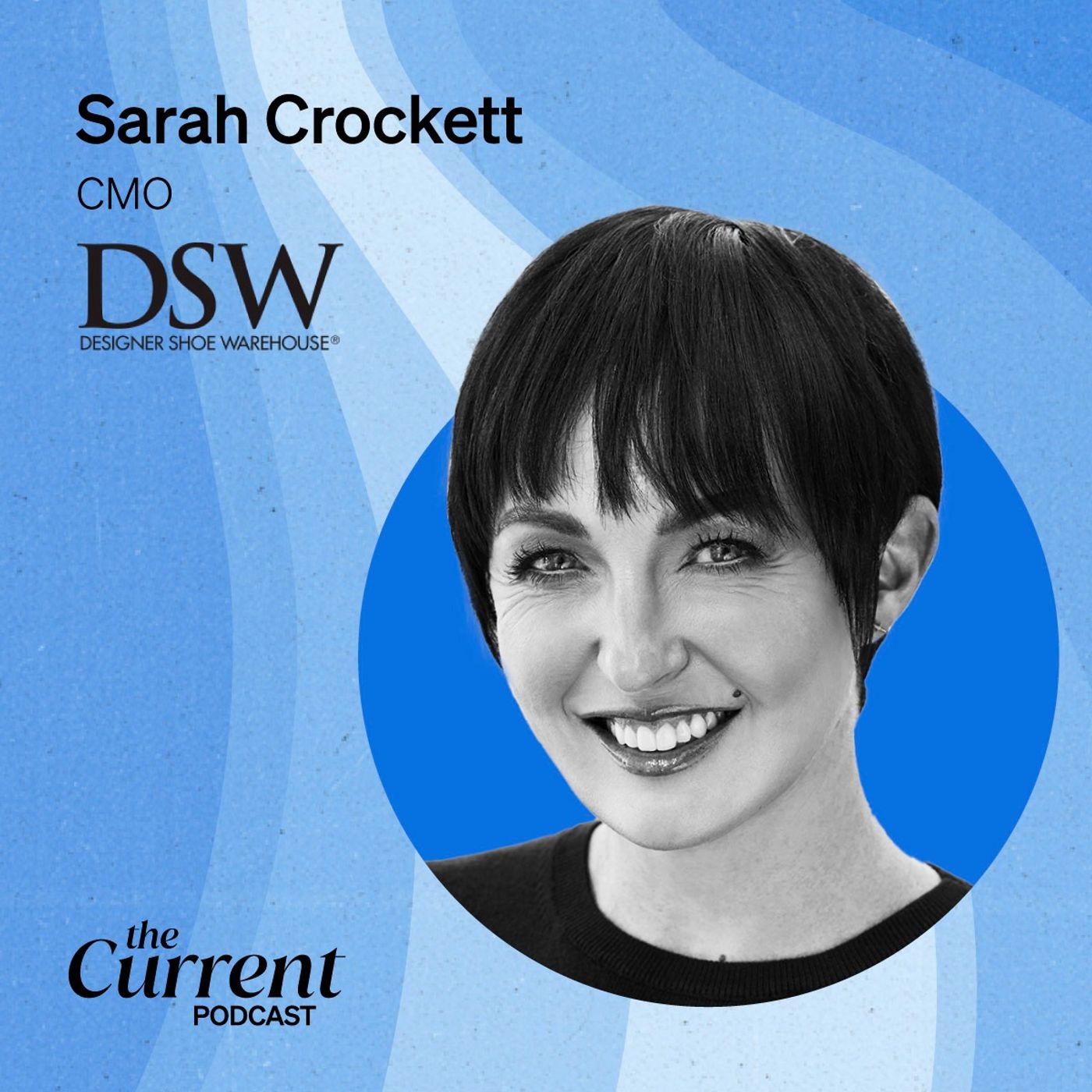
One year into her role as global CMO at Designer Shoe Warehouse (DSW), Sarah Crockett is reimagining how the legacy retailer shows up for today’s consumer — across 500 stores, an upgraded e-commerce experience and a newly expanded digital media mix.
May 7, 202529 mins
One year into her role as global CMO at Designer Shoe Warehouse (DSW), Sarah Crockett is reimagining how the legacy retailer shows up for today’s consumer — across 500 stores, an upgraded e-commerce experience and a newly expanded digital media mix.
Dive into more insights and inspiration from leaders in ad tech: https://www.thecurrent.com/
Hosted by Simplecast, an AdsWizz company. See pcm.adswizz.com for information about our collection and use of personal data for advertising.

Milk is back in the cultural conversation. Miranda Abney, MilkPEP’s VP of marketing joined The Current Podcast to explain how a marathon for women helped boost milk’s messaging.
April 30, 202533 mins
Milk is back in the cultural conversation. Miranda Abney, MilkPEP’s VP of marketing joined The Current Podcast to explain how a marathon for women helped boost milk’s messaging.
Dive into more insights and inspiration from leaders in ad tech: https://www.thecurrent.com/
Hosted by Simplecast, an AdsWizz company. See pcm.adswizz.com for information about our collection and use of personal data for advertising.

Firestone Walker Brewing Company’s CMO says connected TV has made it easier to reach its sports-loving customers.
April 23, 202521 mins
Firestone Walker Brewing Company’s CMO says connected TV has made it easier to reach its sports-loving customers.
Episode Transcript
Please note, this transcript may contain minor inconsistencies compared to the episode audio.
Damian (00:01):
I'm Damian Fowler.
Ilyse (00:02):
And I'm Ilyse Liffreing.
Damian (00:03):
This week we're really excited to talk with Dustin Hinz, the Chief marketing officer of Firestone Walker Brewing the craft brewery based in California.
Ilyse (00:12):
Dustin has been the chief marketer at Firestone for almost six years. He's an award-winning marketer who knows how to build a culturally relevant brand.
Damian (00:21):
Also, he's a musician and he helped build Guitar Center into that powerhouse brand It is today. He worked there for 17 years and you can ask any guitarist about Guitar Center and its Importance. And then he was an Ernie Ball music man, which is famous for its guitar strings, which I love. I'm curious though, Ilyse, do you play the guitar?
Ilyse (00:40):
I wish, but Okay. Damian, we're here to talk beer and how to market it in a crowded marketplace. So let's begin. So Dustin, can you tell us a little bit about Firestone and the brand 805? It seems it really has a West Coast vibe just like me. I'm from the West coast so I can see that. I feel it.
Dustin (01:04):
Firestone Walker is the culmination of David Walker and Adam Firestone's love for beer. And they met back in the nineties when David fell in love with Adam's sister and there's great stories about that. And then they found they had this mutual love for beer and the central coast of California. David being an expat in British and Adam being a Californian, they founded this amazing brewery on the central coast and really focused on just a few craft beers. DBA was their first beer and then Union Jack and there was a lot of craft was sort of an early movement. And then back in 2012 they stumbled upon this idea of 8 0 5 and 8 0 5 is the area code for the big swath of the Central coast, a big piece of California all the way down to Ventura County where actually I grew up. We like to say that the goal of 8 0 5 is to be the most globally recognized, regionally available beer in the world.
Ilyse (02:03):
Very cool. But there are a lot of beers out there, even craft beers. What would you say is the point of differentiation? Is it the taste? Is it the West coast vibes? What would you say?
Dustin (02:15):
I think the biggest point of differentiation in beer is the brand position. Obviously great brand position and great marketing is not going to solve a lousy product, so you got to have amazing product and we're trying to focus on being odds of the evens and really investing in our own legend and trying to stand for something and be the alternative choice. And thankfully beer is so big and there's so much opportunity that you can carve out a pretty nice size of the pie for yourself if you want to focus on being the alternative premium choice.
Damian (02:43):
One of things that you just said about the importance of marketing and how marketing can drive the business seems key to this. Is there anything that you could point us to that you'd say, this was the moment where I created brand awareness above and beyond or something like that?
Dustin (03:05):
The first one with the traditional 8 0 5, the black can I was very lucky to inherit five and a half years ago a slogan called Properly Chill and Properly Chill sort of was the slogan for this idea that life on the central coast was a little different, right? And what we did last year and then going into this year, and I believe that this is going to come out right around this new campaign is going to drop, is this idea telling the story of our brand through the lens of our customer. We have this amazing roster of ambassadors, we call them Authentico and eight oh five Authentico and Professional surfers, motocross Riders, boxers, MMA, fighters, artists, tattoo artists, you name it, it spans the spectrum. There's over 50 of them and they kind of cover every single different customer group that we believe the brand represents and we tell the story of that brand through those consumers or through those athletes.
(04:06):
And then a couple other examples were what we did was Summer of Cervesa when we launched the extension of 8 0 5, the first extension after 10 years, which was a Mexican lagger themed version of 8 0 5 with a little bit of lime in it. And the idea at the time was when you were looking at the marketplace, Mexican laggers were really on the rise. Corona obviously as an incredible background. Modelo has now at this point become the number one brand in the US surpassing Bud Light and Consumers were definitely reaching for this idea of sort of an escapism beer. So when we launched the campaign with summer survey, so we realized that we had to do something to stand out and create some differentiation between 8 0 5 blonde and 8 0 5. And so the 8 0 5 cervesa campaign was the first time we ever showed the product in color. 8 0 5 has been black and white since its inception in 2012. And with 8 0 5 Cervesa was the first time we ever put the product in color in the advertising. And it was a game changer. I mean, we sales went from moderately successful to up 20% pretty consistently because we were able to create that differentiation in the idea that Cervesa was a light and refreshing product.
Damian (05:24):
Wow, I love that just by adding color. But it is interesting that you started out in black and white as a kind of campaign. Why black and white?
Dustin (05:32):
I think they realized they needed to do something different to stand out back then. And trust me, it is a conversation pretty regularly when we're working on new ideas of, there is a lot of consternation around the idea of how do we maintain the brand identity and not stray from it because we want to be timeless, not timely. So we're very, very focused on, hey, every decision we make is going to have an impact a decade from now, two decades from now. Because the greatest brands in beer are multi-generational.
Ilyse (06:02):
Totally. And I know we talked about this earlier because it can be really difficult to market alcohol products, especially on platforms like social media where there are age roadblocks. What are the channels that you decided to lean into for these campaigns and are there any that you're experimenting with now?
Dustin (06:24):
I'd say at-home is a good third of our total media investment and then a big shift to TV about two years ago. And with connected TV platforms continuing to become more robust, it's made it a hell of a lot easier for us to get more geo-targeted because I think that spray and prey doesn't work when you're a regional brand and you want to get really focused on zip codes and you want to try to drive measurement. And so connected TV has been huge for us and whether that's through our partnerships with the World Surf League or we're just doing a sports our brand, what we know though is that from all of our consumer data is that a huge percentage of our customers are sports fans. They watch a lot of football, they watch a lot of baseball. So what we do is we take our brand to those channels and through partnerships like ESPN, we've been able to really connect with consumers and drive some really nice measurable lift for the brand. You're watching a sports game and you're going to see beer brand X or insurance brand X with an athlete for that sport. And then you see our spot, which might have a bull rider in it or a surfer or a motocross rider, and it just stands out
Ilyse (07:33):
With your brands embrace of sports and kind of that measurement piece of CTV, you must love that more live sports are coming into the connected TV space.
Dustin (07:47):
I think the beneficiaries of this sort of democratization of content and it's making things more competitive. So as you see the Disney Network, Hulu, ESPN, or you go to YouTube TV and some of the other platforms that are continuing to open up, it makes it really easy to be competitive in the space or to at least have a voice. I think our team's been really good at identifying those opportunities, proving the efficacy of those investments so that we can continue to do them.
Damian (08:15):
You hinted at something about the seasonality of marketing and I'm kind of interested in that as a marketer of beer and I guess in lots of ways, as you said, you're kind of marketing lifestyle, you have associations with surfers and athletes and the summer. I'm curious how often you think about the need to refresh campaigns and how do you keep them relevant to the culture cultural moment?
Dustin (08:42):
Yeah, great question. You definitely have to, in beer, especially with the retail partners, you need to be seasonal. I spent the first 20 years of my career on the music side as a retailer, so I know what retailers want. They're going to want, Hey, it's Memorial Day, I'm going to have a display in my store for a week and a half, two weeks. It better fit the theme of Memorial Day. Now how you do that, you can do that without just stars and stripes. There's other ways to do that, but the I idea of escapism and patriotism to a degree, but when you look at the retail calendar, there are a myriad, there's like 16 major temples that you have to win. So our team is definitely working to make sure that we're taking the overall thematic of our brand and pulling that down into those temples.
(09:33):
And that fits the larger brand story because obviously you don't want to have 16 different TV spots throughout the year. So we'll have several different campaigns throughout the year, but then those drop down into Cinco de Mayo or Day of the Dead or 4th of July. So you have to, depending on the channel that we're in, yeah, some stuff has to be far more granular to make sure that it's serving the need of that retailer or the desire of that retailer, and as well as making sure that we're still maintaining the brand identity that we want to have. While everybody else does Super Bowl and does football, we're doing the World Surf League pipeline, which is the Super Bowl of surf, so is the official beer of the WSL when everyone's doing Super Bowl, we're doing surfing.
Damian (10:10):
Now, Dustin listeners can't see this, but I know behind you you've got some fantastic vintage guitars there, which I wanted. I know that you are a musician and before you worked at 8 0 5, you worked as a marketer in the music industry, including for Ernie Ball, music Man and Guitar Center. And I'm kind of interested in the kind of synergies that you might have found there between marketing to musicians and the kind of now the position you're in now marketing beer.
Dustin (10:42):
It's really sort of a story of serendipity. I got my first guitar when I was 14 years old and it sort of changed my life. Music just bordered became this obsession and it's what I wanted to do, started a band and typical story, didn't go to college, was like college, I'm going to be in a band, mom, what are you talking about? So I begged her at the time she was working, she was the executive assistant to the CEO O of Guitar Center back in the nineties when they were still a small company. And I said, Hey, just give me a job in the mail room or something, and so just give me the summer. Let me prove to you that my band can be in great before I have to go to college. And so she got me a job in the mail room and said, three months, that's it. And three months turned into 18 years.
(11:35):
I worked my way up to vice president and that typical age old story. But what I found really early on when I got there was, and I remember there was a moment, I was there a couple of months working in the mail room, excited in the mail room is right next to the marketing department and there was a great VP of marketing. It was Mike. I still talk to him to this day, 20 something years later. He always says, his joke is, you're the best hire I ever made. But I remember looking at the marketing materials and saying to the guys like, Hey, we're not marketing to, I'm the customer. Why don't you talk to me? We should change the way that we talk to the customers because this doesn't make sense. I'm the customer, I don't want to read this. So I pitched him some ideas and he's like, yeah, that's a great idea. You want a job in marketing?
(12:18):
And I went from $4 and 50 cents an hour to $9 an hour. I thought it was rich. I'm 18 years old. And I started that journey. And I think what I realized really early on, and what was great about Guitar Center was that our mission was to mint new customers. We realized early on through a great visionary, CEO, we had Marty Albertson was that we had to make sure that we were creating musicians. There wasn't a lot of 'em. When you think about the population of the world, it think it's like 2% our musicians. So if you want to continue to sell guitars and you want to continue to sell instruments, you've got to inspire people to want to play music. So our mission became taking this great feeling and propelling that and perpetuating it to get more people excited about it. And we became a platform for artists and creating, over the course of my 20 years, I got to create TV shows and write documentaries and make slashes documentary.
(13:09):
I got to things that you would only dream of when you were a kid to make art with other artists that inspired the world. And I think the common thread through all of that was that great marketing, great brands stand for something clear and enduring. I'm very, very lucky that as a songwriter and a musician early on, that I found this extension of that creative process to sort of keep me inspired. I mean marketing in a lot of ways, your writers, your songwriters, your creatives, and you get to do that while also tackling, for me at least the necessary evil of lift analysis, analytics and
Damian (13:46):
Some of those things that come with the business. Our musicians have to be marketers these days anyway. Right.
Ilyse (13:50):
That's very true. And that 2%, we at least have two in our miss because Damian's a musician as well. But yeah, it's so interesting that you talk about that area of the population and in some ways it's almost harder to reach those very niche communities.
Dustin (14:09):
Yeah, there's that great quote. I don't know if it came from Nike, it was probably Nike, but what's that speak to the core loud enough that everyone else can hear? I mean, I think that's been a mission of music. I mean, remember the indie movement or the punk movement, it was like everybody didn't want to be mainstream, and it was just like, do this thing, own your audience. And then what happens is the cool thing, everybody wants to sit at the cool table. Everybody wants to be a part of the movement, but you can't market to the people that want to be in the movement. You have to market to the people who have started the movement, and then what happens is then you can maintain some credibility.
Damian (14:40):
I'm just curious to get your high level perspective on what do you think needs to change in the ad marketplace today, which as we all know, is very much digital programmatic.
Dustin (14:52):
I think product placement right now, especially on podcasts, is just incredibly oversaturated. And I understand that when you've got a major budget and you're moving money around and you're trying to do everything you can to drive eyeballs, but I have this conversation all the time with the agency. I'm not interested in the most amount of eyeballs. I want the right ones. And when I look at a podcast and I just see energy drinks on tables and then right behind it, I see a Starbucks cup and the cans aren't open, I just think there's too much of that going on. To me, there's not real connections. So I think one of the things for me that's just unfortunate is because of the amount of money and the amount of ad money that's available and it's all moving from different platforms, is that sort of approach has created, I think a really high level of high bar for entry into some of these categories.
(15:40):
The expectations of money that are tied to some of these opportunities are so overblown. So I think that to me, that's always been something that I've always struggled with that I always hope is going to work itself out and well. I think that you go through ebbs and flows, especially when times get tough, people will cut back on their marketing, they cut back on sponsorships, and that's when opportunities open up. And if you're smart and you manage your money effectively and you have dollars, when other brands are carving back, that's when you can start to find really interesting opportunities. But for me, yeah, influencer marketing, product seating, I've never been excited about it. One of the things that we say all the time at Firestone Walker is keep the main thing, the main thing. And by doing that, we put on ourselves from chasing too many squirrels in the backyard.
Ilyse (16:30):
I love that.
Dustin (16:31):
Yeah.
Ilyse (16:32):
Is there anything you are obsessed with figuring out right now?
Dustin (16:35):
I mean, we sell millions of cases of beer and our first party data. We've done an amazing job of our first party data, emails building customer attention, but there is this weird thing with social, and I'm just obsessed with trying to figure out what it is. And our agency's got great relationships with meta and these platforms, and nobody, one can seem to give me the answer of what is happening on the backend within the algorithms that is preventing some of the biggest brands in the world with tens of millions, if not hundreds of millions of consumers. This ability to create real audiences on these platforms, because we live in a world now where all content is consumed through just a few channels. When you think about YouTube, whatever happens with TikTok, Instagram Meta, et cetera, there's a only handful of channels where a majority of all of the content consumption is taking place.
(17:31):
And if every single one of those has a toll booth between you and your customer, but then there's also a filter that is preventing you from really building your audience. I'm obsessed with trying to figure that out. If we do believe in this idea of the zeitgeist and that culture matters and that brands stand for something clear and enduring, the world is going to continue and down this digital path. And sure, point of sale and billboards and TV advertising are great ways to tell people about your brand, but it is the way to get your arms around them. It's going to be on these platforms and the ones that are coming. And I think that's what the industry as a whole is always the industry as a whole struggles with this. And I think it can be dangerous in the sense that you over obsess it and then you put too much money into like, well, I got to grow followers, or I got to grow my audience. Versus like, well, I just got to drive, drive affinity in purchase intent. And so that's, I think the balance of how do we focus on stuffing the funnel, creating a tremendous amount of energy for our brands. The right partnerships is omnipresent in the right cultural segments that we want to be in, but at the same time try to figure out how we can expand our tent and get more people into it.
Damian (18:46):
Wow. Ali, I love that conversation with Dustin. I mean, it's not every day you get to talk to somebody who's a musician and a marketer and who's able to tie both of those things together so well as he did. But what was the standout thing to you that he said?
Ilyse (19:02):
I think what really stuck out was kind of playing how Firestone and Dustin kind of play that fine line of keeping consistent, but also not being too rigid and trying new things with customers. I know with 9,000 plus breweries, it's kind of crazy that there's so much competition to stick out and beer brands have to stick out. But what he said was really interesting about staying consistent with an agency and measurement and really trying to find, making sure that what you're making art essentially actually makes sense.
Damian (19:45):
Yeah, I agree with you and I feel like one of the most powerful things he said to me was when he was at Guitar Center, when he was there for 17 years, his vision was to mint new musicians and identifying that only 2% of the world population, 2%, I think he said musicians. So you have to inspire more people to want to create music. And taking that sort of core philosophy and applying it to his current role at 8 0 5 seems to be something that's driving him as a mission driven marketer. I think as he said, great brands have to stand for something enduring. So in that regard, I think he's really smart, and to do this at this cultural moment where there's so much fragmentation, that is one way to help him clear through all the clutter and stay focused.
Ilyse (20:30):
Yeah, I think one of my favorite quotes too was like keep the main thing, the main thing, and that keeps us basically from chasing those squirrels.
Damian (20:44):
That's it for this edition of The Current Podcast. I'm Ilyse, and I'm Damian, and we'll see you next time.
Dive into more insights and inspiration from leaders in ad tech: https://www.thecurrent.com/
Hosted by Simplecast, an AdsWizz company. See pcm.adswizz.com for information about our collection and use of personal data for advertising.

Dow Jones CMO Sherry Weiss reveals the marketing strategy behind growing subscription businesses for publications like The Wall Street Journal.
April 16, 202526 mins
Dow Jones CMO Sherry Weiss reveals the marketing strategy behind growing subscription businesses for publications like The Wall Street Journal.
Episode Transcript
Please note, this transcript may contain minor inconsistencies compared to the episode audio.
Damian Fowler (00:00):
I'm Damian Fowler.
Ilyse Liffreing (00:01):
And I'm Ilyse Liffreing
Damian Fowler (00:02):
And welcome to this edition of The Current Podcast.
Ilyse Liffreing (00:09):
This week we're delighted to talk with Sherry Weiss, the CMO of Dow Jones.
Damian Fowler (00:14):
And Sherry's responsible for growing Dow Jones' subscription business across the publisher's. Numerous business titles, which include the Wall Street Journal, Barron's, MarketWatch, and Investors Business Daily,
Ilyse Liffreing (00:26):
But that's not all. Sherry also heads up the brand and enterprise go-to-market strategy for Dow Jones Research and Newswire services like Tiba
Damian Fowler (00:35):
In an era where publishers are facing many challenges to their business models. From the pullback of third party cookies to the advance of ai, Sherry gets into how the publishers answering back by building a subscription strategy.
Ilyse Liffreing (00:48):
We start off by talking about the Wall Street Journal's latest campaign.
Sherry Weiss (00:56):
So it's your business. It's not only our new campaign, but our new brand platform, which we launched in June of last year. A little bit about the history of how we got into this new platform. So our previous platform was Trust Your Decisions and I joined the organization about two and a half years ago. One of the first things that the team and I did at that point in time is really dive deeply into understanding our current and then our future growth audience needs. And when we were going through that research, one of the things that came out was the idea around trust and how that's table stakes
(01:33):
And what our audience are saying that's a given and kind of don't tell us to trust you, we will determine that. And so we realized that there was this need to speak a little bit differently to our future audiences and also to crack the code on what Wall Street Journal is. So Wall Street Journal is a storied brand, it's well known, but oftentimes we were seeing with our growth audiences that people did not think the journal applied to them. And in all of our customer research, what we were beginning to piece together is the folks that read the journal and folks that we believe are our editorial content applies to. They have a lot of similarities underlying them. They're all ambitious, they want to be knowledgeable, they're quite intellectual, but they may be in different stages of their career. And so part of what we needed to do with this brand platform was help bridge the gap is to explain to our future audiences why the journalist for them.
(02:31):
And the other thing that's interesting about this campaign is that it's the first time in quite some time that we truly leaned into the journalism, our actual core product. And in that campaign we brought out specific articles into the actual campaign and balance those articles between things that you would expect the journal to write about and things that you would not expect us to write about. And a really good example is that we had an article around folks that were becoming lifelong renters and those were decisions that they were making. And so one of our headlines leaned into that. Another one was around make hotdog economics your business when you talk about food and inflation. And that was showing up in a hot dog truck. And the great thing there is it killed two burns with one stone because we were able to go loud with an awareness campaign, but it also enabled us a way to drive back to sampling. And in all of our campaigns we had QR codes, it actually drove back to the original article and that was quite successful.
Damian Fowler (03:38):
That's really fascinating. One of the things before we get into what you learned from this campaign, how did you identify where those potentially net new audiences readers were coming from? You say you have this core group of people who are interested in business, but then you have people who are kind of adjacent to it but also interested in business. I'm just curious, how did you think about that and how did you sort of build that into your strategy?
Sherry Weiss (04:06):
Sure. So everything we do is data-based and customer reader first. So as part of this re-looking at our platform, we did a deep audience study and within that audience study we went out obviously across the market around news readers who are willing to pay and really started having deep conversations, both qualitative as well as quantitative research into what people are looking for and also finding common threads around attitudes and life point of views. And what we found was we have a really core group of readers tried and true folks that you would expect over index more into investing and working on Wall Street and more of your traditional business folks, but business expands so much more than that. And what we were finding is that there were a deep growth area where there are people who are outside of what we would say are our traditional professions, marketing, consulting, government actually that have, they are interested in the type of content that we write, they just may not be aware that we're writing it. And again, as I mentioned, we're also looking at our audiences that it's not so much around your profession or where you live, but the attitudes in which you hold in common, right? So your desire to be well-informed, your ambition to get ahead in whatever way you want to get ahead, they all have that in common. And so that's really how we started crafting the growth audiences. And then obviously within that with the research we gleaned a lot of information on where they're engaging and that's where we would go out to find in marketing. Interesting.
Ilyse Liffreing (05:51):
Now you said the first phase of the campaign started in June and I remember going to the Wall Street Journal house in Canon, seeing that all over the place there, what other areas did the campaign come to life in that aspect besides maybe the articles?
Sherry Weiss (06:09):
Sure. It's interesting because again, all of everything really in the campaign, everything that we put forth had an article that was underlying it. But the cool thing about it is that you could do what you would call traditional marketing. So display on social out of home, we did a Penn Station takeover, but you could also, we were able to leverage this campaign to make it more experiential as well. So as you mentioned, we had the Wall Street Journal, cafe A can. If anybody listening was in there, you probably saw there were things like our salt and pepper shakers and on there had QR codes that had, I can't remember the article that we raised there, but it drove back to an article that had something to do with salt and pepper on the menu. Everything had a article that was associated to it. And so there was an article that we were featuring Make Sleep, divorce Your Business, and we were able to put that above a space that was a mattress store, make EV economics your business, and we would take out space in charging stations so you could take the content that we write about, which is so embedded in every day, build it into the context in which a potential reader is engaging and that actually cracks the code, right?
(07:24):
It's your business. It's so much more than stock trading or what's happening in banking these days.
Ilyse Liffreing (07:31):
Yeah, it's everywhere.
Sherry Weiss (07:32):
Yeah, exactly.
Damian Fowler (07:33):
And you're sort of changing perception
Sherry Weiss (07:35):
Of
Damian Fowler (07:35):
The paper.
Sherry Weiss (07:36):
Yes, definitely.
Damian Fowler (07:37):
And now obviously the Wall Street Journal is one of several publications that you manage. I guess it's maybe the vanguard of the Dow Jones Business publications, but you have many other prestige publications like Barron's Investors Business Daily, which is probably more niche for people actually on the front lines of business. When you think about the whole portfolio, are there crossover audiences or are they distinct audiences?
Sherry Weiss (08:04):
I mean, the short answer is yes and yes. So the nice thing is, as you had mentioned, we have a four premier consumer publications, wall Street Journal, Barron's, MarketWatch, IBD, all of them in one way, shape or form is journalism with a business lens. But each one provides a different take on an issue or a topic and serves a different purpose. And you mentioned IBD, right? IBD is really focused on helping people make decisions on trading in growth stocks. And it's not just about information but tools that investors can use. And so we believe that there are, again, taking an audience first approach, there are audiences that fit squarely into each one of those publications but may not overlap. But we also believe that there are audiences that would find value across all of our publications. And interestingly enough, we had done some testing into this over the last two years, really more so from a marketing offer.
(09:10):
What happens if you bring somebody on with an introductory subscription offer to a variety of our publications? And we found that number one, people were opting into it at really high take rates. We also found that once they were on this proposition, people were reading actively across our publications were very engaged and increased engagement over standalone and retain better. And so we've now made this into a true proposition WSJ Plus, and this is just the beginning, but basically we target very specific audiences who are investors who are hungry for knowledge from all different angles, and WSJ Plus is a platform that enables them to do that.
Damian Fowler (09:56):
What was the kind of goal there? In a way,
Sherry Weiss (09:58):
The main goal is to provide additional value and deep in relationships with our subscribers and frankly our future subscribers. But we know across our ecosystem that we have news and information. And then if you think about Dow Jones overall and news data information and analysis to help people, whether it be you as a person outside the office or in a professional capacity to make decisions. And so the idea around the plus offering is how do you open that up so that your readers are able to find additional ways to find value with you
Ilyse Liffreing (10:36):
When you have so many publications and you are trying to grow a business, that first party data that you get from subscribers is very important. How is the Wall Street Journal and other publications under Dell Jones, how are you guys using that first party data to perhaps reach new subscribers and then I guess carry on that same messaging across publications?
Sherry Weiss (11:08):
Sure. Prior to joining Dow Jones about two and a half years ago, I come out of consumer financial services most of my time in the credit card industry. And for anybody who has worked in credit cards or financial services knows that everything that you do, all of your strategies are seeped in deep, deep data payment companies know a lot about you. And so one of the first things that I did when I came in was really to take a look at how we can start supercharging our strategy to not make it a holistic strategy actually or a monolithic strategy, but really start building out personalized ways of engaging with our prospects and our readers. First from a segment perspective, but eventually we want to get to a way of engaging via a of one what worked in media a few years ago is not going to be the secret sauce that drives growth for the future. And so leaning into unlocking our data and analytics is important. Over the last two years, we've built out an internal analytics team really focused on building out predictive models to help drive our strategies forward. And that obviously is all built off of our first party data. A really interesting one that is in beta right now when you talk about this is more around engaging and retaining our customer base is being able to predict customer behavior based on market fluctuations
(12:34):
And really being able to take not only our first party data but indices and market research sets and pull together into models to say, okay, what flags are there four weeks out from a market shift that could help us determine whether or not we need to think about our retention offers more aggressively or whether we should be leaning into paid media a little bit more to start acquiring customers on certain products that perhaps are more sensitive to market shifts.
Ilyse Liffreing (13:06):
That's so fascinating. So basically if the market is down, say like today if the market is down, you can predict that you'll have more readers that day.
Sherry Weiss (13:20):
Well, it could be one of a few things, right? In some respects, and it's interesting because how you apply that model across each one of our products, and as I mentioned it's not just publications but there's tools as well. How you tweak that model to help you make decisions is going to be different based on how someone uses each one of your products. So in some cases, if you have a product that's more geared towards trading and you're seeing swings, let's say the market is swinging upwards, you really want to lean in during that period of time to start acquiring customers because there's an uptick in interest. Or to your point, if you are seeing volatility in the market and they're coming to the journal or they're coming to market watch to understand that that also is a time to really start thinking about is your engagement strategy different? Are you willing to shift again from an acquisition perspective, pull forward media that you would've been spending later in the year? Things like that secret.
Ilyse Liffreing (14:16):
How are you guys able to predict that though four weeks in Advance?
Sherry Weiss (14:19):
That secret secret? That's the secret sauce. Okay. Secret sauce, that's the secret sauce you don't have to tell us,
Damian Fowler (14:25):
But it's fair to say that the marketing campaigns are much faster now and more
(14:30):
Iterative based on current events
Sherry Weiss (14:33):
Very much. And I think that is the other area that we've focused on When I first came in, if you are in marketing in a news organization and you cannot respond at the speed of news, then you are not appropriately supporting your newsrooms. And when we first came in, we did an end-to-end assessment of how quickly we would be able to get creative into market based on breaking news. And it was days and we're now at a place where it's hours and in some case less than an hour. So being able to react that quickly, and it's not just about creative development, but making sure you have your audience targeting in place, you're able to turn things on. It obviously was a mix of people, process and tooling. So yes, we are able to react very quickly.
Damian Fowler (15:20):
That brings us to a question we might call a bigger picture question, but so in terms of the marketing channels that enable you to react to these conditions, where do you see value? Where do you look?
Sherry Weiss (15:34):
Well, let's put it this way. We're looking daily and constantly evaluating where we're putting investment in and where we're showing up. And it's also very product specific. So there's certain products that are quite niche that you're leaning into, really niche influencer strategy for instance. And then there's other that you want to go broad. So obviously traditional channels, paid search, paid social, that all still is very important for us. Organic traffic is still a quite substantial part of our conversion strategy. And so how you show up organically in the ecosystem, if you think about on social media and other outlets, really important. The brand campaign is actually quite important because what we're really trying to do is the referral ecosystem evolves and it perhaps is, well, it's not perhaps is being disrupted. What makes somebody wake up in the morning and want to type in Wall Street journal.com for instance. That's where the brand campaign is really important and why we're leaning into brand marketing more so than we ever have before.
Ilyse Liffreing (16:39):
Now at the same time, publishers are facing multiple challenges to their business models, what's new there, but the pullback of third party cookies to the advance of ai. What has been the most helpful way to stay true to the business during this time of constant change?
Sherry Weiss (16:57):
What just popped into my mind is the quote, my dad always to this day always says, but always told us when we were kids. And it's this idea around adversity breeds opportunity. And so you can think about adversity or changing landscape or changing business models and you can be fearful about it and you can try to push back or you can lean into it. And I think what we're doing is we're leaning into it. The journal as a business has historically leaned into it. So interesting fact. We were the first ones to put up a paywall many moons ago and that was a time of disruption and we're going into a time of disruption now. The first thing is while you're thinking through, alright, what new channels do we want to go into? What brings people to us directly? How do we start building relationships with people in new and different ways?
(17:51):
You also have to lean into and feel really clear about, but who are you and not change that? And so the focus on, we have a storied history about delivering quality journalism through the lens of business that is what we're leaning into. And then trying to find our growth audiences where they are is where we need to crack the code. And what worked before is not going to work in the future. So test and learn is huge. And I know that sounds like a buzzword, but as I mentioned, we, it's not only about predictive analytics that we've introduced, but being okay with rapid testing and figuring out what's working and what's not and then switching quickly to either scale what's working or to stop what's not and everything needs to be measured.
Ilyse Liffreing (18:39):
We've noted and written about recently how certain social media channels have been inconsistent with promoting news, changing their own strategy with that. Is this something that you have to constantly think about and stay ahead of?
Sherry Weiss (18:57):
We can't sit back and rely on refers that traditionally sent traffic our ways. It's not just social media. A lot of places that were traditional referrals channels are really, their business models are looking to keep people on platform and social media. It will continue and continues to play a really important role both not only from a paid perspective but from a organic and amplification perspective. That's where our current and future audiences are engaging. And I think what we need to think about is cracking the code in two ways from an owned and operated perspective. How do we get people to come to us directly, but then also in these off platform channels, how do we show up differently? We've also made a lot of inroads into organic content on TikTok and I think the next place that we have to think about is we're engaging with our future audiences in those areas. How do we then think about new and different monetization models in order to capitalize on that?
Ilyse Liffreing (20:01):
What are you obsessed with figuring out right now?
Sherry Weiss (20:06):
The one thing, and it's going to sound cliche but it is on everybody's mind, is how to start capitalizing on the advent of gen ai. And AI has been around for a long time. We are using a machine learning at Dow Jones most. I talked about predictive modeling earlier, but really the next step on this is how do we start applying generative ai? And when I talk about obsessed with trying to crack the code, it's twofold. How do we leverage this technology to build more value added consumer facing propositions, but also how do we leverage it internally? How do we leverage to start helping us drive our marketing at scale? For instance, how do we leverage it to really start enhancing our predictive models? And so it's something top of mind, it's something that I'm actively learning about. It's something I want my team to really deeply engage in and it's here to stay. So cracking the code on that is important.
Damian Fowler (21:10):
Is marketing a science or an art?
Sherry Weiss (21:13):
Both marketing is both an art and a science. And if you miss each side of it, you miss the secret sauce of it. You can lean too far in each direction. Obviously I would say that I'm more of a science first marketer. That's where I lean first. But if you miss the human element, you can go way far into data and you miss the human element, the way you connect with people, your marketing is not going to resonate, it's not going to land. And it's interesting because I'm not going to be able to state the exact fact, but there was something that I saw at a speaking event the other day where it was saying, when you think about your testing agenda, you can actually make more progress in your creative testing than in your pricing. And that was an interesting thing because that says something about the art of marketing. How do you connect with your audience? And so to that point, although I just said that I tend to be more of a science marketer, most of my decisions are how I figure out how to engage with audiences is everything is based on what the customer is saying first. It's an outside in versus what we are assuming we should be saying to our end users.
Damian Fowler (22:27):
What would you do if you had an unlimited marketing budget?
Sherry Weiss (22:32):
Oh my goodness. All right, let me get the list out. It's like Santa came a hundred, a hundred cafes
(22:39):
A hundred. Well, no, interestingly enough, I guess that's where I'm going to lean into if I had an unlimited marketing budget. When you're trying to determine where to place your next dollar and you're talking about the mix of art and science, for better or for worse, you lean towards the science. And so your next dollar is always going to be you have to make the trade off of, am I going to place my next dollar in something that I know will return? Why? Or am I going to place my next dollar into something that's really unique, different, may not be measurable, but is breakthrough? And if I had an unlimited marketing budget, there would be Wall Street Journal cafes all over the place. Really being able to lean into really interesting different types of experiential events at scale could be really fun.
Ilyse Liffreing (23:30):
That was a great conversation with Sherry. Damien, what were some of your takeaways?
Damian Fowler (23:34):
Yeah, I love hearing from people who are marketing publications probably because I come from a background of journalism and it's always fascinating to hear, talk about how to build and find new readers, which is basically the big question for publications everywhere. When you've got a brand like the Wall Street Journal though, which is really a premium newspaper, probably the Vanguard newspaper in the United States along with the New York Times. It's interesting to hear Sherry talk about how she's trying to find those readers that might not be obvious beyond the business community and how she's using marketing to broaden that reach along with the tagline, which is it's your business. Business is everybody's business. And I think we increasingly realize that and it's smart of her to build a marketing campaign around that concept.
Ilyse Liffreing (24:24):
No, I know what you mean Damien. And what really interested me too is, and I wish she would've revealed her secret sauce here, but it's fascinating how they're able to predict their audience four weeks ahead of time and to be so on the cutting edge with news. And as she spoke about they had to reinvent the wheel a little bit and how they can cover certain news events with their team, being able to predict those insights of how their audience is going to react so quickly ahead of time is so powerful.
Damian Fowler (25:01):
I think that was really a great point. And the fact that marketing moves so much faster now based on what's happening. And especially for a publication like The Journal, which is built around market fluctuations and obviously has a huge political and business readership. So it's really important for them to be able to react to what's happening. And that was a big takeaway for me, talking about the speed at which now marketing moves, which is not built on six month or annual campaigns, but much more rapidly iterating as it were, which is that word we all use in the marketplace.
Ilyse Liffreing (25:38):
No, that's very true and that's what I'm going to think about the next time I go to Wall Street Journal Cafe as well.
Damian Fowler (25:47):
That's it for this edition of The Current Podcast, and I'm Damian, and we'll see you next time.
Dive into more insights and inspiration from leaders in ad tech: https://www.thecurrent.com/
Hosted by Simplecast, an AdsWizz company. See pcm.adswizz.com for information about our collection and use of personal data for advertising.

Stellantis’ CMO Raj Register talks about building consistent storytelling across channels, what she’s learning from AI and why she’s obsessed with connecting marketing action to tangible business outcomes.
April 9, 202528 mins
Stellantis’ CMO Raj Register talks about building consistent storytelling across channels, what she’s learning from AI and why she’s obsessed with connecting marketing action to tangible business outcomes.
Episode Transcript
Please note, this transcript may contain minor inconsistencies compared to the episode audio.
Damian Fowler (00:00):
I'm Damian Fowler.
Ilyse Liffreing (00:01):
And I'm Ilyse Liffreing.
Damian Fowler (00:02):
And welcome to this edition of The Current Podcast.
Ilyse Liffreing (00:09):
This week we're delighted to talk with Raj Register, the Senior Vice President and CMO for North America at Stellantis, one of the biggest names in the global auto industry.
Damian Fowler (00:19):
That's right. Stellantis is the powerhouse behind iconic brands like Jeep, Dodge, Ram, Chrysler, and so many more.
Ilyse Liffreing (00:26):
And as our North American fans may be well aware, stellantis just ran off one but two high profile spots at the Super Bowl in February, both featuring major celebs,
Damian Fowler (00:37):
Glenn Powell as Goldlock in the Ram Super Bowl commercial, and Harrison Ford who rarely appears in ads starring in the Jeep commercial.
Ilyse Liffreing (00:45):
Let's get started.
Damian Fowler (00:51):
The first thing I want to ask you, Raj, is how did it all come together?
Raj Register (00:55):
Yeah, that's a great question and not the most straightforward way that many would think. So at Stellantis we have something called a jump ball. And Jump ball basically means that we curate several agencies and we allow them to pitch and based on the pitch how we brief them and whoever comes up with the best idea pretty much wins the business. So for this past Super Bowl, we spoke to around 35 plus agencies and we were able to round them out to the best two, one for Ram, one for Jeep. So we go through several rounds of creative, we determine what's the best story, how does it really relate to our business? And from my perspective it was what's the best creative outside of that? Then what's the best thing that will help give us more runway past the Super Bowl? So outside of the creative is the business aspect and how are we going to perform and make sure that it delivers upon all of our goals.
Damian Fowler (01:56):
Now everyone knows, I guess at this point that the Super Bowl ad spot is one of the most coveted in the world and one of the most pricey I suppose. But wanted to ask you why was it important for Stellantis? I mean, you're the only order maker as I understand it, to have a spot during the game this year. Why was it important for you?
Raj Register (02:14):
There's a lot of dialogue around why were we the only one. I saw it as an incredible opportunity for us to be auto exclusive. When do you get to do that? During Super Bowl? It was really important for us to show up, not only to show that we're here, not only are we American born and we are proud of our brands, but when we think of everything we have to offer to our consumers, we wanted to leverage this as an opportunity to tell that story and give them an indication of who we are. And it was almost like a reintroduction back to America as well as supporting our UAW workers, supporting our dealers, supporting our employees. So I think it was a rally cry for us to just let everyone know that we're here and we're here to stay.
Ilyse Liffreing (02:58):
That's awesome. And such terrific actors in both of the commercials, Glenn Powell and Harrison Ford, and I feel like they speak to definitely different generations obviously of fans and types of moviegoers potentially. What were the main challenges of securing the talents?
Raj Register (03:16):
Gosh, so Glenn Powell, so we already have an established relationship with him for Ram. He did a really nice job with us for our integration that we had with Twisters. And so for him it was more of a natural fit. He has this serious nature, but he's also very funny. And so when we came up with the idea of Cody Lakson the Three Bears and using that old American fairytale to help bring to life something really cool and unique glim, I mean it was like a no-brainer, like let's extend this relationship because he's easy to work with, but then also he brings a lot to the table to help us with bringing things to life. So he was very involved with making sure that our script and how things showed up were authentic to him. But then also because he knows us as a brand, he knew certain things to lean into.
(04:03):
So he was a really good partner in that way. Harrison Ford was a lot more difficult for us to secure. So quite frankly, and if you've looked at any of the behind the scenes that were done, Harrison talked about his first answer was No, Olivier and a group of us went back and he started with a different script, one that paid homage to Harrison Ford, but then also related to us as a brand and the freedom of America. And so once we were able to align on the idea and have a script that Harrison actually reacted to in a positive way, he actually reviewed it with his wife and she said, now that's good. Then it was a matter of, okay, well who's the director who could work with him and make sure that this comes to life in the way that he's proud of as well as us? We tap James Mango and that was incredible. So they already have a really good relationship. Mango did four versus Ferrari, so he has this really extensive background in movies, but for commercials, this was, I believe it was his first one. And so just balancing the star power of Harrison, Mangold and Olivier, it was like the trifecta of greatness I would say. But it took a while for us to get to where we needed to be. We shot our Super Bowl at three weeks before,
Ilyse Liffreing (05:24):
Which that is a tight turnaround.
Raj Register (05:27):
It's a lot of pressure, but being on set and getting everything together, Harrison was amazing, but that one was definitely a day by day, how are we going to get this done? And just making sure that he felt comfortable with the commercial and it came out better than I could have expected. But that one definitely was a challenge, but in a good way.
Damian Fowler (05:48):
And it's interesting to note that Harrison rarely does commercials, so it was an amazing coup for you to get
Ilyse Liffreing (05:53):
Him. Totally. And yeah, it's great that it came, but it's also a great example of the brand campaign overall because it's the power of choice and why was this the right message for the moment?
Raj Register (06:08):
Yeah, so just to clarify, so power of choice was our Ram ad and freedom of choice was our G ad. And so the reason why we chose those bookends of power and freedom one is it's the breadth and the quilt of America being able to make a choice and be happy and stand up for whatever it is that you want or whatever you believe in. The other part was is as we think about the way the automotive business is changing, there's a lot of energy around what type of vehicle should you choose? And our stance at Stellantis is, one, we want you to love our brands and our vehicles first, and then you make a choice as far as what platform or what energy you want. In both commercials we were able to highlight our ice vehicles, which is our gas hybrid and all electric.
(07:04):
With that being said, it's hey, making a choice should be fun. There's a lot of negative feedback around Bev versus not, or should you have a gas vehicle versus not. And for us it's you have the freedom or power to choose the vehicle that's best for you, and we want to make sure that you make a choice with us and giving customers the education of we are a company for a person like you and we just want you to choose with us. And so that was the premise of it and we were able to do it on one end very humorously. And the other was more around the freedom and pride of being American and being able to make a decision for yourself.
Damian Fowler (07:43):
Now, one of the most interesting things about the Super Bowl this year was that it was also streamed on Tubi, which is Fox's fast channel. And I wanted to get into this in terms of the campaign. How did you think about and come up with a digital strategy around that that goes beyond the second quarter ad?
Raj Register (08:03):
Yeah, so I'll just say even for the day of, it was interesting because being at Super Bowl, I got a chance to see what was happening on the two B app and really being able to just see the integration and being able to not only see our ad live, but also our halftime show. So that was incredible to see live TV while you're on the spot because it's a different experience. What consumers see at home is not the same as what you see in the stadium. The important thing for us was leveraging all opportunities from TV to streaming to social, to tell a complete story. And we want it to be just, okay, here's the TV spot and move on. How can we leverage other avenues to make sure that our story is getting out there and then continuing the story with our consumers or those that are interested in learning more. Yeah, there's a group that are watching on TV or in a environment where they're in a sports bar or something like that, but you also have these other group of customers that are watching on their phones. And so that's why it was important for us to leverage all avenues and all media channels to make sure that our collective 360 story was getting out there.
Ilyse Liffreing (09:11):
Totally. Did you know that it was going to be streamed on Tubi when you first made the buy?
Raj Register (09:17):
No, we didn't. And so I learned when I was in the suite with Fox Sports, and so they came and said, Raj, you can see everything live and here's how everything works. And so I had everything set up and it was really nice to see. So I was trying to balance be here in the moment, but then I was enthralled by Tubi and so throughout breaks and things like that, I was very much so engaged. So it was a surprise and delight for me and something that I'll definitely continue to leverage as we look at our media buying practices in the future.
Ilyse Liffreing (09:49):
Totally makes sense. Curious about how those overall numbers added to the results of the Super Bowl spots. And on that note, let's get into those results with the overall takeaway. First off, what was the reaction to the campaign overall?
Raj Register (10:04):
That one, we did something a little bit different than we typically do. So what we have normally done is Super Bowl is the coveted day. We don't do teasers as a company. Everyone sees it at the same time and it's under lock and key. And we tried something a bit different this year. So for Ram, we created some teasers and so we went live with our teasers a week before Super Bowl, and then on the Wednesday before we had an opportunity with the Today Show to show the entire commercial and really start some of the excitement and engagement before Super Bowl. From a press standpoint, the world knew or people knew that we would have a Jeep spot and we kept up with our previous practice of everything's under embargo, so no one knew that one, we had Harrison Ford or we had a two minute spot.
(10:56):
And so it was a complete really surprise to most people. And so to have that go live during the Super Bowl itself, I mean that just took off from a social sentiment standpoint. Me being a former Ford employee, I got so many text messages because the last line where Harrison talks about loving his Jeep even though his name is Ford, that was quite the zinger. And so everything that we've seen so far has been overwhelmingly positive. Positive sentiment for Jeep was 99%, and for Ram it was 98%. From a global PR standpoint, over 10 billion for ram, we had over 200 million views for Jeep, over 106 million views on social channels. So many recognition and rewards. Ad blitz was one where we were number one spot for Jeep, and so they just keep coming in. And so those are the things that you know, did the right thing.
Ilyse Liffreing (11:52):
Yeah, those are fantastic numbers.
Damian Fowler (11:54):
Amazing. I guess it's fair to say you hit your metrics for success
Raj Register (11:58):
For game day and right after. So another thing that we did differently this time is that we have usage rights for 90 days after Super Bowl, so it wasn't just a day of and done. We're leveraging the content for some localized messaging. We leveraged our websites CRM and really doing a complete 360 after the fact. So we'll have a postmortem after the 90 days of our campaign, which is something very different for us. And having cut downs and really being able to support more product and storytelling key, why buy messaging? And it's something that I think will be pivotal for us as a company and really set the stage for how we do things in the future.
Damian Fowler (12:42):
I'd love to zoom out a little bit. You have many iconic brands on your watch, not just Jeep and Ram, Dodge Chrysler and also European brands too. I wanted to ask you though, how do you balance your marketing across so many different brand identities while also sort of keeping in-house that cohesive idea of strategy for the whole company?
Raj Register (13:05):
At a company Stellantis where you have essentially a house of brands, you have the very all American Chrysler, Dodge, Ram G brands, and then Alpha Mayo and Fiat, each brand has its own DNA. And that's how I see it is the DNA is what sets the stage for the fabric of how that vehicle or how that brand should show up. And we need to be tried and true to that. Many times we get ideas and an agency may pitch us and it might be a great idea and say for example, they pitch us for Chrysler and it comes across as Dodge. I say that's a great idea, but it's very dodge, it's very brotherhood, badass speed power for Chrysler, more of the family with Pacifica and capability and off-road with Jeep and Ram also having capability. It's the only brand that has, and basically in the world that only does pickup trucks.
(14:03):
And so when you think of all those things, each brand has its own identity, and so you don't have to mix and match things. As individuals, we have our own personalities and as families, we have our own DNA. That's how I see the brands. And so that part to me is fairly easy to really just understand and make sure that there's clear lines of delineation. When I think of marketing though, there's best practices and there's things as a company that we know to be true. When we think about, for me, I have things that are considered either above the line or below and just really understanding what investment, what media channels, what optimization, what tactics are necessary for us to be successful with a particular nameplate or launch. And ensuring that I have a complete cohesive plan and really establishing what are my KPIs and goals and things that I need to make sure that I'm accomplishing.
(14:58):
If there's something that needs to be communicated and it falls below the line where we have maybe digital only or we're doing only experiential, really understanding what are my priorities, what am I trying to deliver upon? And then holding true to that. So as a company, having marketing rigor and expertise around what it is that we really need to establish as far as a North star. And then also working with our brand heads on does this meet the brand? DNA does it meet our customer goals? Does it meet our key why buys? And then you move forward. And so a lot of things we do are collaboratively. So it's not the marketing team on our own just driving things and bringing things out the door. It's how are we establishing what's necessary for us to be successful? And at the end of the day, it is about sales and share and making sure that we have a positive sentiment in the market and people are shopping us.
Ilyse Liffreing (15:54):
Speaking about shopping and digital, today's consumers are really omnichannel in their approach to shopping. How has that shift really impacted marketing in the auto sector? Is AI and automation having an impact on that approach?
Raj Register (16:12):
So I would say I don't know if AI necessarily has an impact as a compliment. And so what AI does, and when you think of omnichannel, it allows us to do things faster, more agile, more targeted, more regional focused. And so when I think of how customers consume things many times it takes them seeing something in many different places and how are we collectively telling a story and really understanding what part of the funnel are we leveraging, what channel for and ensuring that we're doing it in the most authentic way that is not overbearing to someone that's receiving it. But to me I see it as how are we taking them down the funnel? So if on TV I'm leveraging a brand campaign for excitement and engagement, but then when a customer sees a similar ad or a version of it at the digital level where they're now as a call to action where we're saying, Hey, learn more, there's a call to action for either building price or learning more about our features and options.
(17:17):
And then when you get to the deal level, allowing them to be the closer of the play. And so all of these things should be, as I said, in compliment with one another. Whenever we create something, we leverage AI to help us with not only creating faster content in a way that gives us that agility, but then we also use it for our data and our forecasting for our modeling and how are we leveraging our media channels, and then also how are things performing and then helping set the stage for, well, you did this component very well, how do you go deeper in a particular audience or market to help establish what success really looks like? And so I think AI is very complimentary in a positive way to really help establish not only from a content perspective, but when you think about performance, it definitely helps guide it from a forecast standpoint what we should expect or how we should leverage certain investments.
Ilyse Liffreing (18:18):
Certainly, and it's hard enough obviously to differentiate the brands from each other and keep true to their own brand guidelines, but as a marketer, you have to also differentiate your brands from competitors like GM and Ford and Tesla. What shapes basically your approach to that,
Raj Register (18:43):
The brand, DNA, when you have that and it's rooted in everything you do, we don't have to worry about looking or sounding like someone else because we know who we are. And that when you have that as your true north is very easy to really understand who you are and where you show up. Now when I think of brand health and brand sentiment and things that we need to listen to customers on, so for example, if we have feedback that's saying our brand is beloved, but customers don't understand our features and technology or they don't understand capability or they don't understand certain components, we use that as data to help us with our storytelling, especially at the tier two and retail level, to really start leaning into things that maybe we're missing the boat on, especially if it's something that we believe is a key factor as to a why buy. But when I think of a Tesla or a Ford or a gm, they have their own brand identities as well. And so trying to chase or be them is not the answer. Many of our brands have been in place for decades. I mean, Chrysler will be coming up on its hundredth anniversary at this point. We know who we are. And holding true to that I think is the most important thing you can ever do as a brand and as a marketer.
Damian Fowler (20:07):
I love that answer. When you know who you are, that's what you lean on. And I think that goes for individuals too in lots of ways. Not to get too psychological about this, but it is a true, it's true. Yeah, it's true. I know that there's a question here about, and maybe that's the answer to this next question, but when things are changing, big picture, macro conditions, global economy, which has a big impact on the auto industry, how do you as a marketer stay focused?
Raj Register (20:35):
Yeah, and that's an interesting question because when you think of macroeconomic factors, it can be competitive actions. It could be things like tariffs. There's all these things that you need to take into consideration. And the things that we can control, the controllables, I always make sure I understand what those things are. The things that I can't control are the things that I consider noise, meaning there's disruption and people don't like Stellantis because of X, Y, and Z, or this decision was made, we had a lot of leadership change over, we can't digest all of that. And so what I try to do is make sure that whatever plan is done soundly, it's inclusive of any key stakeholders that are necessary to help us make whatever decision it is that we're going to market with. And then also having consistency. And so yes, there's external things that we need to have into consideration, but if we run our business and change day by day, fly by fly, we'll be a weather report. We won't be able to really hold true. So for me, having consistency and sticking to a plan, now you need to have some agility in there to account for things that are more major. But when I think of major versus minor, I try to keep the minors at bay plan for the majors as much as I can, but then hold true. The more you're consistent and the more you have a plan that you stick to, the better success you have.
Ilyse Liffreing (22:08):
So it said marketing is a balance between art and science. Do you agree?
Raj Register (22:14):
A thousand percent. A thousand percent. So when I think of art and science one, that's my background. So I have an engineering background, very much science. And then when you have the marketing piece, there is science there, but there's a lot of art. And when you bridge the two together and you know how to yin and yang the two, it works. While I love data, I love to make sure that things are technically sound. I also recognize that there's art in here that you can never discount. And so I think it's an important balance to respect both parts of it. And when you're able to marry the two together, that's where I think the magic happens.
Damian Fowler (22:54):
What are you obsessed with figuring out right now?
Raj Register (22:57):
I'm obsessed with figuring out modernization of marketing. And when I say that it's what are the disruptive things that are not necessarily on the map? So we have a voiceover talent that we use for G, and this is a recognizable voice, and we've used this same individual for over a decade. He got into a car accident and his vocal cords were damaged, we had a decision to make. It's going to be a different voice that we maybe don't want to necessarily use. This wasn't the decision, or could we leverage technology using AI to recreate his voice, get him into an agreement, still going to compensate and all of those things. But how do we continue with ensuring that there's a human part of this? We use the technology, but we were able to still move ourselves forward. And so that's an example for me of I'm obsessed with how do you create opportunities? And again, it goes to the art and science to create things that may be a challenge that you can fix quickly, or are there things that I'm not thinking about that are very different and disruptive that I can start grounding myself on today because it's going to be even more relevant in five years.
Ilyse Liffreing (24:20):
What if you had an unlimited budget? What would be your marketing dream? What would you do
Raj Register (24:27):
If I had an unlimited budget? Really being able to establish a true footprint that gave true indication of what things are necessary for all consumers, whether they're African-American, Hispanic women, millennials, whoever it is, being able to create very bespoke one-to-one communications for them at the stage and at the channel that they need to make a decision. I think being able to create something like that and really understanding what's necessary, what drives someone, and then being able to truly correlate a marketing action with a true business sale impact, whatever the call to action is, I think it would be huge. Right now, we guess we say, okay, there's all these things. They clicked on an ad, they did X, Y, and Z, but we don't always know, especially for a big purchase for online things, that's easier to track. But when I think of true decision making, what are the things that really triggers individuals to make a choice and be able to correlate it to business results, I think is something that I've not yet seen done. And if I were to be able to crack that code, I'd be winning. So I think that's limitless.
Damian Fowler (25:50):
So Eli, what were your kind of thoughts off the back of it?
Ilyse Liffreing (25:54):
Yeah, I really liked how she talked about consistency, especially being a brand that is so prevalent in today's culture. She said, the more you're consistent, the better for customers because customers can see if you're not. Basically, she said, if we change every day, we're just going to be like a weather reports.
Damian Fowler (26:15):
That was very grounding. And I think when you talk about omnichannel campaigns and you think about the consistency of the brand across all of those channels, that's got to be a huge factor. The thing that resonates with me about that too is the fact that she talked about the DNA of each brand in her portfolio, whether it be Ram or Jeep, and just knowing that that was kind of a revelation to me. You can lean back on that idea. And I thought that kind of idea of when you know who you are, things are easy at is easier. So that was something that really stuck with me. And then there was one other thing she said that clarity of thought when she said it's what now, so what? Now what? And I just thought that was a really nice way of structuring the way a marketing campaign might be planned and then how it might roll out.
Ilyse Liffreing (27:03):
I also liked how she talked about the balance between art and science, whether data only tells us so much, but you got to lean into things with your heart as well.
Damian Fowler (27:10):
Hearts and minds, right? That's the old adage.
Ilyse Liffreing (27:13):
That is. That's it for this edition of the current podcast.
Damian Fowler (27:19):
This series is produced by Molten Hart. The Current Podcast theme is by loving caliber, and The Current team includes Kat Vesce and Sydney Cairns.
Raj Register (27:26):
And remember the brand DNA. When you have that and it's rooted in everything you do, we don't have to worry about looking or sounding like someone else because we know who we are.
Damian Fowler (27:39):
I'm Ilyse, I'm Damian, and we'll see you next time.
Dive into more insights and inspiration from leaders in ad tech: https://www.thecurrent.com/
Hosted by Simplecast, an AdsWizz company. See pcm.adswizz.com for information about our collection and use of personal data for advertising.