Published June 1
In April, AI marketing startup Hightouch announced that it had raised $150 million for a $2.75 billion valuation. Less than three weeks later, Publicis announced it was acquiring LiveRamp, a leader in data collaboration.
At first glance, the two events may have little to do with one another. But Hightouch sees an opening.
At its inception, the company onboarded data for large consumer brands to DSPs, according to co-CEO Kashish Gupta. But in 2023, it shifted more closely into ad tech after recognizing that many companies were building their own identity infrastructure — and needed help activating it across different advertising platforms.
“The decline of the cookie and the increase of focus on first-party data was kind of the tailwind that made the Hightouch vision make sense,” Gupta told The Current of the shift.
Since then, identity and data privacy have been core to the business. With some concerns throughout the ad industry over LiveRamp’s neutrality after the acquisition, Gupta said that Hightouch offers an alternative.
“We are now one of the best independent players in the space,” he said. “And that allows a brand that does not work with Publicis to find a partner that’s quite democratic and independent, that will help them build their own identity spine.”
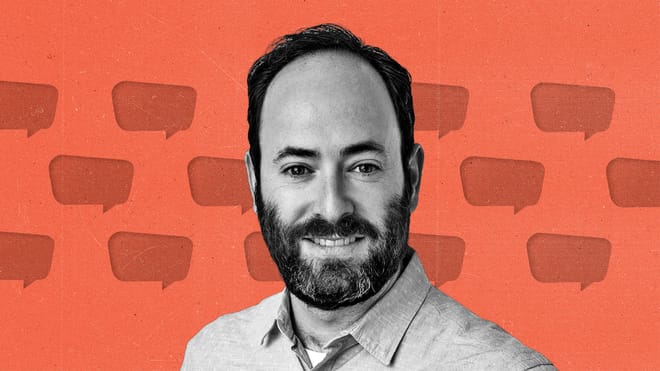
In an interview, Gupta elaborated on the company’s self-serve UI for retailers, its agentic strategy and why he’s bullish about Hightouch’s generative creative product for marketers.
This interview has been edited for length and clarity. Disclaimer: The Current is owned and operated by The Trade Desk, Inc., whose venture capital arm, TD7, invested in Hightouch.
After the Publicis-LiveRamp deal, where do you think Hightouch’s place in the industry is now? Does it change at all? What was your initial reaction?
Internally, we were quite excited about the acquisition. Our opinion is that a data onboarding company has to be democratic and has to be Switzerland. And so when it’s owned by one of the large holdcos and it ceases to be Switzerland, people will want a more open spine or a more open player to work with.
We’re very thrilled for the LiveRamp folks. I think it’s a good outcome for LiveRamp as well as for Publicis. We are now one of the best independent players in the space. And that allows a brand that does not work with Publicis to find a partner that’s quite democratic and independent, that will help them build their own identity spine.
We have two products: We have the enrichment piece, which we partner with other identity spines for, but we also have the identity resolution piece, where we help brands build their own identity spine. And we do this for some of the largest media and consumer companies in the world. If you are a brand that is looking to kind of shore up your first-party data story, then that is becoming more interesting and easier to do with Hightouch than ever.
The world is moving in a place where everyone will build their own first-party identity spine, augment it with something like UID2 and get back the telemetry on that data. … That way, best-in-class brands are spending their time on the creative direction, the marketing, the actual content itself, rather than how to build this identity spine.
Since you mentioned UID2, can you talk more about the future of identity frameworks after the LiveRamp acquisition?
UID2 is exciting because it’s an open standard. We help brands build their own identity based on first-party data, and then augment that spine with UID2, so that they can activate customer data across different platforms in a more pseudonymous and privacy-conscious way.
With the acquisition of LiveRamp, it is possible that UID2 is going to become even more popular. That would be better for the industry.
[Disclaimer: UID2 was developed by The Trade Desk.]
How else can Hightouch differentiate itself in the space and gain visibility?
We have always found our greatest differentiator to be our connection to a brand’s first-party data. We always see the full dataset, which allows us to then make the best decisions on how to do ad sales or media buying for that brand.
Most people don’t know that different consumer brands have wildly different amounts of consumer data in a very different format from each other. So that difficult task of organizing the data is where all of the magic is.
How are you working with retail brands as retail media grows?
We’re helping large consumer brands’ ad sales teams do segmentation on top of the rich customer dataset and then onboarding those segments into their different DSPs.
An example of this could be a grocery chain selling intent data at a higher cost compared to broad-based segmentation. If the retailer can identify shoppers who purchased sporting goods in the last 30 days, that [intent-rich] data commands a much higher CPM from advertisers.
That data exists in your data warehouse and your enterprise architecture, but it’s really difficult for the ad sales team to gain access to.
So we offer a self-serve UI for the ad sales team to log in, ask the question like, “Hey, how many people have bought sporting goods in different geographies?” And then push that data to a DSP.
How is Hightouch thinking about agentic AI?
At Hightouch, our product direction aims to help marketers augment themselves with agents. That could be for content creation, for the actual media buying and media selling, as well as for the orchestration and optimization.
Imagine an [always-on] agent that is constantly monitoring ad spend, giving feedback on which content is performing versus not performing, generating new creative and then launching that into market. A full optimization loop.
We believe that AI can be used both for the insights piece as well as for the content-creation piece, and a platform that does both becomes much more powerful. Rather than building individual agents for these things, we’re building an [end-to-end] agentic advertising platform.
The creative side seems to be where you’re most focused.
It is our No. 1 priority because creative is the biggest bottleneck right now in the marketer’s workflow and in the overall advertising workflow. Most brands’ personalization [efforts] are held back by the amount of content variation they have rather than by the data that they have.
The creative generation product [which would be our third product] is in the early stages. But that’s where we’re most bullish.
When you say, “creative generation,” do you mean ideas or actual assets?
For Hightouch, it means the ideation plus the asset generation. And one novel thing that Hightough has done is taught AI how to generate novel ideas versus similar ideas.
And how did you do that?
Through strong testing and iteration loops. You teach the model how to come up with ideas that match existing patterns, and then you teach the model how to look [beyond] those ideas and generate “blue sky” concepts. It has to first know what it’s similar to [before it generates original ideas].
Do you think LiveRamp’s identity infrastructure gives Publicis an advantage in agentic?
I don’t believe that the identity infrastructure will make a meaningful difference in the agentic vision.
Having a great customer dataset helps with everything related to ad tech. LiveRamp’s identity spine will [help strengthen] Publicis’ stack. But there are many more things also needed to happen in order for that vision to pan out. Thisis just one piece of that puzzle.
How do you view Hightouch’s place in the market through the rest of the year. What are you envisioning and hoping to achieve?
Hightouch has two priorities for the year. One is really redefining the marketer workflow using AI, which would be three types of marketers — lifecycle marketers, advertisers and media sellers. Each workflow is different and AI can make them both more productive as well as more successful.
For us to do this, we can’t just add AI to our platform. We have to build a whole new platform from scratch, and that’s the agentic marketing platform.
How do you kind of view the timeline on that?
We’ve been working on this for over 18 months. We have now several customers that are using our agentic marketing platform at some of the top brands. And now I view it as more of an education task and an onboarding task, more so than a “will this work?” task.
Over the next six months, we believe we can onboard 50 to 100 top brands on the agentic marketing platform and really show the world that this works before onboarding the next 1,000.
Our second priority is being the most democratic [and interoperable] data onboarder, which is the role that LiveRamp historically played.
What should the larger industry understand about where this is headed?
Agencies are here to stay, but the shape and what they offer will change over time.
Right now, many brands delegate the creative direction and content generation to their agencies. Over time, that will make less sense, which is not actually a bad thing for agencies.
They can actually save on their cost basis by using AI to do this. And we hope that agencies will use Hightouch to generate content for the brands they serve.
Ultimately, agencies should own the ROI number on your ad spend. But brands should own their own creative direction.