Published June 17Edited July 22
Over 12 million people watched the opening match of the World Cup between Mexico and South Africa on Telemundo and Peacock, making it the most-watched World Cup game ever on Spanish-language TV in the U.S.
NBCUniversal, which is hosting every Spanish-language World Cup match, reported that this tournament set an ad sales record for any Spanish-language live event ever.
Overall, ad revenue for Fox and NBCU together is projected to reach $850 million, a massive jump from the estimated $287 million in the 2022 World Cup. Some of that can be attributed to the tournament’s expansion, which features a record 48 teams — up from the previous 32-team tournament. But another factor is impossible to ignore: U.S. Hispanic audiences have become one of the most sought-after groups in American media.
Shakira’s, J Balvin’s and Danny Ocean’s performances during the opening ceremony in Mexico City were more than a celebration. They were another signal that Latin culture is not just a complement. It’s the main event.
“Latino culture is no longer only for Latinos, Latino culture is popular culture,” Karina Martinez, co-founder of the media brand Drafted, recently said during Kantar’s Moments That Matter event. She highlighted Bad Bunny’s Super Bowl performance as a tipping point.
The Latino population in the U.S. has skyrocketed 250% to 68 million since 1994, the last time the U.S. hosted the World Cup, leading NBCU Chairman Mark Marshall to call this a “once-in-a-generation moment.”
For advertisers, that growth is impacting how they think about Spanish-language media. What was once carved out as a multicultural buy is increasingly becoming a core part of mainstream media planning.
Around 60 brands are advertising during matches on Telemundo, a sharp jump from the 20 that ran campaigns in 2022. One media buyer estimated that 70% of budgets they’re seeing are new money, rather than dollars being reshuffled from a multicultural allocation.
While World Cup inventory is sold out across Fox and Telemundo, the Spanish-language network is enabling programmatic buying for the first time. The move the success NBCU has seen programmatically during both the Summer and Winter Olympics.
There’s more opportunity than ever to advertise during games, but bigger budgets don’t automatically translate into stronger connections.
“This is not a passive viewing experience,” Diana Bailey, partner at Kantar, told The Current. “This is a family tradition. And you have emotional drivers here. You have pride, heritage, and its high stakes. [Any] lack of authenticity is caught in a second."
In other words, brands can’t come in now trying to reap this massive audience because they suddenly find them attractive.
An estimated 75% of Latinos in the U.S. are bilingual, moving easily between English- and Spanish-language media. That’s why simply slapping a Spanish translation onto the same ad developed in English won’t cut it. The challenge isn’t language. It’s culture.
“You will see the difference with brands,” Jose Garriga, vice president of global sports sales at NBC Sports & Telemundo, said during the same panel. "Are they just showing up once for four weeks every four years? Is the World Cup nothing more than a massive communication event as part of their journey with this consumer? Those brands that can stay with us before, during and after will reap the rewards."
Café Bustelo, Unilever and Buchanan’s are all brands reaching out to Latino audiences authentically during the tournament, according to Bailey.
Telemundo is proving that it understands the culture. As brands look to connect with Latino audiences, the broadcaster has chosen not to cut away during the newly introduced hydration breaks.
Rather than creating additional inventory, the network is betting that preserving the viewing experience will create long-term value with its audience.
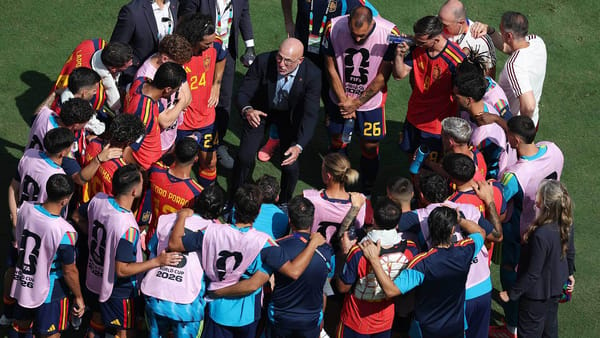
“Fans are going to be able to watch the players and the coach interactions,” Miguel Lorenzo, Telemundo’s senior vice president of sports content, told Sports Business Journal. “Our goal is to create an authentic World Cup viewing experience. We think we can do that in a lot of ways, and one of the most impactful ways is by never leaving the pitch once the clock starts running.”
It’s a decision that reflects Telemundo’s broader understanding of soccer culture, where ad breaks during the two halves are widely seen as sacrilegious.
“Particularly in a sport like soccer, which is 150 years old now, there are traditions,” James May, co-lead of Kantar’s sports marketing practice, added. “There’s an etiquette. The minute you start to break that trust and you don’t show up authentically, you’re in trouble.”