The Big Impression
Editors and co-hosts Damian Fowler and Ilyse Liffreing uncover insights and inspiration from leaders at the world's most influential brands.
Latest Episodes
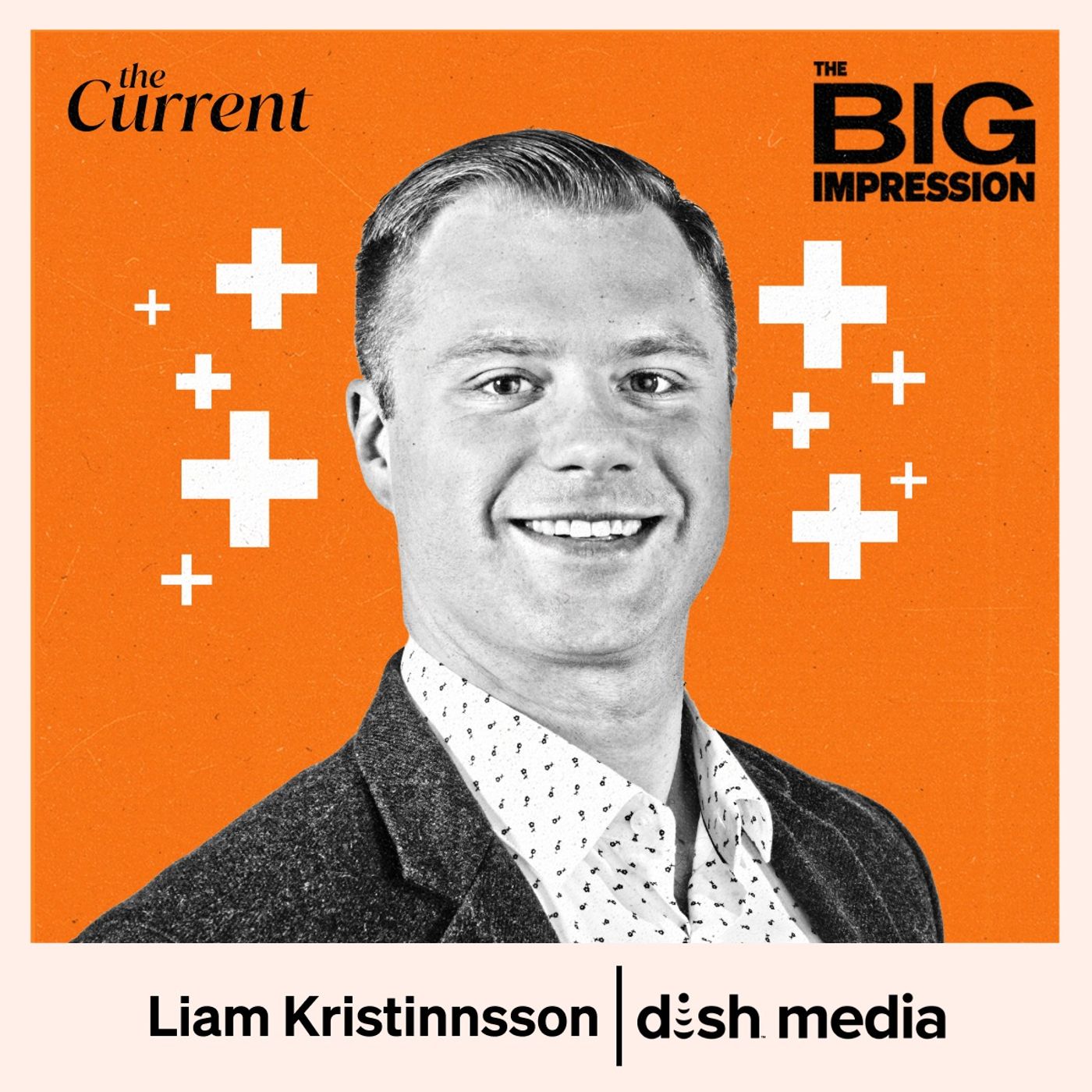
As Dish Media’s new head of programmatic partnerships, Kristinnsson is helping turn advanced TV into a single, addressable marketplace.
January 1428 mins
As Dish Media’s new head of programmatic partnerships, Kristinnsson is helping turn advanced TV into a single, addressable marketplace.
Episode Transcript
Please note, this transcript may contain minor inconsistencies compared to the episode audio.
Damian Fowler (00:00):
I'm Damian Fowler.
Ilyse Liffreing (00:01):
And I'm Ilyse Liffreing.
Damian Fowler (00:02):
And welcome to this edition of The Big Impression.
Ilyse Liffreing (00:09):
Today, we're joined by Liam Kristinnsson, head of programmatic partnerships at Dish Media, where he's helping shape how the company connects advertisers with premium audiences across both linear and digital environments.
Damian Fowler (00:23):
Dish has been pushing hard into the programmatic space. From Dish Connected, it's addressable solution across the ecosystem to Advantage, which links programmatic buying with linear inventory in real time. It's all part of a broader move to bring automation and accountability to advanced TV.
Ilyse Liffreing (00:39):
We'll talk with Liam about how Dish is tackling fragmentation, what premium really means in a mixed green world, and where the next phase of programmatic growth is headed.
Damian Fowler (00:51):
So let's get into it.
Liam Kristinnsson (00:57):
Dish Connected has really revolutionized our product in the marketplace. We've been able to convert an additional four million to five million households into tangible CTV devices across real-time bidding systems across the industry. And it's kind of given us a leg up against some of our more linear competition where we now have full autonomy over our inventory and can enable and provide transparency downstream to any client.
Damian Fowler (01:28):
That's amazing. I mean, there was a moment there where there was a sort of either all linear or CTV, but this is something that's kind of connecting those
Liam Kristinnsson (01:38):
Two worlds. I think this is the start of the convergence. I know it probably truly started post-pandemic, I would say, but the reality is now that what is perceived as underutilized impression-based audiences are now becoming tangible and kind of overlapping with their traditional legacy linear purchases. And there's much more value to it because we are not enabling people to find attribution in a more roundabout extrapolated way, but we can provide meaningful real time results to third party attribution vendors or measurement vendors.
Damian Fowler (02:20):
And that brings us to Advantage, which you introduced in May to Power Programmatic and Linear at the same time. Could you tell us a little bit more about that?
Liam Kristinnsson (02:30):
Yeah. So the beauty of Advantage is it really expands upon what we've already built for Programmatic in Disconnected, but it provides solutions across the whole suite of products we have. Our addressable business can tap into real-time kind of innovations, real-time optimizations against audiences, ensure that we are better delivering across the target audience and finding that incremental reach that in the past may have been next to impossible to verify. And now we have all that inventory in one place. It's kind of like a grocery store when I think the industry has become accustomed to going to a bodega. That's very New York with me, I understand. I like that. But sometimes bodegas have eggs, they have a deli, they might have milk, but they might not always have milk and seltzer and all the little things that you want on a day-to-day basis. And the reality is something lacking when it comes to you being able to actually fill your fridge.
(03:35):
Now we have all those components that the customer or the client is looking for.
Damian Fowler (03:40):
Yeah. I like that analogy.
Ilyse Liffreing (03:41):
It's a good one. Yeah, no, I like that. And now Liam, I'm curious about the advertisers you're working with. Is there a new segment of buyers that Programmatic is really opening the door to here? What is basically your sense of that cohort?
Liam Kristinnsson (03:58):
Yeah, I think it really has grown overnight programmatic in general, but I think it allows us to have expanded exposure across all clients that are looking for that more meaningful kind of results. I think we are seeing a lot of success in generating a lot of traction across the CPG world, the direct to consumer world. And I think we're finding a nice overlap from a category perspective of what we traditionally looked at as direct IO or addressable business, but maybe not all those brands or clients in maybe like a pharmaceutical vertical would tap or earmark dollars for commitments early in their planning phase. Now they have the liberty and the luxury to find that right audience and enable dollars downstream where we're just not hunting in that lane and now we can kind of, instead of spreading ourselves thin, the technology can enable us to really kind of tap into all those brands, whether it be the CPG or the pharmaceuticals.
(05:05):
Now on the CPG side, I would double down further. I think because in the linear world, traditionally there's a level of fragmentation when you were to buy linear and you're only getting a percentage of the marketplace. Now the transparency and data that we're passing downstream really changes that, right? Because now these CPG brands are looking to trade off their kind of gross rating points, but kind of understand, all right, am I serving a family that would buy my products? And now we're freeing up the inventory and making it available to those brands that maybe were not always keen on addressable or linear didn't provide enough eyeballs. We're compensating for that with the data we're
Ilyse Liffreing (05:49):
Providing. Do you have an example of a brand you're working with?
Liam Kristinnsson (05:52):
Yeah. So I mean, more specifically, even though that wasn't in some of the categories I called out, there was one or two major financial brands that we've been able to elevate our profile quite significantly with and then partner with them around some of their initiatives on the backend. And I think it kind of shows some of the flexibility that a publisher can now provide brands that I don't think they ever associated with a conglomerate or a media company like ourselves.
Damian Fowler (06:23):
On that point, there is a perception that the space is fragmented and that there's linear here and then there's streaming here. Do you think that that is changing that perception, maybe thanks to some of the work that you're doing?
Liam Kristinnsson (06:36):
I think that's a lot of our goal. I think that we are simplifying the process and enabling a household or a device level, right? And the device level tends to be at the unique user level and we have the ability to kind of triangulate that and make sure that we're providing good and strong data down to our partners. I think that as a marketplace holistically, I think the fragmentation has changed and I think a lot of that's around some consumer behavior that has changed or specifically around the way consumers are watching more free content or there's pockets where they're not required to provide a subscription. And I think that there's still a gap there and we do have some front porch access to our apps, but we are looking on our end to continue to develop and then enable through Advantage how we can kind of provide those, specifically those returning viewers, that clean look to the advertisers on the back end and really kind of leveraging deterministic data and first party signals to really define that audience more cleanly in some ways that competitors of ours maybe can't do.
Ilyse Liffreing (07:53):
Overall, how would you describe your measuring the success of these programmatic partnerships?
Liam Kristinnsson (08:00):
Yeah. So I think that that's a really unique place because that's something that has been our bread and butter. We have our own targeting and attribution team. They've worked very diligently on the direct IO side. I think a lot of the legacy information that they've been able to provide clients and the insights and the ways that we've been able to either cut our inventory or kind of group or the target audiences for these clients have helped demonstrate the programmatic partners the value in not just our audience, which I think is somewhat being underserved because Dish tends to be middle America and maybe they have less apps or maybe they leverage less apps. So they have been underserved. We have a legacy of success around specific verticals and we're able to kind of provide that to these brands. I think the challenge is it's a little bit of a black hole sometimes of how they tie it back to each other.
(08:56):
And I think there needs to be a little bit more assistance on our end. And by us, I mean the royal we across the industry of like providing some of those insights that I kind of alluded to earlier, whether it's, are we targeting and talking about unique users? Are we looking at success at a household level? And there is some innovation that's required there in the industry, but I think what we're doing is really at the forefront of enabling that.
Ilyse Liffreing (09:23):
Are there any particular channels that have surprised you in terms of performance or even advertiser adoption?
Liam Kristinnsson (09:31):
Sure. I mean, I think I imagine everybody talks about the success of sports. Sports has been a real catalyst to the boon of CTV enablement in general, but I think that I'd be remiss not to call out that a lot of our entertainment brands have shined, but not in the ways that traditionally they've been leveraged, right? Even though certain pockets of inventory is not super desirable in the marketplace at times, like news, there are a ton of clients that we've seen a lot of traction there and like pick up incremental success and really drive reach by anonymizing the content that they buy and focusing on the audience.
Damian Fowler (10:20):
That's interesting. Is there still some resistance to the idea of being around current affairs and news?
Liam Kristinnsson (10:26):
Yeah. I think I myself came from the website world years ago and I saw firsthand when a certain brand would be next to a certain type of content. And I understand the urgent need to not expose a valuable legacy luxury brand to something that may or may not be bad, right? Yeah. But the reality is often there is a disconnect from the content being consumed and the pod of commercials that's watched, right? Yeah. And while we often, and I'm sure we ... My mother certainly will watch news for hours and hours upon day, which is maybe not healthy for her lifestyle, but I think what's great about it, specifically when she goes to sit down, she is glued in to the TV. And that's something I think that a lot of people are trying to figure out, are people watching? Are they tuned in? Are they walking away?
(11:30):
And that's the black box of advertising, but I know that people that watch news are glued into the TV and consuming the content between segments. It's kind of like sports, right? Yeah.
Damian Fowler (11:43):
I think that's true. And I think that's true across all channels as far as I know people reading digital news as well, but I don't want to go off on a massive digression about news, but anyway. But it is fantastic. Can we pull back and look at the big picture a little bit? And we were wondering if there were any precedents or points of inspiration inside or outside of media that inform how you think about programmatic partnerships at Dish?
Liam Kristinnsson (12:10):
Sure. I mean, I think that back to what I was saying about evolution, I think often in the media industry, we look at things like baseball teams are run today. Not to use a sports analogy. I know you guys are probably sick of them, but- We love sports analogies here. Nelly said the trade death.
(12:32):
But the reality is these days people want home run hitters. And I think back in the day, that's a little bit of a cyclical history. People always want home run hitters and like big stats, but you win championships with diversity. And I think what partnerships means today is not what it maybe meant 12 or 13 years ago. I think there's a ... We're becoming a world where people, we're all playing Tetris and there's a way to make it all fit together if we cooperate and enable each other. So it's not one size fit all fits all. I think there's a lot of small partnerships and that's good for the competition of the industry and it doesn't take away from the value of these big partnerships. And I think I don't think in my time in TV there's ever been more opportunity there than there is today.
Ilyse Liffreing (13:28):
Something we often write about at the current is the value of like premium content versus maybe like user generated. For instance, what would you say is the importance of premium and I guess what kind of premium content is most popular? I mean, you brought up sports, but are there any others?
Liam Kristinnsson (13:50):
Yeah. I mean, I think premium content, I'm sure many people discuss across the course of ad week or just in the industry and in general, how valuable, unique and what's deemed as traditionally primetime TV is. But the reality is it's even more valuable than that because you are in a lot of ways demanding an eclectic audience to watch your spectrum of content and you can't always guarantee that in other places. There is also, sure there's some oversaturation for specific channels and maybe the product that they air, but the reality is it is not what everybody is consuming these days, right? It's Halloween. Everybody can find a bunch of great horror movies or Halloween's coming up, I should say. Everybody could find a bunch of great horror movies across the board, can't always guarantee what is in that content, how glued in they are versus just kind of like, "Oh, it's in season." I think with premium content, specifically around live TV, there's 365 days a year of people competing against each other from a content perspective, but it demands eyeballs.
(15:07):
And I think we're also starting to see a surprising jump in the youth getting app fatigue, I suppose, that is better enabling that premium content to ensure eyeballs there, but they're paying attention and I cannot stress that enough. In a world of a short attention span, they want to know what's going on and they consume
Damian Fowler (15:28):
It. I would almost say it's short form content fatigue to a certain extent. There's something nice about a long form, a game,
Liam Kristinnsson (15:41):
A
Damian Fowler (15:41):
Football game,
Liam Kristinnsson (15:42):
A soccer game, or a movie. To that point, right? I was probably part of the problem with TV from a consumer point of view. I became like a cinephile which didn't help a company's ability to monetize myself, but the more meshed I get into the industry and the more, I don't know, popular I get, the less time I have to go find a film, right? The more time I have to maybe watch a drama about women in New York and I will watch the rerun that I just saw the week before at eight o'clock in anticipation of what's going to happen at nine o'clock, but really because I want to see the reunion or the interview at 10 o'clock, right? So now I'm consuming the same content twice, but I'm even more engaged in the live TV and there's something afterwards that is actually, maybe taped, but it feels live, right?
(16:37):
Yeah.
Damian Fowler (16:37):
And that's the proposition that Dish is getting into. I'd want to ask you, how's Dish Media building on the momentum that you've already created?
Liam Kristinnsson (16:45):
Yeah, I think right now it's what more can we do and how can we keep providing and enabling inventory for the right providers? I think that the assumption in the marketplace for any new product that comes out is, wow, this is it, it's here. 100% of it's enabled. That's never the case, right? It takes a year to ramp up typically for the average product, sometimes as much as three for us. We've been hitting the gas and I think now we're about to go from fifth to sixth speed and really kind of enable our inventory holistically to the marketplace. So for us, it's a little bit of crawl, walk, run from an enablement perspective and with that comes even greater insights into what are they consuming, what's the audience? How do we help define and clean up that audience downstream and then let others maybe do what they do best.
(17:45):
But we are really in a great position to keep kind of growing that and exposing net new insights about users that I'm not sure everybody's contemplating.
Damian Fowler (17:56):
Yeah, I'm sure.
Ilyse Liffreing (17:57):
Very cool. I have a question here about the economy and as you know, and everybody does, it's on kind of shaky ground, you don't know. How do you see spend evolving in the programmatic space at this time?
Liam Kristinnsson (18:16):
Well, I'm glad you asked that. I think there is marketplace concerns about what is happening on the demand side and a lot of them are valid. A lot of them are maybe being overthought perhaps, but I think there's some rocky roads ahead for specific industries, but it presents a unique opportunity. And I think from a publisher perspective, maintaining the value of inventory and the premium content that they have is absolutely a must because we are going to continue to provide insights and improve products that ultimately will provide better outcomes for backend users. If we kind of enable knee-jerk reactive spend, I think that actually goes against the grain of supply path optimization and increasing outcomes holistically under the guise of potentially lower rates or what have you. But I truly believe that if one category is down, another needs to go up. And I think advertising is like a mutual fund like that where I have lived in Europe in the past and there's a phrase in Scandinavia that like, no matter what happens to our small economy, people will advertise beer because somebody will buy it, right?
(19:46):
And I think that's much more universal than just in a few select small countries. And I think in a lot of ways we saw that in the pandemic, right? Direct to consumer brands, a lot more variety of entertainment companies or hardware products or TVs were able to kind of put their best foot forward and give the consumer options, right? And I think it's some of their responsibility to provide those options. What we, the publishers can do is enable and ensure they're getting the right results for the content and fitting them in the content or audiences that they really can get the best out of them, right?
Damian Fowler (20:28):
Absolutely. Okay. We're going to bring this home now with some quick fire questions, right? And here's the first one. What are you obsessed with figuring out right now?
Liam Kristinnsson (20:38):
Well, this might be a little divisive, but I am obsessed with continuing to improve supply path optimization, but I believe that comes with the slow sunsetting of linear. When I got to Dish, we were still primarily, while our bread and butter was addressable, we were still primarily from a percentage basis, linear, right? Since then, we've completely flipped the script. We are by far and away, mostly impression based. And the reality is I think that we are leveraging too many legacy tools to tell and provide stories on outcomes that are not always as accurate as they should be. We live in a world where transparency is key, maybe not full transparency all the time, but enough transparency where I, the client or brand should be getting a return on our investment or understanding why the audience or the content I was targeting is not working for me.
(21:42):
And I think that's, those are the pockets we need to start exploring and understanding, not so much the, how do I understand foot traffic on a day-to-day basis, but not convert that to sales when I'm extrapolating out 32 families, right? So that's really, really what I think needs to happen. And I think there's a lot of work to be done there and it's not going to happen overnight, but it starts here and starts with an advantage really.
Ilyse Liffreing (22:06):
Wow. And why do you think that the slow death of linear, as you said, has to happen for that?
Liam Kristinnsson (22:15):
I shouldn't say it has to happen. I think there is a time and a place for it, right? I think if I'm going to a bodega and I think I want a soft drink, that's their goal is to make sure that the first thing I think of is whatever the product is, but I think that time and a place is actually creating a lot of noise downstream and creating a lot of challenges for folks on the attribution and measurement side to actually understand and holistically look at their media purchases. And I think it's okay to have gross in terms of volume, ways of looking at how media should be purchased and leveraged, but I believe nine out of 10 clients really, they deserve the insights and the understanding of who is buying their products and how we can figure out how to kind of tie that together and improve into the next year.
(23:10):
That's how their products are going to build, especially with some of this like in certain categories. There's maybe too many brands or too little, right? Better data will inform beyond individual clients, but it'll enable people to start unique businesses that can compete in an area where there's clearly a lot of eager consumers,
(23:35):
Right?
Ilyse Liffreing (23:36):
Very cool. What's one piece of wisdom you'd pass on to other media leaders navigating the shift to programmatic?
Liam Kristinnsson (23:43):
Yeah. So I hate to say the same thing twice, but if I were to give one piece of wisdom is value your inventory that is going to be the future of your business and there are ways that you can improve your product and enable and improve a third party client or vendor's product, but racing to the bottom for what is happening tomorrow will not enable you next year. And it's a real concern in the marketplace, but my concern is actually twofold that it doesn't actually just hurt publishers, but it ends up ultimately hurting the brands and the people buying the inventory because they are going to receive exponentially more noise, right? And I think that as an industry with a lot of noise, we should really think about like how we can kind of isolate it into, and harness it into, into actual meaningful outcomes.
Damian Fowler (24:48):
If you could pick one brand that's really nailing programmatic right now, who would it be?
Liam Kristinnsson (24:53):
Without explicitly calling out a unique brand, but I'll give you two types of folks that are really nailing programmatic. One, I think is second tier auto brands where they are unlocking, and I really think Disconnected plays a great role here. They are unlocking and understanding how they can better access inventory for the right audiences, period. That could be isolating and understanding how I could serve ads from a reach perspective across the city of Des Moines, or it can be somebody looking for blonde-haired men that have two boxer dogs. Secondly, and I think this is part of the paradigm shift across the industry. I think there's quite a number of CPG brands that legacy-wise have really had outstanding success reaching mass eyeballs, whether it's through billboards, radio, traditional linear television. But now again, like they are able to fill a void across the whole ecosystem by getting better, more dynamic insights into the audiences that they're selling to, but also they're actually getting insights, period.
(26:13):
Retail data, you're talking about? Retail data, yes. And I think if I'm a chip brand, sometimes I want people to know my name first. And that's great. There's a need for that, but eventually you have to start focusing on how you can get money back from that. It's not just about getting your name out there, or it could be diversified. Maybe your name is out there, but now other names have come in, right? Now, how do you leverage the dynamic component of programmatic to diversify your creative and your ability to deliver to the same audience? It'll change the way we think and look at maybe traditional frequency capping or traditional exposure, but now the brand through Programmatic can really lead the new age of creative storytelling and how people understand or change the way people think they know products.
Damian Fowler (27:13):
And that's it for this edition of The Big Impression.
Ilyse Liffreing (27:15):
This show is produced by Molten Heart. Our theme is by Love and Caliber, and our associate producer is Sydney Cairns.
Liam Kristinnsson (27:22):
And remember ... We're also starting to see a surprising jump in the youth kind of getting app fatigue, I suppose, that is better enabling that premium content to ensure eyeballs there, but they're paying attention.
Ilyse Liffreing (27:37):
I'm Damian. And I'm
Damian Fowler (27:38):
Ilyse. And we'll see you next time.
Dive into more insights and inspiration from leaders in ad tech: https://www.thecurrent.com/
Hosted by Simplecast, an AdsWizz company. See pcm.adswizz.com for information about our collection and use of personal data for advertising.
Editor’s note: This episode of The Big Impression was recorded prior to Jessica Bryndza’s departure from Lyft.
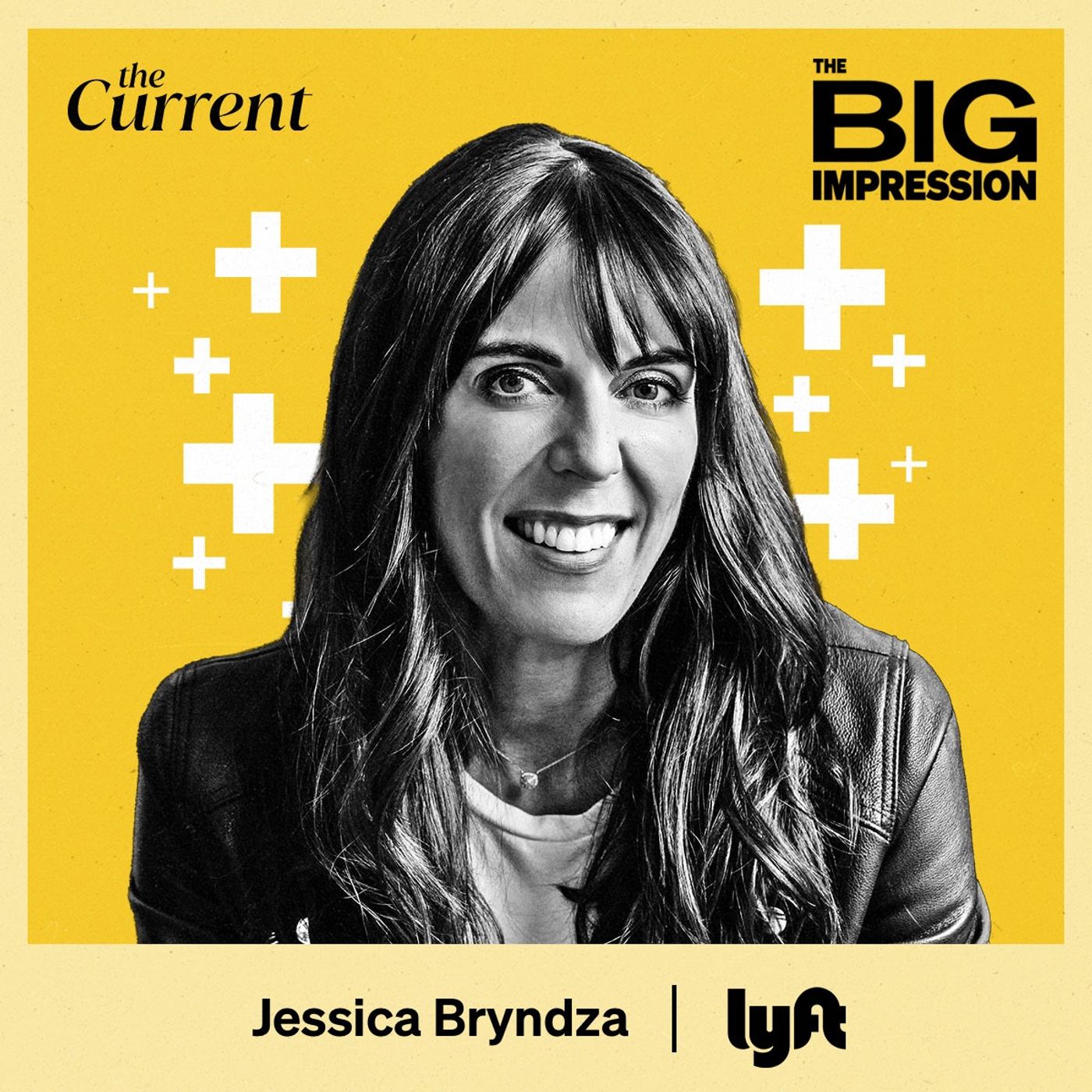
For years, ride-hailing has been optimized for speed, price and efficiency. Jessica Bryndza believes that’s only part of the story. During her tenure as Lyft’s vice president of brand marketing, she focused on reminding people that getting from Point A to Point B can still be personal — shaped by emotion, culture and the everyday moments that happen along the way.
That philosophy is at the heart of Lyft’s new “Check Lyft” campaign, which launched last fall in San Francisco and New York City. The work reframes transportation as something human and choice-driven, not just transactional.
Bryndza argues that the future of mobility won’t be defined solely by technology, but by how intentional and human the experience feels when you’re actually inside the ride.
“I’ve cried in the back of Lyfts; I’ve laughed with friends,” she says on The Big Impression. “We have this spectrum of emotions.” Rather than treating mobility as a pure utility, Check Lyft taps into those moments — the small trade-offs, the waiting, the savings and the lived reality of getting around a city.”
Bryndza also discusses how Lyft’s founding DNA continues to influence its brand voice, why empathy matters more than ever in the battle for attention and how the campaign comes together across out-of-home, social, in-app and hyperlocal executions, with no “AI slop” in sight.
“There’s a lot of slop out there,” Bryndza says. “How do we respect our customers enough to not put crappy work in front of them?”
January 727 mins
Editor’s note: This episode of The Big Impression was recorded prior to Jessica Bryndza’s departure from Lyft.
For years, ride-hailing has been optimized for speed, price and efficiency. Jessica Bryndza believes that’s only part of the story. During her tenure as Lyft’s vice president of brand marketing, she focused on reminding people that getting from Point A to Point B can still be personal — shaped by emotion, culture and the everyday moments that happen along the way.
That philosophy is at the heart of Lyft’s new “Check Lyft” campaign, which launched last fall in San Francisco and New York City. The work reframes transportation as something human and choice-driven, not just transactional.
Bryndza argues that the future of mobility won’t be defined solely by technology, but by how intentional and human the experience feels when you’re actually inside the ride.
“I’ve cried in the back of Lyfts; I’ve laughed with friends,” she says on The Big Impression. “We have this spectrum of emotions.” Rather than treating mobility as a pure utility, Check Lyft taps into those moments — the small trade-offs, the waiting, the savings and the lived reality of getting around a city.”
Bryndza also discusses how Lyft’s founding DNA continues to influence its brand voice, why empathy matters more than ever in the battle for attention and how the campaign comes together across out-of-home, social, in-app and hyperlocal executions, with no “AI slop” in sight.
“There’s a lot of slop out there,” Bryndza says. “How do we respect our customers enough to not put crappy work in front of them?”
Dive into more insights and inspiration from leaders in ad tech: https://www.thecurrent.com/
Hosted by Simplecast, an AdsWizz company. See pcm.adswizz.com for information about our collection and use of personal data for advertising.
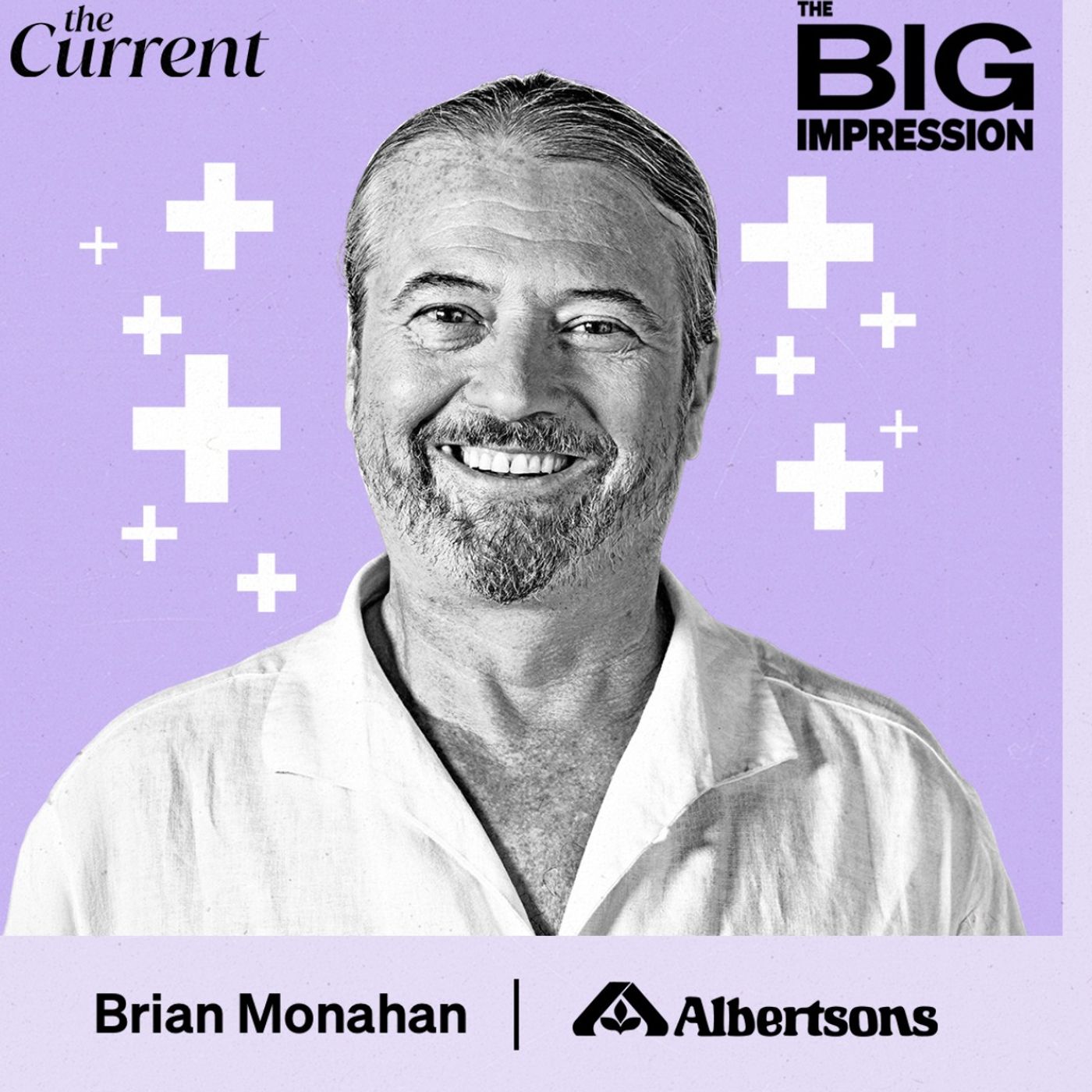
In conversation with The Big Impression, Brian Monahan, SVP of retail media at Albertsons Media Collective, explores how shopper insights, creative storytelling and omnichannel strategies intersect.
December 17, 202530 mins
In conversation with The Big Impression, Brian Monahan, SVP of retail media at Albertsons Media Collective, explores how shopper insights, creative storytelling and omnichannel strategies intersect.
Dive into more insights and inspiration from leaders in ad tech: https://www.thecurrent.com/
Hosted by Simplecast, an AdsWizz company. See pcm.adswizz.com for information about our collection and use of personal data for advertising.
CMO Kimberly Ito shares how Mitsubishi, a challenger brand, drives big impact through audience insight, digital precision and a redefined spirit of adventure.
December 10, 202521 mins
CMO Kimberly Ito shares how Mitsubishi, a challenger brand, drives big impact through audience insight, digital precision and a redefined spirit of adventure.
Dive into more insights and inspiration from leaders in ad tech: https://www.thecurrent.com/
Hosted by Simplecast, an AdsWizz company. See pcm.adswizz.com for information about our collection and use of personal data for advertising.
Discover how Kate Wik, CMO of Las Vegas, drives bold innovation and storytelling to transform the city into a global destination brand.
December 3, 202529 mins
Discover how Kate Wik, CMO of Las Vegas, drives bold innovation and storytelling to transform the city into a global destination brand.
Episode Transcript
Please note, this transcript may contain minor inconsistencies compared to the episode audio.
Damian Fowler (00:00):
I'm Damian Fowler.
Ilyse Liffreing (00:01):
And I'm Ilyse Liffreing.
Damian Fowler (00:02):
And welcome to this edition of The Big Impression.
Ilyse Liffreing (00:09):
Today we're joined by Kate Wik, chief Marketing Officer at the Las Vegas Convention and Visitors Authority. The team behind the city's newest brand campaign, which launched in September,
Damian Fowler (00:20):
Las Vegas, is known around the world for its energy, its entertainment, and its edge. But this ladies' campaign takes a closer look at what the city means today beyond the casinos and into its growing identity as a cultural and sports destination.
Ilyse Liffreing (00:34):
We'll talk with Kate about the ideas behind the campaign, how Vegas is connecting with new audiences, and what it takes to evolve one of the most recognizable brands in the world. Q,
Damian Fowler (00:45):
Frank Sinatra. It's okay. You have an unusual role in that you represent a city as an iconic one, but could you tell us about the role?
Kate Wik (00:56):
That's exactly right. So I work for the Las Vegas Convention and Visitors Authority. Nobody knows what that is or what that means. So really, I shorthand it and I say I am the CMO of four Las Vegas. Las Vegas is my product, which is very unique. It is a city, it's a destination. It's unbelievably dynamic. And what's so unique and thrilling for a CMO of Las Vegas is that our product is always changing, always evolving. If you think back, we were known as the gaming destination. We've evolved into, we're the number one hospitality destination in the US with more hotel rooms than any other destination. And we are the entertainment capital of the world. You've got the world's best artists coming and performing on stages across destination every single night. And we've worked really hard to evolve ourselves into the sports destination as well through a lot of recent things. So really the exciting thing for me in this role is no one day is ever the same. Our product is constantly iterating and evolving, and that is a marketer's dream come true.
Damian Fowler (02:10):
Just on that point about the evolution of the city and the perception of it, how fast has that happened in the last, say, five, 10 years?
Kate Wik (02:20):
Yeah, absolutely. Incredibly fast. And so today we are known as the sports and entertainment capital of the world, but less than 10 years ago, we did not have any sports teams. Yes, sports has kind of always been in our DNA. We'd host major boxing matches in the eighties, NFR we've had for decades. NBA, we hosted their in-season tournament, NBA Summer League, but really it was through infrastructure development that really led to the explosion of sports today. So what I mean by that is we had T-Mobile Arena, which was a joint venture between MGM resorts and a EG that enabled NHL to come to town with the Vegas Golden Knights in 20 17, 20 18, we purchased the WNBA team, which we renamed the Las Vegas ACEs. And so now we've got A-W-N-B-A team. And then in 2020, of course with Allegiant Stadium, we welcome the Raiders. And so now we've got the Las Vegas Raiders, and we are, so actually in four years, we went from having zero professional sports teams to having three, and we're actively working to bring our fourth to town, which is the major league baseball. We're welcoming the Las Vegas a,
Damian Fowler (03:34):
Not to mention Formula One.
Kate Wik (03:36):
Yes, exactly. And Formula One now an annual event on our calendar. So it's a lot. It's a lot. And it creates new reasons to come to Las Vegas for our visitors. And what we found through research actually, is that the sports traveler, number one, we know sports tourism has just exploded the sports traveler. Through our research, we found that it creates a new reason to come to Las Vegas for those that haven't been here before. It creates a reason to explore the destination, see it, consider it, and then ultimately come. And then most importantly, we find that they spend more money than the average leisure traveler. So it's a really rich new audience for Las Vegas. And F1 has definitely exploded that for us too.
Ilyse Liffreing (04:24):
Do you know by just how much more do they spend?
Kate Wik (04:27):
It's usually anywhere from 500 to 800 more per trip.
Ilyse Liffreing (04:31):
Wow, that's a lot. And the rest on gambling,
Kate Wik (04:36):
Anything
Ilyse Liffreing (04:36):
Extra? It's
Kate Wik (04:37):
Funny. Gambling hasn't been, revenue from gaming hasn't been the primary source of how consumers are spending their budget while they're in town. Hasn't been that for over a decade.
Ilyse Liffreing (04:51):
And
Kate Wik (04:51):
I think it speaks to the diversification of the experience in Las Vegas. And when I say we're the entertainment capital of the world, we absolutely are. People come here to see shows, to see comedians, to experience not just like a touring show, but unbelievable residencies where our property resorts will build these amazing theaters where Lady Gaga performs, Bruno Mars performs, Adele performs, they'll create these residencies, which is unlike nowhere else in the US or world.
Damian Fowler (05:26):
I mean, I've been aware of that. I mean, obviously it goes right back to the Rat Pack, but more recently, like Sting had a residency there. I've been aware, I
Kate Wik (05:34):
Just saw Backstreet Boys at the Spear, which was probably mind blowing, which was mind blowing. That's a whole nother level to the entertainment experience where it's just completely immersive that has changed the game for live music.
Damian Fowler (05:48):
The perception of Vegas has changed or is changing, and maybe that teases up to talk a little bit now about the new brand campaign and why this is the right moment to do it.
Kate Wik (06:00):
Yeah, absolutely. So we just launched a new campaign September of this year, so just a couple of weeks ago really. And the intent behind it is this notion that there are so many different reasons to come to Vegas, but there are also so many different vacation options. What we wanted to do was break through the noise and make sure that people understood that Vegas is the ultimate destination regardless of the experience you're looking for. We have it all, the breadth and depth that exists within our destination iss, it's uncomparable to any other destination. So we needed to get out there and get that message out there in big form. And why now what we found was through a lack of big brand messaging over the summer, we actually took a hit with a lot of negative headlines. And so we needed to get in front of that. And I think one of the big takeaways for marketers out there is that if you're not actively talking about your brand day in and day out, you create room for others to create their own narrative. And so after we launched the campaign, it's been about a month in market, we've seen a lot of that negativity drop because now everybody's covering, oh, here's the new elements, here are the new promotions they're doing, here are the new experiences that you can find. So it's really about driving the narrative that you want for your brand.
Ilyse Liffreing (07:29):
Very cool. And could you tell us a little bit about the campaign itself, maybe the creative, and then what channels are you leaning into?
Kate Wik (07:36):
Yeah, absolutely. In looking at how we were going to develop the work around this new brand campaign, what we wanted first and foremost was to be really authentic about Las Vegas and be very unique to a message that only Las Vegas can deliver. And so we took inspiration from our iconic welcome to Fabulous Las Vegas sign. So it's the sign that exists literally on Las Vegas Boulevard as you drive into town. And that sign, it's 65 years old today, but it is more iconic. And the awareness on that is it puts it as one of the highest elements assets within our portfolio. So you think Las Vegas, you think of Bellagio, you think of Wynn, even Luxor or all these amazing resorts. When we show that sign, the amount of awareness of what that is and where it is and what it's for just exceeds every other asset that we have out there. So we took inspiration from that. We took the neon, the lights, the really, the notion of setting the example of fabulous Las Vegas. That's the experience that our visitors can come to expect when they come to Las Vegas. So it truly has been our brand promise for over 65 years. So that's the inspiration behind the campaign.
Damian Fowler (08:57):
Yeah, I can see that sign now.
Ilyse Liffreing (08:59):
Yes,
Kate Wik (08:59):
That's right.
Ilyse Liffreing (09:00):
Yeah, that's right. Do you have a sense of the audience that you're trying to reach and through, I guess, which channels are you trying to reach them?
Kate Wik (09:10):
Yeah, so we have a really diverse audience set, which is very unique for a marketer, which usually has a single product or they've got a very specific audience for that product. Vegas is really the 21 and older adult playground. And so if you look at just an average audience, it's like a 45-year-old split, 50 50 male, female, et cetera. But what we offer is an unbelievable unbeatable experience at every single price point. So we absolutely cater to that high-end luxury market, that luxury traveler, all the way down to the entry level budget conscious traveler. And so we've got products from a circus circus all the way up to a win Las Vegas. And so for us, our audience is very broad, but generally it's adult travelers, people that have traveled in the past year looking to travel again,
Ilyse Liffreing (10:11):
We just had Marriott on the podcast and we were talking about how more travelers now are singles and single people. And I would think that might be particularly true for Vegas. For some reason, people are coming for a new experience and to get away.
Kate Wik (10:28):
I think that's exactly right. Not necessarily single travelers, but the idea of it's a getaway, it's a new experience. What we find from our visitors is number one, it's really high repeat visitation because every time they come, they're finding something new. So we usually get at least 80% repeat visitation from our visitors and really high satisfaction rate, but it's that mindset of wanting to try something new. For sure. Yeah.
Damian Fowler (10:56):
One thing that just occurs to me as we are talking is how the awareness of Las Vegas has been so kind of embodied in so many movies and TV shows. I was just thinking, I watched the studio recently, the Seth Rogan
Kate Wik (11:09):
Show,
Damian Fowler (11:09):
Which I think that has a combination in Vegas while
Kate Wik (11:12):
I actually haven't seen it yet. So no spoilers on my list.
Damian Fowler (11:16):
I mean, I was thinking about Oceans 11, you can go back and back. I have to see it. But that is all kind of part of the kind of braided cultural iconography as it were of the city, I guess.
Kate Wik (11:27):
Yeah, I think movies represent, you almost have to think of it as a channel for marketing. It represents an amazing opportunity to penetrate culture, reach new audiences that you wouldn't normally get to talk to. And so we have a history of iconic movies. Actually this past summer, you might've seen it, but the F1 movie, that was a partnership that we did with them to make sure that they filmed in Las Vegas and the Las Vegas Grand Prix circuit. That was really important. But again, reaching new audiences, keeping us sort of at the pinnacle and sort of leading culture. Also really awesome to have Brad Pitt lead in that. I'm not going to lie. That was pretty awesome. But a ton of movies. And it's kind of interesting to think of it as almost like a marketing channel, not a traditional
Ilyse Liffreing (12:17):
One, but yes. Yeah, like free marketing too sometimes, because a lot of things are based in Vegas,
Kate Wik (12:22):
Right? On the marketing channel front, I know you had sort of asked about how do we launch the campaign, and it was very much an integrated multi-channel approach. We did everything from brand marketing, product marketing, I call it value, but it's really promotional as well as experiential. So of course, from a brand marketing point of view, TV or movies are wonderful, but there's also tv. And we launched the campaign actually with NFL kickoff, so September 4th. We know that when people tune into tv, they're tuning in really into an NFL game. That's where the most eyeballs are at any single time. So from a marketing point of view, it's great return on your investment there. So we launched with a 62nd ad on September 4th on kickoff, but really it was about making sure that this is not just a TV campaign, but it's a platform that reaches the consumer at every different touch point throughout their travel journey or through their daily life.
(13:27):
And so we maximized the viewership by making sure that, yes, we had a TV spot, but we partnered with the Raiders to actually take over the tunnel walk. And so when players arrive at the stadium, any stadium across the us, it's usually sort of this gray back of house space. And what we did was we installed neon all over the wall as the backdrop. And so it gave our players the sense of pride as they're walking in where they see this huge fabulous Las Vegas neon sign, and then they get a bit of a swagger. And then we partnered with GQ to cover sort of the fit that the players are wearing because that's a whole thing, this sort of new cultural moment where you've got the intersection of professional sports and these athletes in fashion. And so GQ wants to cover that. And so now the backdrop for all of this is the fabulous Las Vegas neon sign that we installed.
(14:22):
And so then CVS and ESPN want to cover it because they're like, oh, what's going on with the Vegas tunnel walk? And so every time Vegas shows up, we want to make sure that we're sort of breaking through the clutter. We're doing something very unique, bold and different, and whatever we do, it's sort of Vegas worthy. So I guess another channel is outdoor. We don't just buy outdoor. We worked with media partners to find these super high impact spectacular units that just command attention. So around the corner, in Times Square, we have this huge 3D board where you've got a 3D view of the iconic welcome to Las Vegas sign that rotates and dice come out, chips come out, an F1 race car comes out, right? It's a showstopper. And when you walk into Times Square, you see people taking pictures of advertising and that blows your mind.
(15:21):
And then on the other side of the country, we've got an actual neon installation on Sunset Boulevard. So we took, quite frankly, one of the ideas behind the campaign is let's take the neon and export it. Let's take our Neon National. And so we've got these big neon relics all across the us and so this one on Sunset Boulevard is spectacular. And then you walk across any of our resorts in Las Vegas and you see our Neon Signs Launch week. We took over all of our, well in our top 10 markets, we took over our digital outdoor boards and we had a roadblock for the whole week of launch. So just doing these big spectacular moments to capture the attention of our viewers. Wow,
Damian Fowler (16:08):
That's a lot that you're doing a tremendous amount, but on the other side of it, how are you kind of measuring and tracking all of these moments that you've created?
Kate Wik (16:18):
Yeah, I think measurement is incredibly important for any brand. We are actually consistently in market every single week with a research tracker, a brand health tracker. We've been doing it for decades. Making sure that we're keeping a finger on the pulse of our consumer is really important to us. So before we launched the campaign, obviously we tested it to see, number one, does it break through? Does it resonate? Does it deliver on the message of escape? Does it make people want to go to Las Vegas? It actually tested stronger than any other campaign that we've tested, and we test all of our campaigns. So that was pretty exciting. And then post-launch, again, we're in the market every single week. We found that we continue to uptick in terms of likability of the campaign, the campaign that makes you want to travel to Las Vegas. Those metrics are really important to us, intent to travel, and so it's continued to climb every single week since we've been in market. That's really strong. I think outside of traditional campaign testing, something that we consistently do is social listening, and so understanding what the current conversation is on social, I had mentioned this summer was a little bit rough. There was a lot of negativity out there for us. What we found was we had peaked in terms of negativity online in, gosh, in August. We launched Campaign in September, and that number has dramatically reduced, which is fantastic. It goes back to this point of you have to constantly be talking and driving your own narrative.
(18:01):
Otherwise if there's a void, others are going to fill it for you. That's was a
Ilyse Liffreing (18:05):
Quick turnaround time too from
Kate Wik (18:07):
In
Ilyse Liffreing (18:07):
August to launching in
Kate Wik (18:08):
September. Absolutely. So a couple weeks. So I would say early August was peak and then Campaign formally launched September 4th, but working with our property partners to seed components of the campaign before, that was a big part of it as well. And then I think a very tactical measurement is we launched actually the first ever destination wide sale, so we called it the Fabulous Five Day Sale. Our campaign is Welcome to Fabulous, so fabulous five day sale. We wanted to make sure that we were putting a spotlight on the value that exists across the destination. And what we found was we drove four times the amount of website volume that we normally do to visit las vegas.com and that we actually were driving more referrals, so people were coming in to see what these deals were, what the sale was, this first ever limited sale, and then the traffic, the referral traffic that we were sending out to the booking engines of each of our property partners. That was 120 times the normal weekly average that we have in terms of, oh my gosh, yeah, referral, wait. So really unbelievable. It was kind of mind blowing for us in terms of the results of that. Nice.
Ilyse Liffreing (19:28):
And what was the reception from businesses in Las Vegas too, because that involved all of them?
Kate Wik (19:34):
Absolutely. Yeah. We don't launch a campaign without the support of our property partners. The reception was fabulous to use a cliche, incredibly fabulous. They leaned into it, you'll see part of the campaign. We created these neon elements and literally handed over this toolkit to our property partners so they can push out on all of their digital signage, on all of their marketing elements, sort of reflections of the campaign work as well and tie into it.
Damian Fowler (20:05):
Great. Just out of curiosity, is the campaign driven from the ground up by businesses or does it come top down as it were, from what your office, what's the kind of interaction?
Kate Wik (20:19):
Yeah. Well, the interaction is we are the DMO, the destination marketing organization for Las Vegas. So what we do is we work closely with our property partners to understand what's the business needs, what are the trends they're seeing. We do research and provide them top level trends, and then we work with them on what do we need the advertising to accomplish, and then we develop the campaigns. We're funded by them. We're actually funded by a room tax, which is paid by our visitors. And so there is complete coordination with our property partners, and we really do all of the upper funnel marketing for them. That's kind of the role we play for them.
Damian Fowler (21:00):
Interesting. Yeah. Yeah. I want to ask you, actually, I guess this is a big picture question. Are there other big cities that kind of have similar outreach or similar marketing campaigns, or are you unique in lots of ways?
Kate Wik (21:15):
I think the big destinations like New York, la, they will have a tourism authority within their destination that we'll do it for them. I think what's unique about Las Vegas is how we're funded. Again, it is through this room tax. And so generally, I'm not out there every day trying to drum up membership funds or anything. Our job is to go market the destination 365 days a year. That is why we exist. And so I think other destinations have something similar, but not quite the structure or the support behind it. And I think what is unique for Las Vegas is tourism is the number one economic driver for southern Nevada, and so we're the engine behind that. We have to make sure we're continuing to fuel that. Tourism represents 55 million or 55 billion, excuse me, in direct economic impact. That's visitors coming, spending fueling the local economy. And so the role we play matters. The advertising that we do matters because it fuels the entire ecosystem and the economic climate for Southern Nevada. Wow.
Damian Fowler (22:33):
Another quick question, follow up question there because you keep making me think of things. You have a lot of international visitors. Do you have a sense of where the majority of them are coming
Kate Wik (22:42):
From? Yeah. Yeah. So international visitors are really important to us. Interesting. Canada's typically is our number one market. We have seen a decrease this year from our Canadian visitors. That's true for the US overall. We love our neighbors to the north and we welcome them back. But Canada is generally number one. Mexico is number two. Mexico is still going strong. They've actually seen growth year over year. UK is our number three market. We love our UK visitors and our partnership with F1 continues to grow that, which is phenomenal. And then interesting, our fourth market is actually Australia, and we don't have a direct flight there today, but it's an easy stopover from la. But the Australians and the Aussies, they love coming to Las Vegas. Great cultural alignment, but in general, we love all of our international visitors, and it's about anywhere from 10 to 15% of our overall visitor mix,
Damian Fowler (23:46):
So Cool.
Ilyse Liffreing (23:47):
Well, so along with just how many changes Las Vegas has seen, how would you, I guess, describe the expectations around hospitality and how that has changed over the years?
Kate Wik (23:59):
Gosh, hospitality, not unlike marketing, it's really fueled by tech innovation. Everything from keyless check-in, you can check in on your phone, you can use your phone as your key. All of these things have been unbelievable accelerants to a great experience, but that's across the board in every city, across the world. Technology has fueled that. I think what's unique for Las Vegas is actually doubling down on the core of who we are. And that's about service, and that's about kind of going back to the brand promise of the campaign where the welcome to fabulous Las Vegas isn't just a sign. It is the brand promise of the experience you're going to have here. And before we launched the campaign, we actually went around to all the CEOs and all the presidents of all our resort property partners to say and to remind them, we're going to launch this campaign, we're going to go back to the roots of Las Vegas. And the roots of that is hospitality, and it's about making every individual feel like somebody special that is so uniquely Las Vegas. You can walk into a circus, circus, an Excalibur, and have this mind blowing unbelievable experience. You could also walk into a Bellagio, an aria, a fountain blue, and have a mind blowing unbelievable experience. It's not based on your economic value or your financial worth. It's based on who you are as a visitor coming. We're going to deliver that unbelievable experience, and that is service related, hospitality related for us.
Ilyse Liffreing (25:39):
Very cool. So what's next then? How are you planning to build on the success?
Kate Wik (25:44):
I think for us, welcome to Fabulous is not just like an A Flash in the Pan ad campaign. What we intended to do was create a marketing platform that will just stand the test of time that will continue to iterate off of it. We have three big announcements, not yet announced, but still coming out later this year that just continue to build on this platform. So it's a platform for us as the DMO, but it's also a platform for our property partners to continue to iterate because it is so unique to us.
Damian Fowler (26:20):
Now we've got some kind of quickfire questions now we've looked at that big
Kate Wik (26:24):
Picture.
Damian Fowler (26:25):
What are you obsessed with figuring out right now?
Kate Wik (26:29):
I am obsessed with figuring out how you hack the social algorithms. And I think what's super interesting is something that can go viral that isn't necessarily representative of the brand or the experience that you have. And so really making sure that for us, it's fueling a ton of content out there to make sure that we're dominating what that narrative is. And that's not just from brand voice, it's influencers or whatever, but that social algorithms I think is really important for
Damian Fowler (27:05):
Brands. Yeah, absolutely. I would love to figure that out too. It seems like a kind of a magic unlock.
Ilyse Liffreing (27:11):
Yes. Right.
Damian Fowler (27:14):
Okay.
Ilyse Liffreing (27:15):
This year you are included on the Forbes list of 50 Fierce Global leaders.
Kate Wik (27:20):
Yes.
Ilyse Liffreing (27:20):
Congratulations. Thank you. What is one piece of wisdom you'd pass on to other marketers?
Kate Wik (27:27):
Oh gosh. Constant learning, constant iteration. Nothing is ever done, right? You put something out in the world, there's always a chance to continue to iterate and learn and get feedback and continue to push it further. Yeah.
Damian Fowler (27:44):
Another is ai, a marketer's friend.
Kate Wik (27:46):
Yeah, absolutely. But actually, let's be careful with that. It's a friend, but it's like a starting point, right? I think using it as information, as research, as sort of an input but not a final output is really important.
Damian Fowler (28:01):
I like that. That distinction is important.
Ilyse Liffreing (28:03):
One last fun one for you, maybe outside of the Brad Pitt movie from the summer. What's your favorite movie set in Las
Kate Wik (28:12):
Vegas? Oh, gosh. I love Oceans 11. I mean, how can you not? I mean, it's still Brad Pitt, but
Damian Fowler (28:20):
Oh, yeah.
Kate Wik (28:20):
But it's an icon. He can be at anything, everything.
Ilyse Liffreing (28:27):
And that's
Damian Fowler (28:27):
It for this edition of The Big Impression.
Ilyse Liffreing (28:29):
This show is produced by Molten Hart. Our theme is by Love and caliber, and our associate producer is Sydney Cairns.
Damian Fowler (28:36):
And remember,
Kate Wik (28:37):
If you're not actively talking about your brand day in and day out, you create room for others to create their own narrative.
Damian Fowler (28:45):
I'm Damian, and I'm Ilyse, and we'll see you next time.
Dive into more insights and inspiration from leaders in ad tech: https://www.thecurrent.com/
Hosted by Simplecast, an AdsWizz company. See pcm.adswizz.com for information about our collection and use of personal data for advertising.
Formula 1 Chief Commercial Officer Emily Prazer joins The Big Impression to accelerate the motorsport’s hold on Americans with year-round content and venue in Las Vegas.
November 19, 202527 mins
Formula 1 Chief Commercial Officer Emily Prazer joins The Big Impression to accelerate the motorsport’s hold on Americans with year-round content and venue in Las Vegas.
Episode Transcript
Please note, this transcript may contain minor inconsistencies compared to the episode audio.
Damian Fowler (00:00):
I'm Damian Fowler.
Ilyse Liffreing (00:01):
And I'm Ilyse Liffreing
Damian Fowler (00:02):
And welcome to this edition of The Big Impression.
Ilyse Liffreing (00:09):
Today we're joined by Emily Prazer, president and CEO of the Las Vegas Grand Prix and the Chief Commercial Officer of Formula One. She's helping transform F1 into one of the fastest growing sports brands in the world, leading strategy partnerships and fan engagement across markets from Miami to Melbourne.
Damian Fowler (00:30):
Emily's here to talk about the road to the last Vegas Grand Prix on November the 22nd. Now, in its third year, the Vegas Grand Prix turns the strip into a global stage where sport, entertainment and culture collide under the neon lights.
Ilyse Liffreing (00:46):
I love that. From the 100 day countdown events to new sponsorship models and digital fan experiences, formula One is redefining what a modern sports brand can look like, especially in the U.S. market.
Damian Fowler (01:02):
In past years, the marketing around Las Vegas, the Grand Prix has felt like a crescendo building over several months. What's been your strategy this year as you build, it's the third year, right? As you build towards those?
Emily Prazer (01:14):
Yeah, this third year, so I think the difference this year is we've had two years of a foundation to figure out what works and what doesn't work, but equally we've had our building open all year, so prior, well the first year we're obviously building the building for those that dunno, it's called Grand Prix Plaza. It's the length of three NFL fields, so it's not small. It's designed and built to service the Formula One Paddock Club, which is the most high-end hospitality that we offer in Formula One. Underneath that is where the garages are and where the teams hang out, so it's quite a significant building. When we first moved to Vegas, we purchased the 39 acres of land and have invested around $500 million in this infrastructure and so the difference I think is obviously the first year we were building it, the second year we were getting to grips with owning such a significant property in Las Vegas and then moving into the third year of the event, the building's been open all year and we built something called F1 Drive, which is carting.
(02:10):
We've had a restaurant up there called Fool and Fork, which is Formula One, themed food and beverage as you'd expect. We built an immersive Formula one experience called F1 X and so the marketing's ramped up, but that's because locally we've been able to activate since the day after the race last year all the way through to this year, and obviously how we market is very different depending on what we're trying to do, whether it's selling tickets or whether it's driving foot traffic to the building. It's all the awareness that we need in Las Vegas to continue to grow our fan base.
Damian Fowler (02:41):
The a hundred day countdown, that's important,
Emily Prazer (02:43):
Right? That was a big one. We always go big around a hundred days. We did a strip takeover, we made sure people understood that it was a hundred days ago. We did similar for 50 days, so we use those milestones to make sure, obviously Vegas is somewhat a last minute market. Some Grand Prix go on sale and sell out in 90 minutes. We see the most amount of activity from a hundred days through to November.
Damian Fowler (03:04):
That's very interesting. How do you decide which moments where you target your marketing strategy in that a hundred day buildup?
Emily Prazer (03:12):
Oh, well, we're very fortunate that the racing continues For those, again, that aren't familiar, formula One is a 24 race calendar, which spans globally, so we typically go big around the big races as you'd expect. We've just come out of Singapore where hopefully people have seen that McLaren won the Constructors Championship. We'll go big again around Austin and Mexico. They're both feeder markets to the Las Vegas Grand Prix and we'll just continue to make sure we've got major announcements, whether it be food and beverage merchandise programming all the way through between now and race day.
Ilyse Liffreing (03:42):
Now, can you also talk a little bit about the F1 business summits because you're also launching that during race week? Sure. How intentional is the idea of making Vegas not just a race, but a business and cultural destination?
Emily Prazer (03:56):
Sure. Well, if you look at what Vegas do around other major sports, it's not that we're trying to reinvent the wheel, we're taking learnings from how well the NFL have operated there with the Super Bowl, even around WWE where you see them extend from a one or two day event through to a whole week. We are very fortunate that again, for those that dunno, formula One kicks off on Thursday with free practice, we have qualifying on Friday and then on Saturday is the race. And so we are lucky that we actually have really good opportunity for shoulder programming and so it was a lot of requests coming through from multiple stakeholders saying we'd love to get the ecosystem together and talk about how we've shifted Formula One culturally into something very different. Obviously it's a sport first and foremost, but I think everyone's now seeing the change into more of a lifestyle brand and a proposition around how we're executing with some partners, which I'm sure we'll get to, but I think a lot of it has been around how we kind of talk about that strategy and how we've grown the sport over the last five years.
(04:54):
So it was very intentional, it's had really great uptake and as you'll see as we get closer to the race, we'll start talking about what we're doing kind of Tuesday, Wednesday all the way through.
Damian Fowler (05:04):
It was interesting you brought up the mention of partners and the fact that Formula One now transcends the racetrack and I for one say follow some Formula One drivers on Instagram. How do you play into that whole notion now that Formula One is this lifestyle brand and what does that mean when it comes to partnerships?
Emily Prazer (05:26):
Well, we've been really fortunate that we've, formula One was bought by Liberty Media in 2017 and the handcuffs were taken off per se, where social media was something that didn't really exist in the sport prior to that and the drivers have done a great job and the teams have done a great job of giving us access collectively to the drivers. They're all a lot younger than they have been before, so we've been fortunate enough to help them build their profiles through social, but obviously the pivot came with Drive to Survive. Everyone knows that that was a big leap of faith that Formula One took to be able to give behind the scenes access. It's a complicated sport that had traditionally been kept to a different type of club and we've opened up those floodgates and obviously we're reaping the rewards of that at the moment.
(06:10):
It hasn't been easy, but ultimately when you have the likes of Netflix wanting to display what we do, hopefully everyone's seen the Formula One movie with Brad Pitt, which is now I think the highest grossing sporting movie of all time and Brad Pitt's highest grossing movie of all time. So that again, is a great explainer if you take that concept, the strategy around all of it has to create this always on dynamic, which isn't just about the 24 race weekends, it's about how to have brand extension through partnerships 24 7, 365 days a year that's come to life through our licensing business, which I can get to and also our sponsorship business, that the thought process was we want to sign less B2B organizations more consumer brands, not because we don't appreciate, we are always going to have a B2B element Formula One lives in that space, especially on the technical side of the sport, but as it talks about how we penetrate the fan base, how we acquire new fans and how we talk to fans differently.
(07:06):
One of the big pieces of it was, well, how do we show up in every shopping mall, not just in North America, but globally and using the likes of Lego? You would've seen our recent announcement with Tag Hoya. You now go to these shopping malls and you see these different brands actually activating and taking some learnings from how the US sports do it, where everywhere you go you can buy a t-shirt. I think one of my proudest moments was being at the Super Bowl last year in New Orleans and seeing people in the parade wearing Formula one T-shirts.
(07:32):
I was like, that shows that the strategy is working. In addition to we acknowledge that pricing of Grand Prix is expensive, they're also places you typically have to travel to, and so brand extension through license partners has been really important. We have something called F1 Drive, which we'll be rolling out, which is the carting proposition I mentioned in Vegas we have F1 arcade, which is now opening up and popping up all over North America. We have F1 exhibition, which is a tribute to the history of the sport and we'll keep growing as we want to keep penetrating and explaining to those fans
Ilyse Liffreing (08:07):
Fans. That is really interesting hearing you describe just how different the strategy here is in the US too because F1 is such a global brand. How do you I guess, keep the brand though true to its global roots at the same time as also making it feel like America's race?
Emily Prazer (08:25):
Definitely not trying to make it feel like America's race. I think taking the learnings of how to speak to the audience we've acquired wherever we go, the benefit of being a global sport is we're global, but in each of those destinations we act very local. So when you're there, you very much know that when you're at the British Grand Prix that you're at Silverstone and there's all of the heritage around it, Monza, there's nothing more special in global sport in my opinion, than seeing the ZI on a Sunday run onto the grid with the Ferrari flags and what have you that you can't take that passion and bottle it up and just pop it into a US race. The US market is different, but if you look at how Miami has identified itself, you for sure know where you are. Same with Austin, where it's Texas and everybody is in cowboy boots and you know that you're in Texas and then Vegas takes it to a different level because we partner with our friends at the L-B-C-V-A and other partners in Vegas to bring that kind of extreme entertainment to life. So yeah, wherever you go, you really do know where you are and that's where I think the local element comes into play.
Ilyse Liffreing (09:28):
Has anything changed in the sports rights context in order for Formula One to really be able to create more social and organic marketing tied to the event?
Emily Prazer (09:41):
Yeah, I think it's that we've got the confidence to try different things and have given different types of access. So you'll see obviously that we have lots of short form content. Now we're noticing that this generation of fandom that we're trying to continue to excite wants to look at things slightly differently, whether it be through YouTube or TikTok. I think we're launching our first TikTok store in a couple of weeks, which I never thought we would be in a place to do, but it's a testament to where the sports got to. So I don't think the rights have changed. I think our approach to it has changed where we have the confidence because of the excitement around destinations like Las Vegas to shift our mindset. Like I say, we're not going to do it everywhere. We're going to pick specific places to test it, and Vegas for us for the last three years has served as that test testbed.
(10:28):
You'll see the collaborations alone that we do in the merchandise space we've not been able to replicate prior and we're proud of it. What we're doing there is giving us the confidence to deliver new partnerships across the sport. American Express is a prime example where they came in as a Vegas only partner, did a year of that, a year later became a regional partner, so they activated across the Americas and then a year after that became a global partner. So it's just showing that we can bring in these more consumer led brands, but also how we've shifted our mindset to be able to deliver against it.
Damian Fowler (11:00):
That happened very fast. It's kind of amazing. You touched on this a little bit, but the different audiences in the different markets. What have you learned after the first two years of hosting Grand Prix in the United States about American fans specifically?
Emily Prazer (11:16):
Just that you need to give them variety. They aren't going to come in and behave the same way as a traditional Motorsport fan that has been or has grown up with. The heritage of the British audience is a great example where I mentioned Silverstone goes on sale and sells out. We've had to adjust the product to make sure that we're very much catering to that audience and the programming around it, like we talked about, has been super important. People don't want to come just for one session, but they want the option to come and leave and go to a casino or go to a different show and what have you. So they're looking for all round entertainment, not just coming to watch the Formula One event, which we focus specifically on making sure that we deliver against.
Damian Fowler (11:59):
One thing that's interesting about Vegas as well is that it's a big draw for tourism globally as well and people fly in. So maybe that fan base is also kind of a mix of international and local.
Emily Prazer (12:11):
Yeah, well interestingly, we've seen the majority of our fan base come from Mexico, Canada, and within the United States. I think Vegas obviously is incredibly special that they cater to everyone. I think they have something like 150,000 hotel rooms that spam from five star all the way through, and so one of the things that we had to pivot from in the first year where we expected Vegas to be this really, really high end proposition was actually that we needed to cater for all different types of ticket package and hospitality package. So we've learned those differences. We thought that it would be very, very high end and mostly international. It's actually around 80% domestic, but drive in traffic and fly in traffic from other US markets in. Like I said, Canada and Mexico have been significant buyers of the Grand Prix and Vegas.
Ilyse Liffreing (12:59):
Very cool. I'm very curious what kind of feedback you've gotten so far from those fans, sponsors, broadcasters, anybody watching the sport in Vegas?
Emily Prazer (13:09):
Well, the sponsors love it because it's something different. Like I said, we put a lot of emphasis on the production. What we were all really surprised about was the quality of the racing. I think it has the most overtakes on the Formula one calendar, so that was something we weren't going to know until you can do simulations, but until you see cars going around the track in the first year, we didn't really acknowledge or understand how great the actual racing would be. So I think that was the biggest surprise around feedback and what the broadcasters and general audience have been quite positive about shifting. The mentality and mindset has been something that we're proud of, but it's all stemming from the confidence we've gained through promoting our own event.
Ilyse Liffreing (13:47):
When you look at success, what KPIs are you most interested in? Is it ticket sales or,
Emily Prazer (13:54):
I think it's all around halo effect for the sport ticket sales and revenue is obviously my ultimate goal. I'm the chief commercial officer of Formula One, so I don't think I can sit here and say otherwise, but brand extension and growing the fandom and being engaged, giving another touch point to the US audience when again, I mentioned Liberty bought Formula One in 2017, they were very clear that they had two very strategic objectives. One was growing the sport in the United States, the other was growing the sport in Asia and obviously Asia's taken a little bit longer for obvious reasons with COVID and what have you, but we're starting to see the momentum pick up again there. The US we heavily focused on signing Miami as a starting point as a partnership with the Miami Dolphins, which we're really happy with, proud of as they have shown us how to do it. Seeing how they put their event on before we even put on Vegas meant that we could really take their learnings. But yeah, the expectations are that we continue to grow it, that the production level remains incredibly high and that it's our tempo event in the Formula one calendar.
Damian Fowler (14:55):
Now, you mentioned the Netflix show Drive to Survive, and obviously there's been a lot of media around the importance of that show. Could you talk a little bit about the significance of that show, how it helps or not inspire marketing strategy?
Emily Prazer (15:09):
Yeah, it comes back to this always on point that I mentioned before, which is Formula One needs to be accessible for the next generation of fans to truly understand it and the next generation of fans care about the competitive nature of the racing, but they also want to understand the personalities behind the sport, and I think it gave us the opportunity to open up to be able to show who we all are. The technical terminology, the filming that went into that and the movie to be honest, has given us the opportunity to use that content to be able to explain what DRS means or what is the significance of each Grand Prix, what does it actually mean? So these drivers like the NFL, when a player puts on a helmet, it's hard to understand the emotion, but being able to get to know the drivers and the team behind the drivers, which is also incredibly important, has been really helpful in our marketing strategy.
(16:01):
But what it inspired was how do we talk to the different audience? Like I said before, you can't talk to that audience the same way that you talk to the 75-year-old fan that's been going to Silverstone since its inception. So a lot of it has been about how we change our thoughts around short form content and how we use different platforms. To talk to a different audience in different markets has just meant that we've had to learn how to engage and pivot from just broadcast on a Sunday to every minute of every day coming up with new ideas to talk to the fan base.
Damian Fowler (16:34):
That's pressure for sure. You also mentioned the different channels, and we do talk about a lot about how live sports is now available across many, many different channels and tech platforms are bidding next to traditional broadcasters. I wonder in the mix of things, and especially when it comes to the show and when you broadcast it, how important has that kind of explosion as it were of channels been?
Emily Prazer (17:00):
I mean we have been ahead on the curve on that somewhat for we are different. Formula One owns its own broadcast capability. We have an office or a building in the UK in Big and Hill and Kent for those that have been in London, been to Kent around London and it's incredible. We own and operate again the whole thing. So every camera, every fiber optic cable, everything you see at a Grand Prix is being produced by Formula One. We have remote operations at the track that go back to Big and Hill and we have 180 broadcasters globally. So we've always been slightly different to other mainstream sports in that regard because we produce our own show, which is helpful for us around sponsorship and what have you. But generally speaking, I think obviously the world is changing and we've got to make sure we keep up with it.
Ilyse Liffreing (17:47):
Looking forward, which marketing innovations, there's obviously a lot right now, but ai, contextual, programmatic, what excites you the most? Is there any digital marketing innovations?
Emily Prazer (18:02):
Yeah, I think AI is something that we are excited but cautious. Again, with the sport that's so technologically advanced, you've got to be thoughtful about how we use it. We also don't want to lock ourselves in one direction or the other. So we're doing a lot of work without Formula One has the most unbelievable roster of tech partners. If you think about Salesforce, AWS, Lenovo globin to name a few, they're going to tell us how to use AI to benefit our sport, not just commercially, but on the tech side. So we are very excited about it, not just from a marketing point of view, but from a just general point of view. How does AI benefit the sport? We're taking a massive amount of time to think about just general activations. I know that sounds kind of immature if you think about Formula One, but how do we bring different activity to the track outside of just races? I'm not sure if either of you saw what we did in Miami with Lego, where Lego built 10 full size cars for the drivers to race Lego cars around the track.
Damian Fowler (19:05):
I show my son that. That's
Emily Prazer (19:06):
So cool. If you think about the content that that created around marketing, that was probably the most viral thing we've done in a very, very long time. So our marketing strategy at the moment is about solidifying the brand equity, making sure that we deliver against our partnership objectives and that we continue to grow our social platforms. I'm not going to say that we're not technically as advanced, but the data capabilities is all quite new to Formula One. Loyalty programs are all quite new to us, so for us, I keep coming back to it, but it's really about figuring out how to engage with the audience and have something to sell them. Again, we're a rights holder that doesn't have tons of assets to sell ourselves. We license a lot out, and so really it's about coming up with these creative ideas to be kind of 10 steps ahead of anyone else.
(19:53):
And I think we are in a very unique space. We're very lean, which means we can be very nimble. So when we're making a lot of these decisions, it's me going to Stefano who's the CEO of Formula one saying, how do you feel about us trying something like this? And that's again, where we link the Vegas piece together with the broader marketing strategy to continue to keep everyone engaged rather than it just being like a technical marketing play. Obviously we do that day in, day out, but I think for us it's the confidence we've got now to really push the boundaries and be the first to do a lot of different things, whether it be what we're doing in the broadcast around all of the different types of digital advertising and what have you. I think again, if you watch the races, you'll start to see that we are trying and testing new technologies in that
Ilyse Liffreing (20:37):
Way. And on that note, we talked a little bit before about the timing of the race in Vegas. In
Emily Prazer (20:46):
Vegas. Yeah.
Ilyse Liffreing (20:47):
Because it's a new time for you guys that
Emily Prazer (20:49):
10:00 PM Yeah, we moved it forward from 10:00 PM to 8:00 PM which is great. I think a lot of people were struggling with how that's local time, right? Local time, yeah. When we first went to Vegas, the idea was that the timing would be in line with the boxing match or the show. So it wasn't done for any other reason than 10 o'clock on a Saturday night in Vegas is when typically you start seeing things happen. The difference being is that the distance or time you need to keep between certain amounts of sessions meant that it created gaps. So if there were delays that 10:00 PM could technically be pushed. And so we had our issues in the first year. We learned from those last year operationally delivered really well, but we still felt that it was slightly too late, hence the 8:00 PM start. So everything has shifted forward. We have F1 Academy this year, which we're really excited about, so that will, I think doors now open at 2:30 PM rather than four. So it means everything will be a lot earlier, but it's all for the show.
Damian Fowler (21:48):
And presumably you have a kind of global viewership as well, so that all impacts
Emily Prazer (21:53):
The trends. Yeah, I think it obviously will be beneficial to the east coast market, not so beneficial to the rest of the world, but we still feel good about the viewership numbers and what we're seeing. So
Damian Fowler (22:03):
The true fans will
Emily Prazer (22:05):
Watch you, right? If not next. Exactly. Hands always come through. Exactly.
Damian Fowler (22:08):
Alright, so we've got some kind of quick fire questions here to wrap this up. So first off, what keeps you up at night in the lead up to this?
Emily Prazer (22:16):
Everything in the lead up? The lead up. I'm not sleeping at all my first year as A CEO, I think last year it would've been ticket sales. This year it's probably just security and all round operations. So as my role has expanded on the Vegas race particularly, it's just we are opening and closing the track every three hours. It's not like other street races keep their roads closed for up to seven days. We are having to keep it open and close it regularly. You're in one of the busiest roads in North America, so we don't really have much of a choice and we don't want to impact the locals any further. So I think it's just being responsible for the logistics is scary.
Damian Fowler (22:58):
Wow. I agree. Closing the road down is like mind blowing.
Emily Prazer (23:00):
Yeah, it is genuinely mind blowing. If you go to Vegas now, you can see that things are still are on their way to being built and it's like, oh wow, this is happening.
Ilyse Liffreing (23:10):
That is scary. I'm scary for you. What would you say is missing in the US sports sponsorship marketplace that you would love to see happen?
Emily Prazer (23:19):
Ooh, good question. I haven't thought about the answer to that. That's a hard one. I'm going to have to sit on that one for a minute. Don't worry. Yeah, I mean I can't speak for, I can only really speak for my sport, but I'd love to have the same access to the teams that N-F-L-N-B-A have as the rights holder. We definitely don't get to just sell the team IP as we see fit. We have something in Formula One called the Concord Agreement, which means that we have some restrictions there. But yeah, let me have a think about the broader space. Sorry. I like that answer One hit me.
Damian Fowler (23:52):
That's a good answer there. We can circle back and do it again if you want, but I like that to be honest. Okay. So which other sports or entertainment brands do you think are nailing their brand positioning right now?
Emily Prazer (24:03):
I think the NBA and the NFL, they just do it so unbelievably well and they have fandom here. I've never witnessed in the UK you very much see the fandom around a specific team. Here you see genuine fandom around the NFL. And what I love as a Brit in the US obviously is I still can't believe how each of the TV channels cross-promote each other for other games. So you'll be watching Fox and they'll be like, tune into CBS to watch this game. And you're like, oh wow. They really do do it for the greater good of the league. We would obviously it's different. We don't have multiple games in Formula One, but if I think about it in comparison to the Premier League, you really do follow the team. If I'm a Chelsea fan by the way, but I would watch Chelsea, I wouldn't then flip channels to watch Man United in the us.
(24:57):
I find myself on a Sunday watching three or four games and I'm like, I'm not even your core audience. It has to be something to do with the marketing that it's always there telling me what to do, telling me how to watch it. And I really admire, maybe this is actually the answer to the previous question. I actually admire how good they are at getting in my head because I think about it, I'm like, what games are on a Sunday or what playoffs are happening in the NBA and I go to watch it because it's there. Whereas like I said, premier League, as much as I'm a huge Chelsea fan and grew up with it, you just don't seem to be able to follow it like that.
Damian Fowler (25:35):
Yeah, that's very interesting. Would you say you were an NFL fan before you came to the
Emily Prazer (25:39):
Us? No, not at all. Didn't know the rules and now I'm like hardcore
Damian Fowler (25:42):
Because of the marketing, I guess.
Emily Prazer (25:43):
Wow. Must be. They just got in my head.
Damian Fowler (25:46):
Amazing. Yeah. And that's it for this edition of The Big Impression.
Ilyse Liffreing (25:54):
This show is produced by Molten Hart. Our theme is by love and caliber, and our associate producer is Sydney Cairns.
Damian Fowler (26:01):
And remember,
Emily Prazer (26:02):
We've had to learn how to engage and pivot from just kind of broadcast on a Sunday to every minute of every day coming up with new ideas to talk to the fan base.
Damian Fowler (26:13):
I'm Damian.
Ilyse Liffreing (26:14):
And I'm Ilyse.
Damian Fowler (26:14):
And we'll see you next time.
Dive into more insights and inspiration from leaders in ad tech: https://www.thecurrent.com/
Hosted by Simplecast, an AdsWizz company. See pcm.adswizz.com for information about our collection and use of personal data for advertising.