
The Big Impression
Editors and co-hosts Damian Fowler and Ilyse Liffreing uncover insights and inspiration from leaders at the world's most influential brands.
Latest Episodes
Oura CMO Doug Sweeny on how the brand uses data, storytelling and its Olympic partnership to make wellness more personal — turning health insights into everyday behavior change.
April 2929 mins
Oura may be best known for its sleek smart ring, but its bigger ambition is changing how people think about health. In this episode of The Big Impression, CMO Doug Sweeny joins hosts Damian Fowler and Ilyse Liffreing to unpack how a wearable brand is translating complex data into something people actually use and act on.
The timing is global. As the official wearable of the Winter Olympics, Oura stepped into one of the world’s biggest stages. But instead of leaning into peak performance alone, the brand took a different angle: focusing on everyday habits like sleep, recovery and stress that shape long-term health.
That approach comes from how Oura sees itself. Under the hood, it’s as much a health care company as a tech brand, built on medical research and biometric data. But on the surface, it’s something far more human: a tool that helps people understand their bodies in real time.
Dive into more insights and inspiration from leaders in ad tech: https://www.thecurrent.com/
Hosted by Simplecast, an AdsWizz company. See pcm.adswizz.com for information about our collection and use of personal data for advertising.
Land O’Lakes may be best known for dairy, but its latest effort has little to do with selling butter. In this episode of The Big Impression, CMO Heather Malenshek joins hosts Damian Fowler and Ilyse Liffreing to talk about a campaign that’s aiming for something bigger: changing how rural America shows up in culture.
April 2227 mins
Land O’Lakes may be best known for dairy, but its latest effort has little to do with selling butter. In this episode of The Big Impression, CMO Heather Malenshek joins hosts Damian Fowler and Ilyse Liffreing to talk about a campaign that’s aiming for something bigger: changing how rural America shows up in culture.
Called the Modern Rural Collective, the initiative skips traditional ads entirely. Instead, it partners with filmmakers, writers and platforms like Imagine Entertainment and Getty Images to tell more accurate, nuanced stories about rural life.
Dive into more insights and inspiration from leaders in ad tech: https://www.thecurrent.com/
Hosted by Simplecast, an AdsWizz company. See pcm.adswizz.com for information about our collection and use of personal data for advertising.
In this episode of The Big Impression, hosts Damian Fowler and Ilyse Liffreing talk with Stanley Steemer's CMO Andrew Schneider about how a legacy brand earns its place again, starting with a moment everyone knows: spring cleaning.
April 1526 mins
Stanley Steemer is one of those brands people recognize instantly — if not by name, then by that jingle. But recognition isn’t the same as relevance. In a world of robot vacuums, DIY hacks and endless shortcuts, the question is: Do people still think they need a brand like this?
In this episode of The Big Impression, hosts Damian Fowler and Ilyse Liffreing talk with CMO Andrew Schneider about how a legacy brand earns its place again, starting with a moment everyone knows: spring cleaning.
Dive into more insights and inspiration from leaders in ad tech: https://www.thecurrent.com/
Hosted by Simplecast, an AdsWizz company. See pcm.adswizz.com for information about our collection and use of personal data for advertising.
Editors and co-hosts Damian Fowler and Ilyse Liffreing uncover insights and inspiration from leaders at the world's most influential brands.
New episodes drop every Wednesday on all podcasting platforms and YouTube.
February 241 min
Editors and co-hosts Damian Fowler and Ilyse Liffreing uncover insights and inspiration from leaders at the world's most influential brands. New episodes drop every Wednesday on all podcasting platforms and YouTube. Dive into more insights and inspiration from leaders in ad tech: https://www.thecurrent.com/ Hosted by Simplecast, an AdsWizz company. See https://pcm.adswizz.com for information about our collection and use of personal data for advertising.
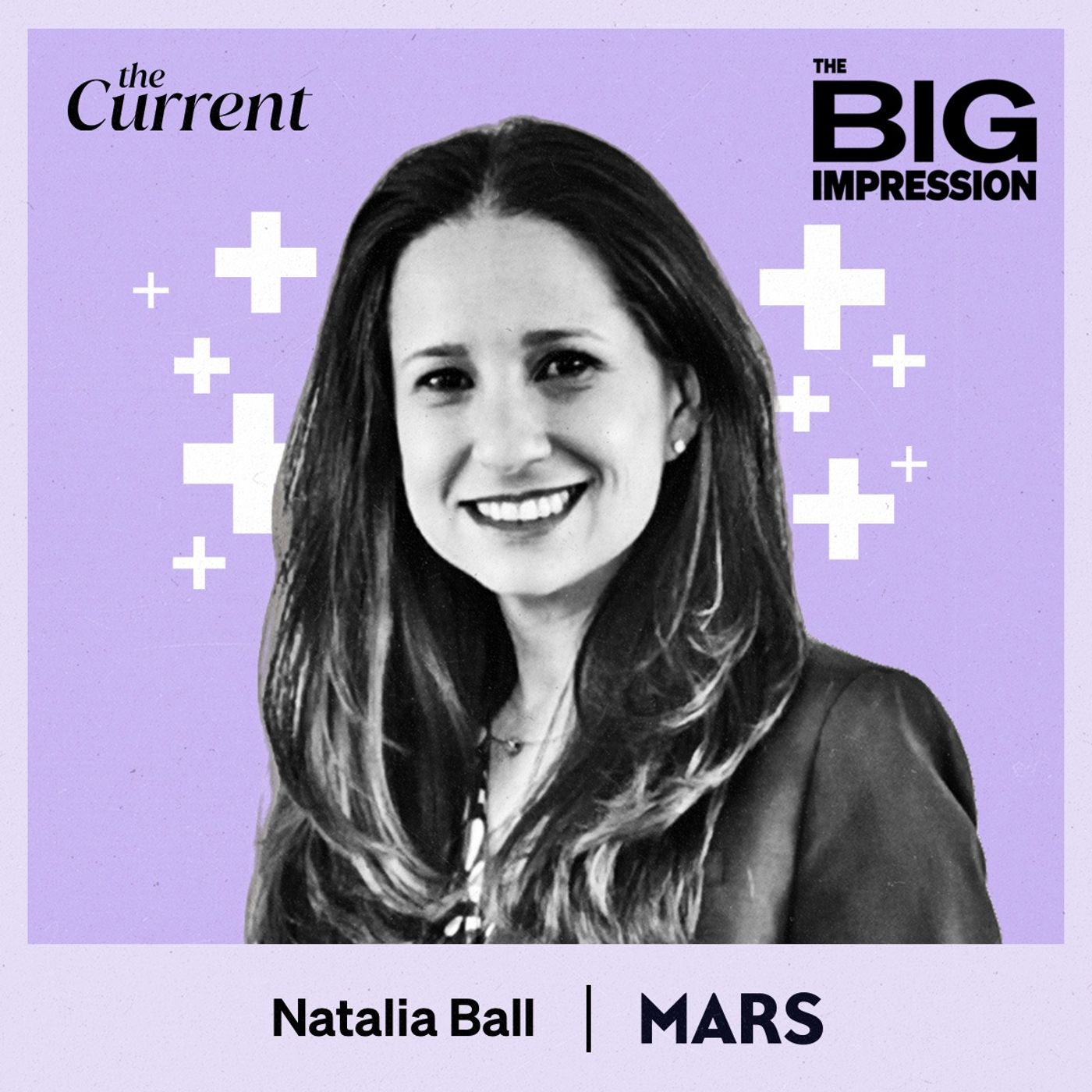
Natalia Ball, global chief growth officer at Mars Pet Nutrition joins The Big Impression podcast to talk about how Pedigree transformed a local Brazilian insight into a global business story.
She also shares why she is now focused on the next frontier of growth: Connected commerce and making sure brands show up when AI agents, not just people, are making purchasing decisions.
February 1827 mins
Natalia Ball, global chief growth officer at Mars Pet Nutrition joins The Big Impression podcast to talk about how Pedigree transformed a local Brazilian insight into a global business story.
She also shares why she is now focused on the next frontier of growth: Connected commerce and making sure brands show up when AI agents, not just people, are making purchasing decisions.
Episode Transcript
Please note, this transcript may contain minor inconsistencies compared to the episode audio.
Damian Fowler (00:00):
I'm Damian Fowler.
Ilyse Liffreing (00:01):
And I'm Ilyse Liffreing.
Damian Fowler (00:02):
And welcome to The Big Impression.
Ilyse Liffreing (00:09):
This week we're joined by Natalia Ball Global Chief Growth Officer at Mars Pet Nutrition home to brands like Pedigree and Sheba.
Damian Fowler (00:18):
Last March, pedigree launched a bold, purpose-driven campaign in Brazil celebrating mixed breed dogs, especially the iconic Vela Caramelo.
Ilyse Liffreing (00:27):
It wasn't just a campaign, it became a movement boosting adoption and challenging long held bias.
Damian Fowler (00:35):
The work went on to win top honors at the 2025 cans. Lions including the titanium lion
Ilyse Liffreing (00:41):
And its impact is still rippling across markets and media channels worldwide.
Damian Fowler (00:45):
So today we're unpacking what made it work with the person who helped drive it. Natalia, tell us about the Carello campaign and how you landed on the idea.
Natalia Ball (00:57):
Carmelos are mixed dogs that are beloved in Brazil. They are found on the streets everywhere. They are the subject of meme, street culture, and people just identify Carmelo as the Brazilian dog. However, the inside that we discover was that this dog is 90% less likely to get adopted than breed dogs. So it is the most popular dog in Brazil, but the most overlooked. And when we learned about that, we decided that we wanted to make a difference and that we wanted this dog to get the position it deserve and pedigree decided to champion the underdog and become the official brand of caramel's in Brazil.
Damian Fowler (01:41):
You talked about the caramel. Could you just describe a little bit more for people who don't really know the caramelo and that term Vita, where does that come from?
Natalia Ball (01:52):
Yes, so caramels are basically mixed breed dogs that you can find on the streets of Brazil everywhere they are called caramel because they are caramel color and that's what it is in Spanish and they tend to be that caramel color, short hair. But there are different ways that these dogs look and feel because they are mixed breeds. But like I said, they are beloved dogs in Brazil, but when it comes to getting a pet, getting a dog, they are not the ones that people are going for. They see them as street dogs, not a dog that you have in your house. And the whole campaign was about, like I said, championing these caramels, driving adoption of mixed breed dogs, not only breed dogs. And we did that by saying that if caramels were considered non breeded, pedigree was going to give them a breed and who better to give them a breath than pedigree.
Ilyse Liffreing (02:48):
Great. And then at what point did you connect that insight to the campaign itself?
Natalia Ball (02:54):
What you need to know about pedigree? Pedigree is one of the largest dog brands in the world. Pedigree feeds more dogs than any other brand, and it has been there for many years and for the past 20 years or more, pedigree has been driving adoption, encouraging people to adopt pets everywhere. We have had a lot of iconic campaigns so much which maybe you would've heard, like for example, docs on Zoom during COVID or the child replacement program, which was a very interesting one. And we were talking about adoption in Brazil, but other local brands were talking about adoption too. So we were not cutting through and it was only when this insight came to us, which was a very deeply local insight that we made the connection, if we want to drive adoption in Brazil, this is going to be the way in and we're going to make this as big as it can possibly be.
(03:51):
Because we, from the very beginning saw we understood this idea of the vi Lata. You mentioned it before by the way, the vi lata is how you call mixed breed dogs in Brazil. And so when we had these conversations about this insight, the injustice of this beautiful dog not getting adopted, but also the cultural impact that it would have on resilience themselves, who could see themselves related in the fact that they were being championed, we decided to go really big on this campaign and not only do just an activation, but actually we are doing this campaign. We did it all of last year and we continue activating through this year. And some of the ways in which we championed this was actually by creating a caramel kennel club by creating the first ever caramel DNA testing. And it's the largest ever DNA test done in mos in all of history, kept creating a Carmelo dog show and not only that, putting caramels for the very first time ever on our packs. So it was really a way to give them the rightful place.
Ilyse Liffreing (05:01):
I love how you guys just took it a step further than even just it being a campaign and you actually adopted it into your packaging and the whole bit. At what point did you realize that the campaign wasn't only just a marketing ploy and it began actually affecting culture?
Natalia Ball (05:23):
Yeah, I mean this campaign has really changed culture in Brazil, but it was a campaign that was deeply rooted in culture itself because Carmelos were part of Brazilian culture. But when we realized the campaign became bigger than ourselves, absolutely. When it started driving difference in adoption of Carmelos, we saw more than 200% lift of caramelo adoption just in the first month. And we saw a 65% increase in likelihood to adopt a Carmelo in the future with this campaign. And then when we started seeing other brands and other businesses even outside of the pet care category start using the Carmelo in their campaigns in their advertising, that's when we knew this had really hit culture big. An example of that was Chevrolet that actually launched a partnership with Netflix that launched a documentary about caramel, and several launched a caramel or a caramel colored car in a promotion.
(06:29):
Other brands like Honda or Whirlpool also feature caramels in their advertising. So we started seeing that this became much bigger than ourselves, but maybe the biggest achievement that we had with this campaign other than driving adoption itself, which was the cost at the end of the day, was the fact that we were betting on the mixed pre-doc actually not being accepted in dog shows because only breed dogs are accepted usually in dog shows. But at the end of the day, the movement became so big that after only two weeks of this campaign, the federation that actually controls the dog shows called us and said, we now want to move to accept mixed breed dogs in all of our shows. So that was a huge achievement that we never knew it would be possible.
Damian Fowler (07:18):
What's really interesting to me about this campaign is the way you focused on one region, one country, one market, but obviously you're a global brand. So how does that connection to the local end up escalating? So it became this global campaign.
Natalia Ball (07:35):
Like I said, adoption is a huge cost for us, and we have been very consistently on pedigree, driving adoption for a long time. So we have an evergreen brief that goes out to all of our agencies on adoption, and in my case in particular, I am a strong believer in creative excellence as a driver for growth. And so I put a creative excellence program in place that included building capabilities on creative excellence, but also creating a creative council where the best ideas could come faster to the marketing leadership of Mars Pet Nutrition so that we could move at speed, but also we could fund the better ideas. And in this creative council DL map team, Al Map VO, who are the agency that came up with this idea presented Carmelo. And from the very beginning, me and the whole leadership team fell in love with it, and so we decided to fund it.
(08:31):
We decided to go big and to give it our full support. We knew it had the potential to drive the business and change culture, and I think in this case, the important thing about the campaign, obviously it did a lot of good. So it's a purposeful campaign and pedigree is a purposeful brand, but it was not only about the purpose, it was also about driving business results. Through the campaign in the first couple of months, we were able to grow 15% and through all of last year, we moved to grow volume and value by double digits. So the campaign really did the job about turning around the pedigree brand and delivering results not only on the cost but also on the business.
Ilyse Liffreing (09:11):
That's great. And you're doing something right when all the other brands out there are copying you guys suddenly in pop culture and everything like that. I'm very curious about as the campaign evolved, obviously it started out from a social aspect, but as it evolved, how did you decide what other channels to bring it into? What other channels did you try out in this process?
Natalia Ball (09:42):
Yes. Actually this campaign started as social first and we then boosted with media. The way it started is we partner with local influencer called Tata Vernick. She loves caramels and she herself has adopted caramels. And we asked her to register her caramel in a dog show because we knew that her caramel was going to get rejected, which it did. And so she posted on her Instagram that had 60 million followers that she was outraged that her beautiful and smart caramelo could not be accepted in a dog show. This went viral immediately in Brazil and everybody was outraged. This went on the evening news, the morning shows everywhere, and we waited for it to gain enough fire for us to step in. So actually we were planning that this was going to take a couple of days, but at the end we had to act after only 10 hours because this became so big so quickly.
(10:41):
And we step in and we said, you know what, Tata, don't worry. Pedigrees got you. We're going to give all caramels a breed. And we launched the campaign with our beautiful campaign video that talks about our program of giving them a DNA test, giving them a show, giving them a kennel club and giving them everything that breed dogs have. And then after that, we use that video and we boost the message. The video went viral as well, but we boost the message, for example, with connected TV as well as Prime and Disney, et cetera. So in order to make sure that everybody had listened to it, but it was truly an omni-channel approach because we use a lot of offline tools like for example, the dog show itself that we created or the adoption drive that we had later on where we were invited people to adopt caramels and then online tools like Instagram or Connected TV or Disney, et cetera.
Damian Fowler (11:38):
You suggested that the kind of timeline got really sped up really fast. So this thing you had to act very quickly. At what point did you realize you had a hit on your hands in a way, and how quickly did it escape the local context and became this bigger campaign that everyone looked at?
Natalia Ball (12:01):
Yeah, this exceeded all of our expectations. So we knew that it was going to get picked up, but like I said, we were not expecting for this to become so big so fast. And the fact that it appeared in all of the big shows, evening news, morning shows, et cetera, it appeared as well on national media, on print Everywhere meant that we needed to step in faster, but we were fully prepared for that. So that didn't represent the challenge. It was more of an opportunity. And then the other thing that really surprised us was that the largest dog association reached out to us after only 24 hours to partner to see how mixed beat dogs could then be allowed to compete. We were not expecting this. We were expecting actually that to be attention point that we were going to leverage in our campaign, and this became so big that they just couldn't ignore it. So it was a big win just from the very beginning.
Damian Fowler (12:57):
Wow.
Natalia Ball (12:57):
Now one of the things that we're seeing is even though this was very, very local, as we have started sharing this work across many other places in the world, we have realized that the insight actually exists in many other markets. For example, in Chile they have a dog called the Quilter, which is the equivalent of the caramel. We have them in Philippines, we have them all over the world. So this insight can travel. The way to activate might be different because you need to localize to the nuance, but we are very excited about the potential of drive more inclusion of these dogs with these campaigns, but also for pedigree to stand stronger in culture.
Ilyse Liffreing (13:36):
I love that. As a dog owner, myself and owner of a mutt, I'm glad they're getting their time in the spotlight a little bit more around the world. Generally, I feel like post COVID in the marketing world today, some brands have actually moved away from purpose-driven marketing a little bit, but this is a really good example of it done right. What would you say this campaign proved or maybe disproved about purpose-led marketing?
Natalia Ball (14:04):
I am a strong believer of purposeful brands actually growing stronger, but it only works when it's aligned truly and authentically to the reason for the brand to exist. Pedigree itself, the purpose of the brand is we believe that dogs bring out the best in us, and pedigree wants to bring out the best in dogs. So the purpose of pedigree is pedigree brings out the good dogs bring to the world to do that. We obviously do that with our great nutrition, but we do that by putting dogs in houses so that they can bring out the best in people. That's what we do because we strongly believe that dogs make us better. So that's why we have been driving adoption for more than 20 years. And when you really make this part of your core DNA and it's authentically linked to the brand, that's when it really works.
Damian Fowler (14:56):
And one of the proof points of that is the awards that you scooped up last year. Can you tell us a little bit more about how that happened? And that must have happened quickly because the campaign rolled out in March, 2025 by June, you're already in the spotlight.
Natalia Ball (15:13):
Yes. So this campaign was picked up for a lot of awards at Cannes last year. We won the Rainbow, silver, gold and Titanium. The titanium we are very excited about because it's Mars Inc. First ever titanium. So we are really proud of that, and it's also an award that rewards transformation in the creative industry, and we believe this idea was transformational. We're also proud of, I mean, we've got the many other awards, but the other one that we're really proud of is that we got the Grand Phy in the latam phy and in the Brazil phy, which shows that this was not only a creative idea that was very strong, but also a very effective idea in driving the business. So you can achieve both. You can do good in the world, you can drive the business and you can be creative actually. So it's three.
Damian Fowler (16:03):
Yeah, that's great. I love that trifecta. What happens to the titanium award?
Natalia Ball (16:09):
Well, I have it right here
Ilyse Liffreing (16:10):
With me.
Damian Fowler (16:12):
No
Ilyse Liffreing (16:12):
Way. Very nice. Beautiful here. It's beautiful.
Damian Fowler (16:16):
Beautiful. Well, congrats again. So from that, obviously momentum has come on. We've talked a little bit about how it influenced other brands, but in terms of the campaign continuing, what's next? How are you thinking about expanding this?
Natalia Ball (16:33):
In Brazil itself? We want to stay committed to this idea. We don't want to do one and go, and we are working, we continue activating the campaign through all of our channels. We continue doing adoption drives. For example, very recently we released the results from the DNA research that we did. So we find ways to keep this relevant. But now I think the next stage is to move on from not only caramels but all mixed breed dogs. Because with this campaign, the sentiment has been extremely positive. We got 99% positive sentiment. The only 1% negative comments was what about the other mixed breed dogs? They also deserve to be adopted. They also deserve recognition. So I think that's probably where we're taking it next in Brazil and then outside of Brazil, we are working on, like I said, these inside travels very well, but we're working on how to localize it in a world that feels authentic for the specific markets. I can't share anymore. Stay tuned, because some interesting things are coming soon.
Ilyse Liffreing (17:44):
And it sounds like that theme is going to keep going with this idea of all putting mutts in the spotlights from now on too.
Natalia Ball (17:54):
Exactly, yes. This is about inclusion. At the end of the day, our hope is that mutts are shown everywhere. We also love breed dogs. They're great. All dogs deserve to be feature everywhere. So our hope is that this campaign will drive inclusion, inclusion in advertising, inclusion in homes, inclusion everywhere.
Damian Fowler (18:16):
Another thought I had actually is when you were filming this campaign, did you have any standout caramelo stars?
Natalia Ball (18:22):
Actually, actually, I think our biggest star was Patas Caramel, which we then did a lot of things with her, I think. I mean, I don't record very well, but I think it was Mia, her name, but we did a lot with her in our activation. She was present when we did the dog show, et cetera. So I think that was our biggest star.
Ilyse Liffreing (18:43):
Oh, that's great. It can't always be that easy to shoot with dogs though, even if they're very well-trained, I imagine it's still a different world than human actors. So Natalia, what problem are you most obsessed with solving right now?
Natalia Ball (18:59):
I am right now obsessed with agentic commerce and agentic search and winning the race to that
Ilyse Liffreing (19:08):
Because
Natalia Ball (19:09):
I'm really concerned that in only a couple of years, if we are not winning, we will completely disappear the way all decisions are going to be made. So together with my team, we're trying to figure out how do we stay ahead of that race and how do we crack it pretty soon, so we're ready future.
Ilyse Liffreing (19:26):
Wow. And just to press you a little bit more on that, so you're talking about probably using agents on your website directly.
Natalia Ball (19:35):
It's about we are very good about marketing to people. We have cracked the code on how do we talk to people. We have the best insights in pet care, so we know how to create compelling stories that humans will listen to, but we need to crack how to market to agents, how to market to the machine because they are going to be making a lot of decisions for us in the future, in the very near future. And that's what we're working on.
Damian Fowler (20:05):
You're talking about media buying specifically on the creative side of it
Natalia Ball (20:12):
Or the LLM. This is about how do you make your brands show up in searches that are being done on ai? This is how do you make your brands be the ones that get recommended to be bought? So for example, when you're on Cha G PT and you're asking Cha G pt, I got a new puppy, what brands should I buy for my puppy? We want our brands to be the first ones to be recommended if you are going to buy a gift, anything like that, we want our brands to show up and we want our brands to show up in good light. And so that's what we're trying to figure out and to win. There is a combination of how do you have the right content in the right places? How do you get the right third parties to talk about you in the right way? What are the media channels where you need to show up? How do you optimize your search? So it is a very complex way. We need to crack the algorithm basically.
Damian Fowler (21:12):
On that point, how do you ensure your marketing teams have the right capabilities for success?
Natalia Ball (21:19):
Well, that's a big priority for me as CGO is one of my main jobs is to make sure that we're building capabilities for today and for the future. So in my team, we have a strong capabilities program where each and every one of the people on my team owns a capability and owns making sure that we get best in class content training and as well as the tools, because it's not only the knowledge, it's also the tools in order to do that. But the reality is that none of this works unless you are creating a culture of curiosity. And I really want to instill that in myself and in my teams because the industry is changing so fast. The minute you think you have cracked something, there is a new challenge. And the only way to stay fresh, the only way to stay in line with what's happening is to be curious. Whenever you don't know anything, go and ask someone who knows, go and ask questions like really try to learn instead of fearing the change, be curious about the change, and that's the way that we will build future proof capabilities.
Ilyse Liffreing (22:22):
Beyond ai, how do you see the role of connected commerce in the pet industry? Are there any other channels, for instance, that you're testing out? I'm thinking of are you testing shopping ads on CTV or any of that?
Natalia Ball (22:40):
Connected commerce is extremely important for us in pet care. The reason for that is because this category is one of the highest engagement categories that there are out there. People are making decisions for living beings, and they need to do deep research in order to make those decisions because they have real consequences. And so people are very engaged in reading through rating and reviews, and connected commerce gives us an opportunity to connect better with pet parents in those moments that matter most. We also, when it comes to pet care, a lot of our products come in huge bags that are hard to carry. So actually the fact that the convenience of those bags getting delivered at home make so that digital commerce becomes really important in our category. And so what we're trying to is to really help consumers navigate the pet parent journey and moving from content to commerce in a seamless way so that they can make the best decisions for their pets and that we are helping them along the journey to make those decisions.
Damian Fowler (23:46):
Okay, here's another, what's one marketing rule? This campaign, the Caramelo campaign happily ignored.
Natalia Ball (23:52):
The one rule that we happily ignore is about keeping your distinctive memory structures consistent because pedigree has always had a golden retriever on its pack. But with the Caramel campaign, we thought that it would be hypocritical of us to feature a breed dog while we were championing a mixed breed dog. So for the first time ever in history, we changed our pack and we feature a caramel, and this made the news again. And this was a huge bold move that we made and that made the campaign even more authentic and more powerful.
Ilyse Liffreing (24:28):
Now we have a fun one for you. Personal one really. Are dogs better than cats when it comes to brand lift?
Natalia Ball (24:36):
Oh, when it comes to brand lift, well, actually both are great for brand Lift. We actually have studies that show that when you feature cats or dogs in advertising, attention significantly increases emotional connection, significantly increases. This is why you see a lot of brands that are not in the pet care space featuring cats and dogs. They are both fantastic. Cats are more powerful in meme culture, as you probably know. They are huge in meme culture. And then dogs are some of the biggest stars in social media today. Some of the biggest accounts on social media are dogs accounts. So we are lucky that we get to work in this beautiful category because people want to see dogs and cats. I myself have a dog. My dog's name is Bella. She's been with us for three years and she's great. But the more I work in this category, the more I'm falling in love with cats as well because they are so particular and so unique. So yeah, both are fantastic.
Damian Fowler (25:45):
And that's it for this edition of The Big Impression.
Ilyse Liffreing (25:47):
This show is produced by Molten Hart. Our theme is by love and caliber, and our associate producer is Sydney Cairns.
Damian Fowler (25:54):
And remember,
Natalia Ball (25:55):
You can do good in the world, you can drive the business, and you can be creative.
Damian Fowler (26:00):
I'm Damian.
Ilyse Liffreing (26:01):
and I'm Ilyse
Damian Fowler (26:01):
And we'll see you next time.
Dive into more insights and inspiration from leaders in ad tech: https://www.thecurrent.com/
Hosted by Simplecast, an AdsWizz company. See pcm.adswizz.com for information about our collection and use of personal data for advertising.
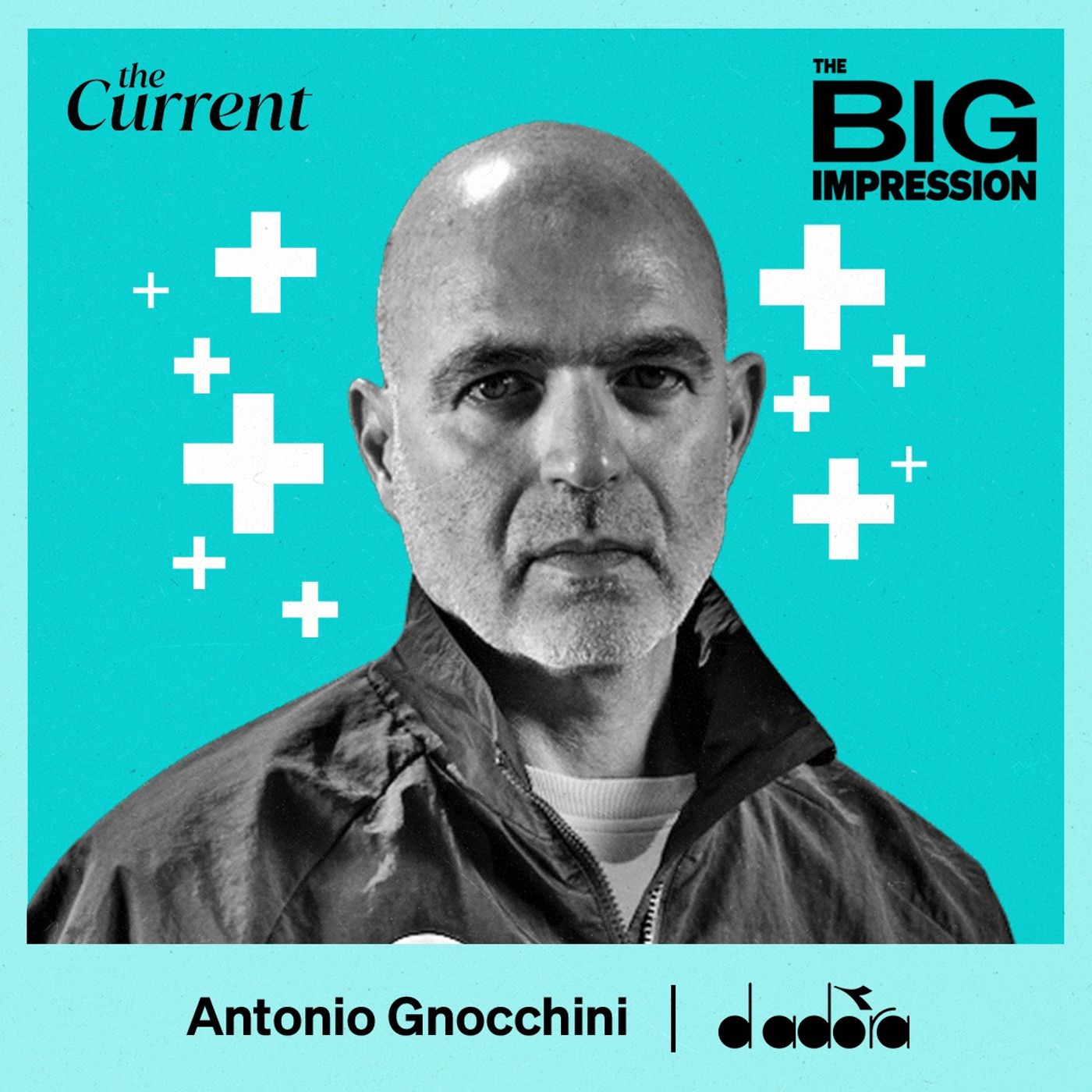
Diadora CMO Antonio Gnocchini joins The Big Impression to discuss winning the Paris 2024 Olympics as a challenger brand and why “discovery” beats heritage in modern sports marketing.
January 2230 mins
Heritage sports brands may be tempted to rely on their history to appeal to a new generation that wasn’t there to see it. But in the fast-moving digital attention economy, that’s a mistake, says Antonio Gnocchini, chief marketing officer at Diadora.
He joins The Big Impression podcast to explain how the iconic Italian brand is reclaiming its spot in the performance market. By leaning into a challenger brand mindset during the Paris 2024 Olympics — without the price tag of official sponsorship — Gnocchini and his team are shifting the focus from nostalgia to high-performance innovation.
Episode Transcript
Please note, this transcript may contain minor inconsistencies compared to the episode audio.
Damian Fowler (00:00):
I'm Damian Fowler, and welcome to this edition of The Big Impression. Today, we're looking at how a heritage sportswear brand carved out its own spotlight at the Paris 2024 Olympics without being an official sponsor. My guest is Antonio Gnocchini, Chief Marketing Officer at Diadora, the iconic Italian brand known for its made in Italy craftsmanship. In the lead of the Paris, Antonio and his team launched a global brand campaign built around Diadora's roster of Italian athletes from Trackstar, Larissa, Yapacino, defensers and speed skaters, all while showcasing innovations like the Atomo Running Shoe. That's the first high mileage running shoe made in Italy in three decades. We're going to break down how Diadora timed its campaign to maximize the Olympic moment, how it differentiates itself from giants like Nike and LVMH, and what this strategy says about building awareness in a crowded high-stakes marketing landscape. So let's get into it.
(01:07):
Antonio, can you tell us about why the Paris Olympics was such an important moment for Diadora as it sought to elevate its brand name again?
Antonio Gnocchini (01:18):
So if you are a multi-category sport brand, Olympics is certainly the big event, the main event, your main catwalk of the main show. And you prepare for it for a long time because you need to be in one of the most competitive environment with the best product, competitive athletes. Everything needs to be perfect. And it's also one of those moments in which you can go deeper with attention, with messages. If you are serious about sport and you want to communicate, sport brand values, what you really stand for, it's not easy, especially today in moments in which the attention is not much, few seconds from everybody. Channels are very fast and flattened messages very easily. The Olympics is a moment in which for a few weeks you have the attention. You have people connected and engaged. You have people who care. And so it's a perfect environment to talk again about what you stand for.
(02:41):
And so going back to the Olympics was a statement to say, we actually are a competitive sport brands, a performance brand, not only lifestyle of it. And so yeah, it was such an important environment for us. Also, these Olympics was maybe one of the first ones that I've seen since I started doing this job when you could see some challengers brands activating and being visible.
(03:15):
In the past, this was really an event only for main sponsors and official sponsors mostly. Now this is a moment of challengers. And if you find the right way and if you had a good connection with your outlets, you could be doing a successful marketing campaigns and actions.
Damian Fowler (03:35):
That's really interesting to hear you say that. And I think, and I'm curious to hear your thoughts on this. Is the kind of media environment that we exist in now, does that make it possible for challenger brands to find a way to reach audiences that they otherwise might not be able to find back when it was the main TV channels and big glossy mags, there are more niches now in many ways.
Antonio Gnocchini (04:00):
There's a very interesting report that Business of Fashion and McKinsey release every year. And the most recent one was a study from McKinsey, which they were showing displaying how the sport market, which was dominated by only few incumbents. And you could see that at Olympics, still today, the most recent one, the usual suspects are dominated most of the sports. But in this past few years, there is a change going on in which incumbents are really under pressure from Challengers brand in the sport industry. They're gaining momentum. Challenges are gaining space, gaining market share, and also visibility. And you can say that maybe this is linked to the explosion of running as a global movement, but it's not only that. Running certainly as contributed, because running is one of those categories that is really extremely democratic. And yeah, sure, track and field main athletes, famous names help, but you can become a successful running brand without having only the most amazing hundred meters runners.
(05:37):
You can be successful by working in other ways. And you see brands starting to become more visible through running in the sport industry.
Damian Fowler (05:47):
What's interesting about Diadora is that it has this very significant legacy as a sports brand. I mean, I think back to my childhood when I used to absolutely love Beyond Borg. And as soon as I saw the name Diadora, I remember Borg. And of course there's other soccer legends like Roberto Baggio or Francesco Totti. But in recent years, it's been a little bit maybe eclipsed by bigger brands that you just mentioned. So you're a challenger brand, but you're also a legacy brand. Could you explain a bit more of the context around the history of the brand?
Antonio Gnocchini (06:24):
If you are passionate about sport, when you land at Diadora and you visit the museum, it is a kid in a candy store. That was my experience at the museum is you could see in real life the objects of desire of your youth. In my bedroom, I had posters of all these heroes and there's a moment, there's a scene in King Richard with Will Smith, in which you hear for a moment in the movie, you hear Venus and Serena Williams coach telling Richard Williams to wait on the Nike offer because the perfect offer for any tennis player at the time was the one Jennifer Capriati was getting from Diadora. When I watched the movie, I was like, whoa. So we wear really the tennis brand and the brand that was in relation with athletes, especially tennis athletes. We were the tennis athletes brand. What happened?
(07:34):
I think that the brand, the company really focused for few decades on product, product marketing, sports marketing contracts, traditional marketing actions. While in the meantime, other brands, other sport brands have become very sophisticated, very innovative in their marketing strategies, films where Nike's main language and they were exciting product of their marketing department. I think the brand here, the Theodo has been focusing on other things and lost the engagement with consumers globally. And then for a few years, as I was saying, the focus had been really on capitalizing on its legacy and becoming more of a lifestyle brand. But in reality, the market can tell you that if you're not serious about sport, you lose your credibility as a lifestyle of sport brand.
Damian Fowler (08:42):
Yeah. So the new campaign or the more recent campaign is about reasserting that sports connection. How else would you define the brand as it is now?
Antonio Gnocchini (08:57):
I think that what we needed to do ... So the first thing that I wanted to do is to prove that the sensation, the feeling that we had was correct. So we run a long and insightful brand health monitor study, and the results of that study was showing that, yes, that we were a legacy brand, people recognized the name, but they couldn't really link it any longer to specific performance product, and they were not buying performance product any longer from the Adora. So we were also associated linked to values like being Italian, but at the same time, it was this idea of romantic Italian, quaint, Italian, traditional. If you want to be successful in sports, you have to talk about innovation, you have to be recognized for your capacity of being a technological advanced company. And so the main effort for us in the beginning was to go back into making sure that our research and development center was up to speed and that the marketing department was capable of telling these type of stories because these stories were in fact very important for our consumer, for our focused consumers, the focus of our target, a younger consumer that wanted to talk about sport, they wanted to be capable also of discovering innovative brand sports.
(10:44):
So even if we were not one of the main incumbents by being authentic in sport, especially in running and in other categories, by being authentic, we could engage with this young consumers who was interested in discovering new brands that have an innovation angle that was really relevant.
Damian Fowler (11:11):
Yeah, that absolutely makes sense. I'm interested to hear you talk a bit more about that audience group that you really wanted to reach and the profile of that group. And presumably there's an element of conquesting going on because you've got to get them from some of the bigger names that we've already talked about.
Antonio Gnocchini (11:29):
Yeah. As I was saying, running has become one of those category, goes beyond just track and field, goes beyond the daily jogger, goes beyond ... It is really something that touches wellness, fashion is playing into running a lot. Everybody is doing running collections today, not just the usual suspects. We wanted to make sure that in this environment in which you had a lot of noise, we could be recognized as authentic, as separate from the noise. So we wanted to talk with a niche and then make sure that that authentic young athlete was putting the mileage out. So it wasn't talking about running, but putting also the miles and the sweat in running. There were those consumers that were scheduling all their weekends around the run, around the race, so the real authentic runner could recognize that we weren't distracted by all this running noise. We were serious.
(12:48):
So our messages were we run a campaign that is called Normalize iMileage that was directed only to that type of consumers that could recognize the acts and the gestures and the typical struggle of that type of runners. Even if that meant alienating for a little bit a wider audience, because we know that with a wider audience, we had less capacity of rich. We didn't have the muscle for them. But we see today that when you are authentic and strong with that type of niche, that niche creates expansion and creates influence, and then you start to resonate also in other markets and with other type of consumers.
Damian Fowler (13:39):
Yeah. Can you talk a little bit more about how you set the stage leading up to Paris to build that buzz that's going to resonate across all these different outlets?
Antonio Gnocchini (13:51):
Yeah. We decided, as you can imagine, getting attention is ex extremely difficult, especially today. The new channels are flattening everything and everything is so few fraction of a seconds between your thumb and in your face, it's very hard to go deeper with messages. And if you want to go deeper, you need to find ways in which you can. And for us, our strategy was, okay, we need to stop their attention, stop their eyes for longer.
Damian Fowler (14:35):
I'm curious now to see, given the kind of media exposure that you started to establish, how did it play out during and after the Olympics, and how did you capitalize on it essentially?
Antonio Gnocchini (14:49):
So we monitor during the main events at the Arsenal, we made sure that all the guests and all the people, all the stakeholders of sport were well-informed and also capable of giving the right message out with the proper information. And then we started collecting and amplify this type of information, then feed them also to our partners in the market, retailers, key accounts. All of this helped us make sure that the product was properly displayed and also was selling out in the right moment in time. And by being nimble and agile and fast, we had a great success on this. The content that we had created, we noticed that they were getting a completion rate of 97, 98%. We never had completion rates so high. So we knew that we had something that was resonating. We only needed to be insisting on it and fasting the reaction by feeding athletes, giving the same content to them, and that's it.
Damian Fowler (16:08):
And you mentioned that 97% completion rate on videos and things like that. That's obviously an important metric. What else did you do to measure brand buzz? And then maybe then how did you connect that to sales?
Antonio Gnocchini (16:21):
Every year we do a brand study, a brand health monitor in order to understand the feeling and how our values are perceived by consumers. If there is any change in what we're doing that is affecting their point of view on the brand. Then we do social monitoring on a daily base, especially when we post and when we have athletes performing our.com and a good connection with key accounts, get us data on results and how what we do resonates on the market. That's pretty much what keep us informed and get us a good understanding of what we're doing.
Damian Fowler (17:05):
How did this push around Paris help define the current market right now? And what does it also tell you about where you should build next?
Antonio Gnocchini (17:15):
It is a confirmation that it is a challenger moment. It is a confirmation that if you establish a conversation with your consumers, you can expand and you can gain market in a market that was completely polarized and dominated by only a few brands. It is also confirmation that if you are authentic, at times, maybe even very vertical in your attack to the market through the category, we don't do every sport. We only are focusing now on few sports, but to do them with authenticity, this is also resonating a lot and you have to be ready for sport moments, which means every sport moment that it's not only Olympics, even minor sport moments, if you're capable of being ready and capitalize on it with your athletes, it's a great tool.
Damian Fowler (18:20):
You talked about using innovation, being on the cutting edge to reach a new generation of fans, but do you also still infuse that with some of the golden age narrative that Diadora has? Yes,
Antonio Gnocchini (18:33):
We do. We balance. We try to balance the messaging in that sense, but I think what I've learned in this past few years here is that this is no longer the sneaker culture generation where you could go and have long session and education and talk about the history of that specific model, and you would have this passionate nerd of Sneakers that would then storytell the whole thing to Hollist friends and everybody were buying into it. Everybody was buying into it. I think every time we preach about our history, every time about we try to give lessons, especially the younger generation, it doesn't seem to be interesting and doesn't like it also. But what we see that they like is what they discover. So we have to be ready with the right information. We have to give them a story that is compelling in term of product, in term of innovation, and then let them discover the history behind it, the art, let's say, the origin of the whole story, and where is this coming from?
(19:54):
So maybe one thing that I'm seeing that it's also a learning is the fact that brands ... I've seen brands just trying to capitalize on the fact that one product story has to be successful because it's linked to this specific moment in time, and you consumers should know about it and should buy about it because of that. It doesn't really resonate to consumer any longer. You need more than that. And so, yeah.
Damian Fowler (20:27):
I love that. I think it's so interesting to hear you say you can't preach to consumers, but you can allow them the opportunity to discover. I think that's such a great insight. I think that goes for any storytelling, to be honest.
Antonio Gnocchini (20:45):
I think you're right, but I think it's specifically more valid now in which I believe that you need to have your story perfect and you need to have the details of your story needs to be really well done. People think that you can simply post in every second and be very fast in making sure that consumers will see fresh things every second, digest it very quickly, and then post new ones. Especially for us, this doesn't prove to be right.
Damian Fowler (21:24):
I had a good guest on this podcast a few editions ago who talked about how brand messaging is in everything, the tactile element of the brand. He used Harley Davidson as an example, it's not just a bike, it's everything you encounter in the showroom, the quality of the materials. And I'm getting that sense when I look at Diadora and the Diadora site that their brand messaging comes through in the product line.
Antonio Gnocchini (21:55):
This is very true and very valid. Again, if you want to be serious in your relationship, in your conversation with that niche audience, it means that every touchpoint, every single touchpoint needs to tell something about that story, otherwise they will immediately perceive that it's not authentic
Damian Fowler (22:21):
Any longer. So let me ask you big picture here. So for marketers listening, what's the lesson here that you can tell? You came from Nike, but now you're at Diadora. So you've seen what the big heavyweight brand has done and can do, but what can a smaller brand learn from your experience, I guess, whether it be about future forward channels like CTV or retail media or programmatic or social? Sorry, let me just ask you ask that more simply. What can a marketer learn from your experience trying to market this, bring this brand back into view? I
Antonio Gnocchini (23:04):
Think the most important thing for us has been to be capable of focusing on doing few things and do them perfectly, or at least as perfect as we could do. You are challenged to be very active and be reactive and also try to capitalize on every single product you have in the line and every sport that is played is an opportunity of doing something. The reality is if you want to start to resonate, you need to establish a valid conversation with your core focused consumers. And to do that, you need focus. And this means also at times being capable of saying no to things that you could be doing or that you get pressure from anybody or everybody in the company to do, and also the pressure from the market many times. Again, let's remember that this was a market in which you were supposed to drop a new product every few weeks, so we don't do that.
(24:23):
And we try to talk about innovation only when we have real innovation to communicate. And then when you do build an authentic story and a strong story with every touchpoint connected in the right way, this to me proved to be successful.
Damian Fowler (24:44):
Going back to Paris, that was obviously a huge high watermark for sport last year. As you look ahead to next year, is there anything that's on your calendar that's one of those moments where brand and moment have that synchronicity?
Antonio Gnocchini (25:01):
Olympics is not something that you prepare the season before. So next Olympics is already something that we are studying, preparing for, sweating about. We have to prepare all our innovations. We have to be ready with the right messaging. We have to find the right athletes, and we have to have a strategy on what type of messages we want to focus on. So LA Olympics is certainly something that we look at and we dream of.
Damian Fowler (25:40):
Let me turn to the last section here and just ask you some quick fire questions, if I may. One of the things I wanted to ask you is, is there a sports marketing trend that you think is overrated?
Antonio Gnocchini (25:51):
Maybe there is something that is a bit underrated, which is the fact that some lesser known sport events and maybe not the main athletes, but the local athletes, they are underrated. You can build excellent engaging campaign through those.
Damian Fowler (26:17):
What matters more in the next five years? Heritage, innovation, or cultural storytelling?
Antonio Gnocchini (26:24):
If I may try to put them in order, I would say cultural storytelling for me, then innovation and then heritage. If you do cultural storytelling well, I think your legacy, your heritage is probably already well told in there, but I think that you, again, it's a moment in time which I will never stop stressing the fact that you need to be capable in storytelling properly.
Damian Fowler (26:57):
Is there anything missing in the ad marketplace today that you perceive?
Antonio Gnocchini (27:01):
Data that goes beyond just the reach of a campaign. And even the reach at times is not really ... And not everything is so perfect and reliable. If you could find a way ... You remember where you were studying marketing and the sentence from Wanamaker, I don't know which half of my money spent is wasted. I go back to that. I've been promised by these new tools and these new digital tools that I will know better, but it seems that to be capable of really reading through the noise and getting valuable data that goes just beyond rich, it's still hard and it's still at times not that reliable. And then the other thing is I see an inflation in the attention economy that makes me think that I need to find new ways and new channels and not only finding great storytelling. The reality is my stories, if I even have a great way of telling, if even when I have a great story, at times I need to change it and distort it in order to be played in these new environments, in new digital channels.
(28:40):
These channels at times distort the values of my brand, and I want that not to happen. So I need to find better ways and better channels.
Damian Fowler (28:55):
And that's it for this edition of The Big Impression. This show is produced by Molten Heart. Our theme is by Love and Caliber and our associate producer is Sydney Cairns. And remember.
Antonio Gnocchini (29:04):
I think the most important thing for us has been to be capable of focusing on doing few things and do them perfectly.
Damian Fowler (29:15):
I'm Damian, and we'll see you next time.
Dive into more insights and inspiration from leaders in ad tech: https://www.thecurrent.com/
Hosted by Simplecast, an AdsWizz company. See pcm.adswizz.com for information about our collection and use of personal data for advertising.