
November 23
Over the last year, I’ve been on a journey to understand the history of measurement in advertising.
I’ve asked hundreds of people to tell me the ad that most influenced them in their life. More than 95% of them discuss either a TV commercial that was at least 30 seconds long or a radio ad centered around a distinct and unforgettable jingle.
After talking to measurement experts, brands, CMOs and other senior leaders of companies who participate in measurement, I’ve learned a lot from the many different perspectives. I also uncovered some of the history that got us here.
At times, it reminded me of when I took a friend and colleague to London for the first time. I vividly remember watching him stare perplexingly at a map trying to make sense of the layout of the city. Clearly, he was hoping for a NYC-like grid and was finding no system or pattern that could explain the city. After a few minutes of bewildered examination, he finally exclaimed in frustration (and frankly, quite understandably), “Who designed this place?!”
Those twists and turns are now (and probably forever) a part of the London experience that are explicable only through an understanding of history, not a simple architect-designed system. The map wasn’t designed in a day or by a person or committee. The layout is a result of over a millennium of evolution.
Measurement in advertising has its own complicated, counter-intuitive evolution.
I spent a great deal of time understanding how we got to this moment in streaming, with its measurement challenges, standards and imperfections. Like London, the ecosystem is complex. And while its evolution has taken place over less than a century, its messiness, inefficiencies, imperfections and suboptimal ubiquitous standards can only be understood in the context of history.
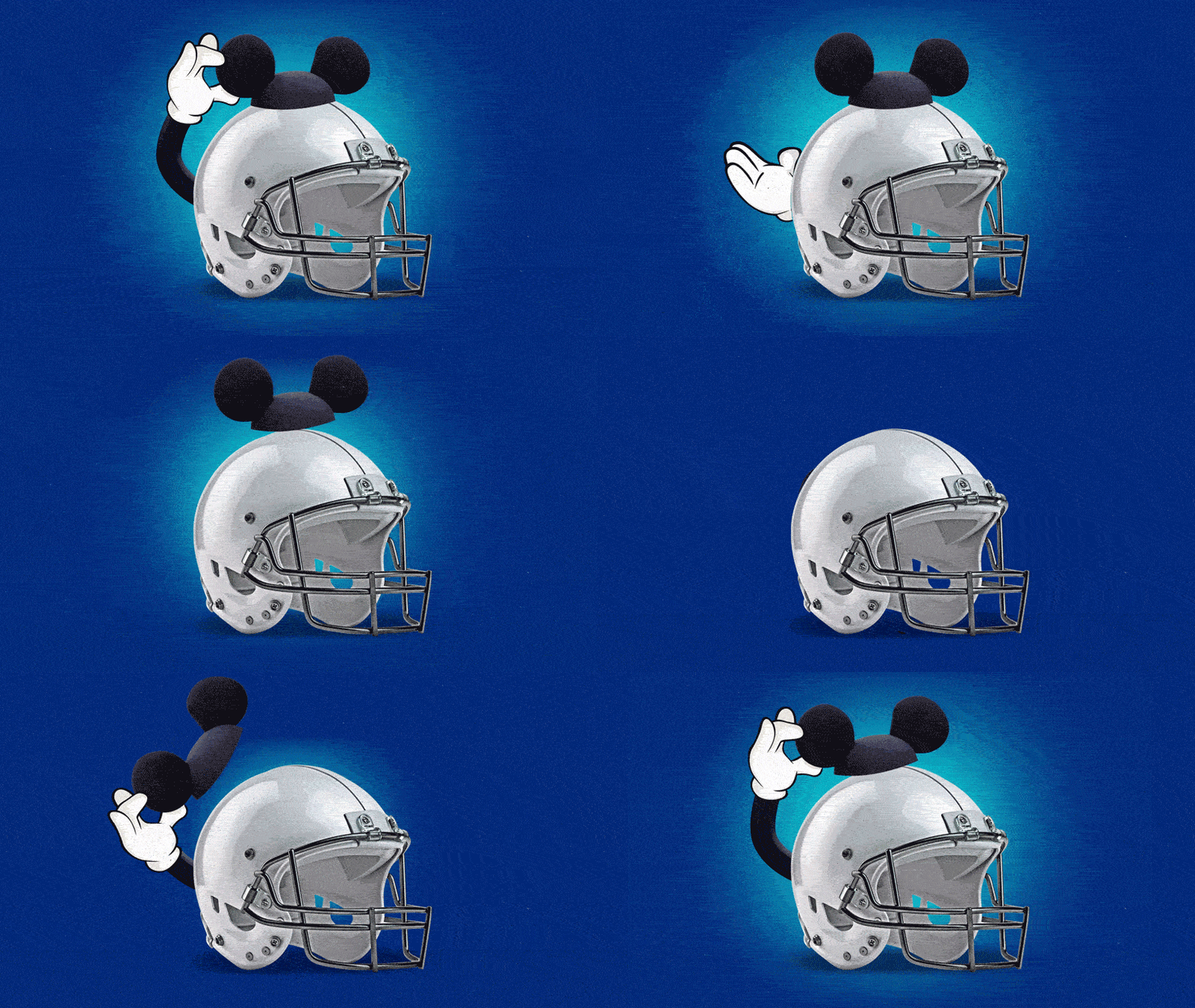
Along the way, I happened upon what I believe is the best $75,000 ever spent on advertising. And there is a lot of insight to be learned from its success.
The idea originated with Jane Breckenridge, Michael Eisner’s wife, during a dinner party with Dick Rutan and Jeana Yeager shortly after they completed the first nonstop, unrefueled flight around the world. After hearing the details of the voyage, she asked, “What are you going to do next?"
Rutan, the pilot of the plane, replied, “We’re going to Disneyland.”
Jane had an epiphany. She then suggested to the group including her husband, Michael, the CEO of Disney—that would make a perfect slogan for an advertising campaign.
He listened. She was right. The rest is history.
You can argue that it was the best $150,000 spent in advertising. Both Phil Simms, the New York Giants quarterback who won and delivered the now-famous phrase, and John Elway, the Denver Broncos quarterback who lost but was prepared to say it if his team won, were each paid $75,000.
This phrase has since been said (with only slight modification) after every Super Bowl since—except for when Tom Brady won in Super Bowl XXXIX. Only one miss in four decades.
I think it is worth considering why this was and is one of the most successful ad campaigns ever. After all, it’s still running after 40 years! And Disney’s brand growth over that time is an actuality that feels as much like a fairytale as reality.
There is something powerful about being associated with greatness. Perhaps we all hope a little of that Midas touch rubs off on us. Perhaps this is why so many of us get nervous or act differently when we are around celebrities, despite knowing they’re human and ordinary in most ways just like the rest of us. Ordinary people like to associate with greatness. It makes us feel extraordinary.
Disney’s association with arguably the pinnacle of American sports is a smart branding move. But there is even more to its brilliance.
What we’re learning more and more, clearly from the science of advertising, is that advertising, memories and emotion are all deeply enmeshed. To create a memorable ad, marketers have to make the viewer or listener feel something. If they feel something, they will remember it.
So at the very moment the victor is declared, right when Super Bowl viewers’ emotions are at their peak, Disney inserts itself into people’s memories.
Whether your team won or lost, you are emotional and receptive. If your team wins, the emotions are more positive and likely so are the associations. However, if your team loses, the emotions can be in many cases more memorable.
This advertising is genius. Jane Breckenridge was likely tapping into this reality intuitively, long before ‘influencer’ became part of marketing vocabulary. Disney found a way to plant its brand in this rich soil of emotions. Doing that over and over again is how the most iconic brands in the world are built.
Great advertising makes us feel something. Great media amplifies that. Together, these feelings become memories. And it is through these memories that great brands and the premium side of the internet are built.
Observing the top 100 brands in the world reveals that brand-building is not at its best right now. Some are doing great. Many brands have failed to adapt brand-building techniques that made them thrive before the internet and streaming.
Fusing the best of the brand-building with digital targeting and measurement can create the most effective advertising ever, but digital capabilities have come with complexity that make it hard to navigate, like the streets of London.
Before us is an opportunity. The same brand-building techniques that helped create companies like Disney can be applied to the Open Internet, where advances in measurement and market-driven price discovery create the opportunity to build brand more effectively than ever before.
If we fuse the improvements that digital has brought us with the brand-building strategies that were working long before the internet, we’ll combine improved price discovery, measurement and targeting with the best of brand-building.
The Open Internet is our best (and perhaps only) hope to create the most scaled, cost-efficient, brand-building advertising ever.
The Current is owned and operated by The Trade Desk Inc.