
July 21
This is the second in a three-part series on how AI is changing the ways consumers interact with the web and how advertisers can reach them across commerce, streaming and search. You can read Part 1 here.
The streaming wars as we knew them may be over, but a new struggle is emerging, with AI at the center.
Streaming platforms of all shapes and sizes — from premium subscription video-on-demand (SVOD) like Netflix to free ad-supported streaming TV (FAST) like Tubi — are racing to adopt AI tools or partner with AI platforms to deliver a more personalized user experience.
Tubi, for instance, was the first streaming platform to integrate its app within ChatGPT earlier this year. It’s also utilizing large language models (LLMs) to predict viewing patterns and create “hyper-personalization.”
Netflix, meanwhile, is using generative AI to better gauge what a viewer wants to watch in the moment. Elizabeth Stone, the company’s chief product and technology officer, said during the Bloomberg Tech conference last month that GenAI “helps to solve a consumer frustration” with choosing content.
As more platforms invest in AI-powered experiences, the next phase of competition may depend less on the size of a content library and more on how intelligently that content is surfaced.
But is that what consumers actually want?
“Much of the conversation around AI has focused on its potential to generate creative content,” said Jon Giegengack, principal and founder at Hub Entertainment Research. “As it turns out, these aren’t the AI applications audiences are most interested in. Our research found that consumers are far more enthusiastic about AI features that improve the highest friction parts of the viewing experience.”
How AI can improve personalization — and advertising
According to Giegengack, the biggest opportunities include discovery and more relevant advertising.
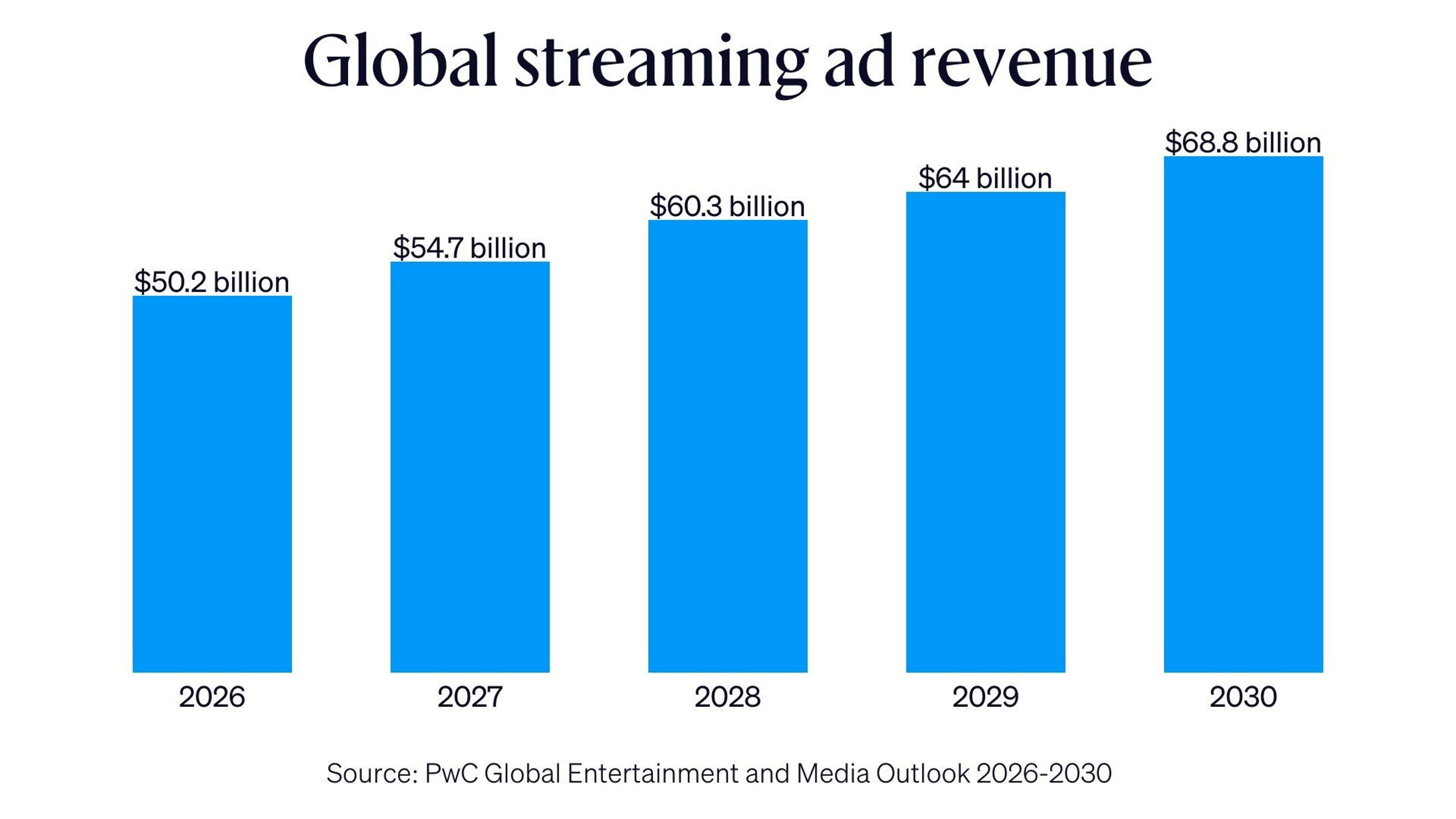
In theory, better recommendations and personalization could make advertising more effective, as that becomes an increasingly important part of streamers’ success. In its recent Global Entertainment & Media Outlook report, PwC projected that global streaming video ad revenue would reach nearly $69 billion by 2030, accounting for over 22% of total revenue.
Audiences are becoming more receptive to ads if they can pay less for streaming. Nearly 70% of respondents to a recent Hub Entertainment Research survey agreed. Gen Z was more likely than older generations to prefer targeted ads if it meant fewer ads overall, an experience AI could help deliver.
“That value exchange becomes even stronger when the ads are actually relevant to their interests,” Giegengack said. “Many viewers also say they’re willing to share more personal information if it results in more relevant ads or fewer interruptions during their viewing experience.”
But PwC cautioned that AI won’t change what consumers expect from entertainment and media in terms of quality.
“No matter how digital and algorithmic the user experience becomes, at its root, E&M remains an industry built on human craft and human experiences,” the PwC report noted.
That brings us to what consumers may not want from AI in their streaming diet.
Younger consumers are growing more suspicious of AI content
While consumer adoption of AI tools is growing, sentiment toward AI-generated media is more complicated.
According to a recent survey published by Gartner, 49% of U.S. consumers say that generative AI has made content quality worse; for Gen Z and millennials, that rises to 57%.
“AI-generated content is increasing the volume of media that consumers encounter, but not necessarily the value,” Kate Muhl, vice president and analyst at Gartner Marketing, wrote in the report. “In a more skeptical media environment, brands need to be more recognizable, more credible and more intentional about the contexts in which they appear.”
Even so, media companies continue to experiment. Disney was reportedly planning to launch AI-generated TV ads this month, an effort to help small-and-medium-sized brands who may have smaller budgets create spots using an AI ad tool.
This followed Disney’s flirtation with OpenAI to include AI-generated user content on Disney+ from Sora; after OpenAI shut down its video app, Disney said it would “continue to engage with AI platforms to find new ways to meet fans where they are.”
Further, Amazon recently announced the GenAI Creators’ Fund, providing funds and AI tools to creators, and greenlit three animated series under the initiative.
Reid Litman, global consulting director at Ogilvy Consulting, said that GenAI is becoming an important “source of agency” for Gen Z as it lowers the barrier in a tough job market. However, he added, they also trust the technology less than any other generation.
“They see brands automating creativity while asking creators to become inputs into the machine. They see slop flooding their feeds. They see fewer artisans and time for creativity.”
He added: “When AI expands what people can do, it seems they’re much more open to it. When it replaces the judgment, craft or opportunities of the people behind the work, that’s where the anger begins.”