
Published December 4, 2025Edited June 22
Here’s the thing:
This year’s Black Friday sales data reveals a sharp shift compared to recent years.
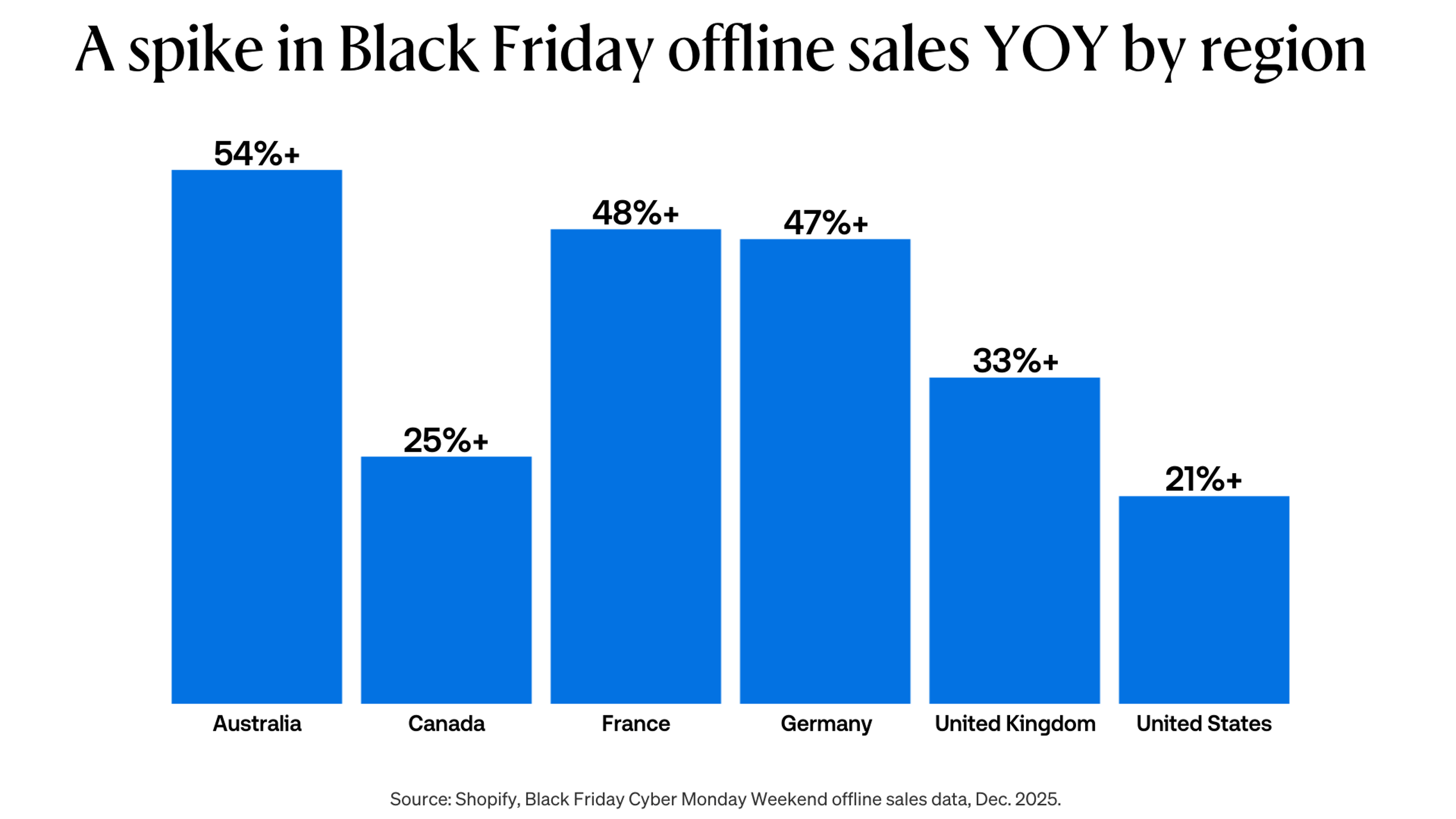
People did not flock exclusively to online deals in overwhelming numbers last week. They left their homes, braved parking lots and stood in lines at higher levels compared to 2024, contributing to a 21% year-over-year rise in offline sales in the U.S., according to Shopify’s offline sales data collected from its point-of-sale channel.
While Adobe Analytics data shows online Black Friday U.S. sales rose 9.1% to $11.8 billion, the offline sales surge suggests the brick-and-mortar store still matters for holiday strategy.
Forbes reports that foot traffic in physical stores rose 1.17% on Black Friday in the U.S., per Pass_by, a firm that tracks in-store traffic. Crucially, department stores saw traffic jump 7.9%, which Pass_by credited to a renewed interest in one-stop shopping.
Data debrief:
Despite U.S. shoppers spending more this year, observers say a key factor in the foot traffic boost is the lure of discount retailers as consumers globally navigate economic uncertainty.
Salesforce data shows tariff pressure in the numbers. For instance, in the U.S., the average selling prices rose 7% year over year, while order volumes slipped 1%.
The trends align with new research from The Trade Desk Intelligence and Appinio exploring how the economy is impacting holiday shopping and shifting purchase behavior across regions.
- Sixty-six percent of U.S. consumers surveyed say inflation will impact how much they’ll be willing to spend this holiday season.
- Fifty-four percent of Australians surveyed say economic trends will have a negative impact on their holiday purchases.
- In the U.K., 40% of consumers surveyed agree that ads influence what they buy for the holiday season.
- When it comes to groceries, 60% of consumers surveyed in Germany are planning a bigger grocery haul than usual this season.
In addition to the rise in U.S. offline sales, Shopify’s data also saw spikes in offline success for these regions: the U.K. (33%+), Australia (54%+) and Germany (47%+), among others.
Why it matters:
E-commerce still maintains its sway, but the offline sales numbers prove stores still steer holiday revenue. Brands that ignore them could lose share to competitors offering seamless ties between digital browsing and store buying.
The data suggests that the consumer is balancing convenience with control. It is a signal for marketers and retailers to invest in omnichannel strategies that link search, discovery and fulfillment across every touchpoint.
The Current is owned and operated by The Trade Desk. This information is provided solely for background and is not a representation or guarantee of any future performance.