March 26
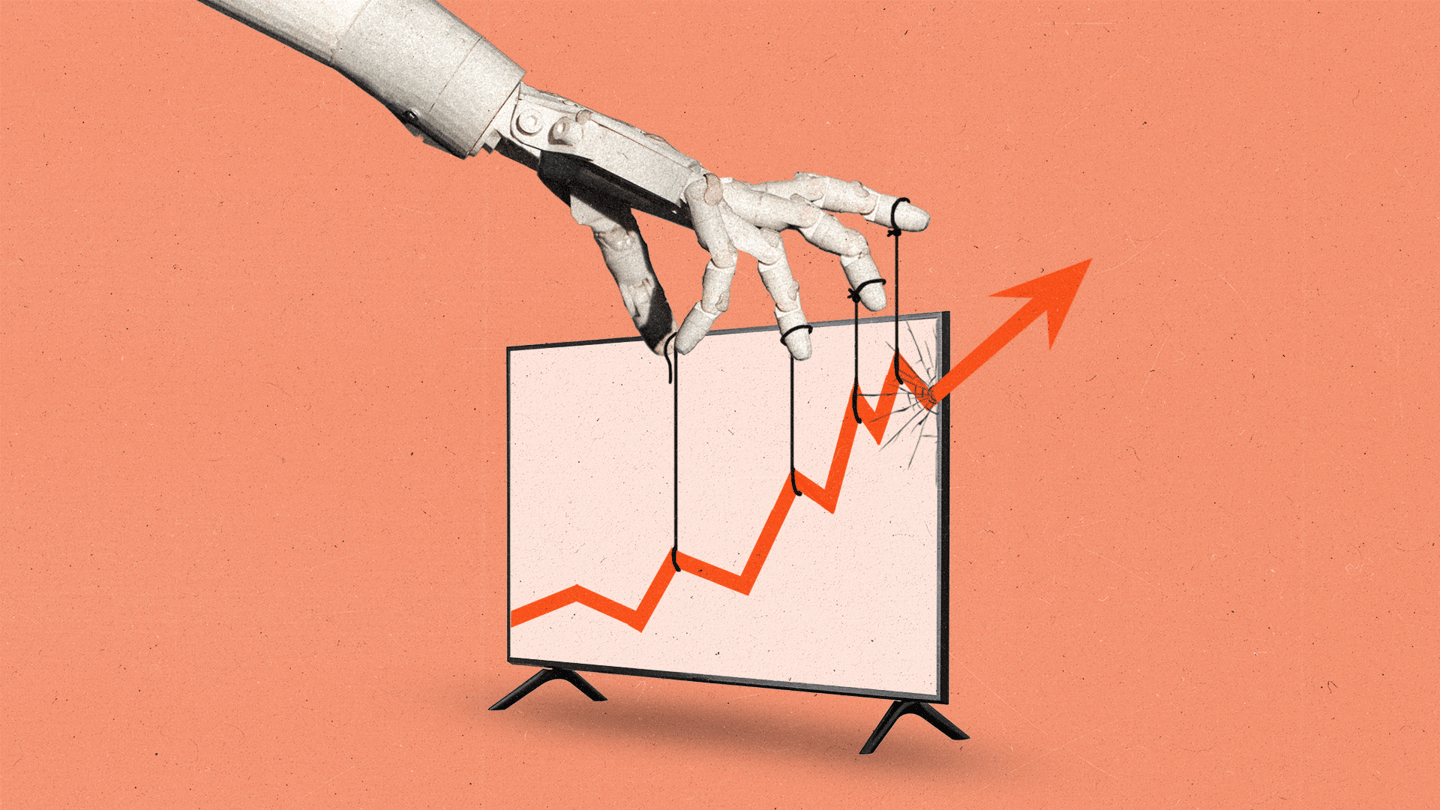
It appears that TV’s “outcomes era” has given way to the rise of “performance TV.”
That was the biggest takeaway from this week’s annual IAB NewFronts, where players in the digital space pitched to advertisers, including Samsung, LG and Comcast. They all touted new products and initiatives aimed at delivering measurable results, with a bit of AI thrown in for good measure (no pun intended).
“Outcomes are what moves your business forward. … We know that the TV is a powerful conversion medium, but it’s been historically difficult to measure,” asserted Courtney Howell, head of agency development at Samsung Ads, during a presentation on Tuesday.
Jamie Finstein, vice president of IAB Media Center, echoed this sentiment during a keynote on Wednesday: “The measurement systems that we have in place have not kept up with how audiences actually watch.”
To that end, Samsung announced a “full-funnel performance platform powered by AI and shoppable innovation”; LG Ad Solutions unveiled Own the Outcome, a CTV performance framework; and Comcast Advertising launched Outcomes+. No, that’s not a streaming service; it’s a suite of AI-powered products.
“Today, there is so much competition competing for attention. The world that we’re in is incredibly fragmented,” said Dawn Lee Williamson, chief revenue officer of media solutions at Comcast Advertising, during a presentation on Wednesday.
But she added that marketers know that “when it comes to turning attention into true business impact, TV drives performance.”
Not everyone was convinced by these overlapping talking points. Media expert Evan Shapiro, who writes the newsletter Media War & Peace, said he was most impressed with Tubi, which focused on driving performance through fandom. That includes alternate F1 broadcasts in partnership with Apple TV, designed to expand the appeal of the sport to younger viewers.
“The future of entertainment is built on fan passion,” said Anjali Sud, CEO of Tubi.
Arthur Larrey, CEO of Audion, cautioned advertisers not to overlook audio in all this performance TV talk, arguing that audio has matured in the same way that CTV did as an advertising channel.
“CTV did not become powerful because audiences suddenly arrived. What changed was the underlying infrastructure. Programmatic pipes standardized access to inventory. Identity frameworks improved audience targeting,” Larrey told The Current.
“Audio now sits at a similar inflection point. … It’s easy to see that audio consumption is increasingly digital, increasingly on-demand and embedded in daily routines.”
But even LinkedIn isn’t immune to advertisers’ interest in CTV. The company hosted its second-ever NewFronts presentation this year, saying that it’s streamlining how B2B marketers use LinkedIn data to reach CTV audiences.
According to LinkedIn’s 2026 Global B2B Marketing Outlook report, 81% of B2B CMOs surveyed believe that video accelerates sales cycles compared to other formats. And that’s reflecting a shift in how B2B decision-makers use the LinkedIn platform itself. Alex Josephson, vice president of brand and content strategy for advertisers at LinkedIn, told The Current that advertiser spend against video formats has increased about 30% year over year.
“More and more B2B buyers are leveraging video throughout the buying journey,” he said.