April 21
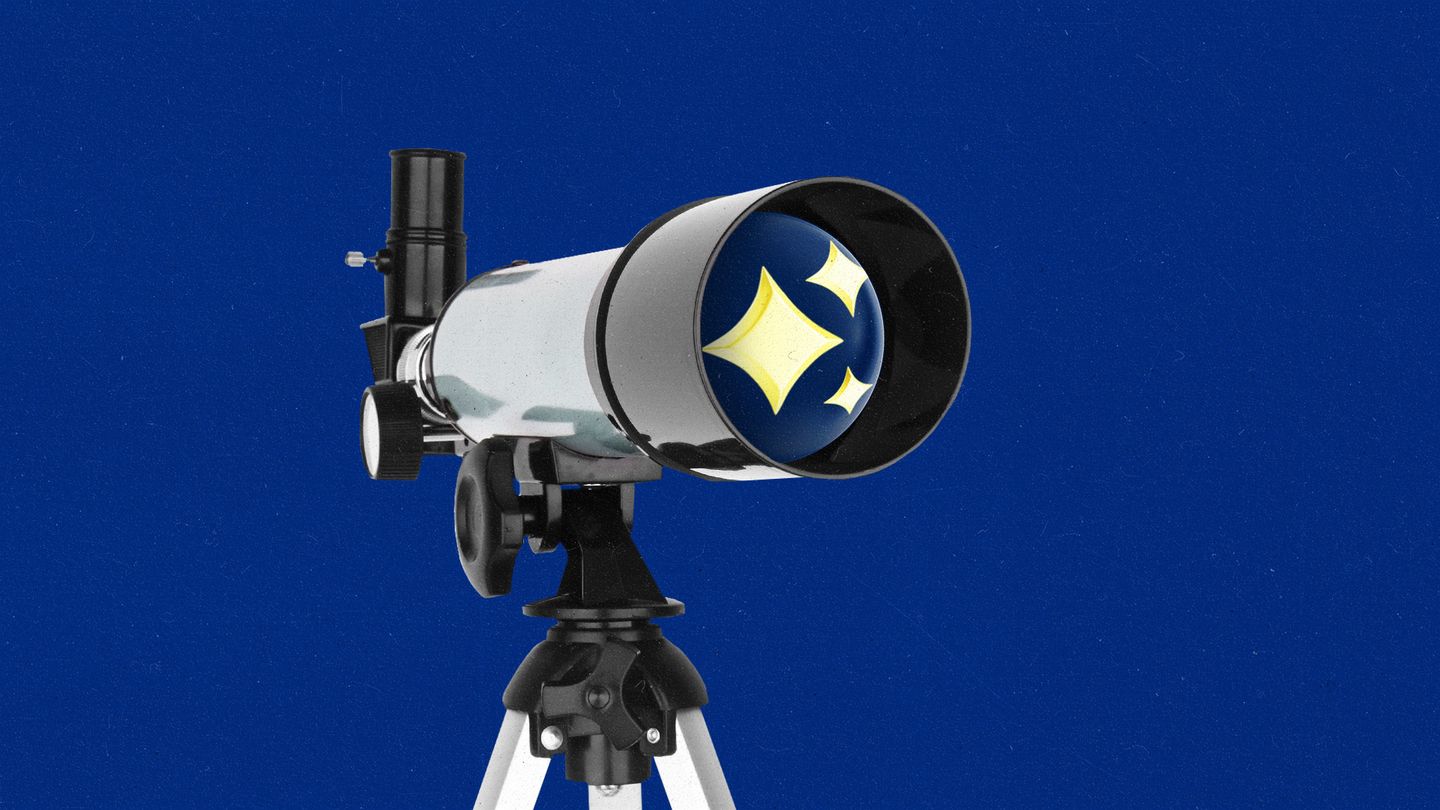
Steve Jobs once described the personal computer as a bicycle for the mind. For marketers, AI may prove to be something closer to a telescope.
The signals that drive advertising — audiences, context, content and outcomes — have always been there. What’s changed is scale. But the volume and velocity of those signals now far exceed what any human team could fully observe, let alone interpret and manage in real time.
AI doesn’t change the nature of marketing. It changes how much of it we can see.
And that matters, because marketing has always been a discipline of judgment. The best marketers deftly choose the right audience, the right context, and the right moment to reach a consumer. The difference now is that those decisions no longer happen hundreds of times in a campaign. In fact, they happen more than 20 million times every second.
The persistent narrative that AI will replace marketers misses the point. AI handles the complexity. Humans still define the intent by setting the guardrails, deciding what success looks like.
That’s not automation replacing marketers. It’s a shift from manual control to amplified judgment.
The constraint no one talks about
But here’s the catch. AI is only as good as the data beneath it. Inside large-scale, objective platforms, AI can evaluate the full context of media buying, including audiences, inventory, performance and measurement, against a marketer’s goals. Outside of that, it operates with partial information.
There’s growing speculation that agents will sit above advertising systems, orchestrating campaigns independently. In theory, that sounds elegant. In practice, it risks layering AI on top of incomplete or flawed data where scale doesn’t correct the gaps; it amplifies them. And when AI learns from imperfect inputs, it doesn’t just reflect bias; it compounds and accelerates it into outcomes.
Why open matters more in an AI world
That’s why AI won’t succeed as a standalone layer on top of advertising. In an AI-driven world, platforms begin to function less like tools and more like infrastructure shaping what data is visible, which signals are connected, and ultimately what decisions AI can make.
Our vision is that the DSP evolves into this kind of operating system for modern marketing: an objective layer that connects AI to the open internet, integrates signals across sources, and enables more transparent, informed optimization.
Because systems built on open, interoperable data create the conditions for better outcomes, while closed systems, by design, limit visibility and constrain what AI can truly understand or achieve.
Objectivity matters here.
Closed systems optimize for their own inventory and their own economics. AI doesn’t eliminate bias. It amplifies whatever bias exists in the system beneath it.
An objective platform, operating across the open internet, can evaluate every opportunity on its merits. In a world where AI drives decision-making, that difference becomes structural, not philosophical.
From pushing buttons to managing agents
As AI matures, the way marketers interact with technology is starting to change. Instead of navigating dashboards, they’re beginning to ask questions:
- Why is this campaign underpacing?
- Which audiences are driving conversions?
- What should I change to improve performance?
AI systems can now interpret those questions, diagnose issues and recommend actions. That shift is already underway. In systems like Koa Agents, the interface is no longer a dashboard. It’s a conversation.
This shift isn’t just about efficiency. It’s about changing the role of the marketer from managing tools to directing outcomes.
Less time pushing buttons. More time making strategic decisions.
A much bigger open internet
AI is also changing what the open internet looks like. For years, advertising in search and social environments has been locked inside closed platforms. AI changes that, too.
Conversational interfaces, generative search and AI-driven discovery are creating new kinds of inventory. But they require new methods of targeting audiences. Keyword-targeting worked when search queries were a few words long. Longer, intent- and affinity-rich prompts are better suited to the audience-targeting capabilities that have longer underpinned programmatic advertising.
As more customer journeys move into these conversational experiences, they create more surfaces for advertising, not fewer. More opportunities but also more complexity. In this future, search and social advertising won’t be constrained to single, closed environments. They join connected TV and other premium media on the open internet.
Which brings us back to the core question: Who, or what, can actually see across all of it?
Seeing farther
The next generation of marketing won’t be defined by more dashboards, more manual optimization, or more disconnected systems.
It will be defined by visibility into audiences, into performance, and into opportunities that were previously invisible.
That’s the role AI will play.
If the personal computer was a bicycle for the mind, AI is becoming a telescope for marketing. The marketers who succeed won’t be the ones with more tools. They’ll be the ones with more visibility.
The Current is owned and operated by The Trade Desk Inc. This information is provided solely for background and is not a representation or guarantee of any future performance.


October 15Bill Michels

August 27Max Snow