Is it in Google’s best interest to suffocate the open internet?
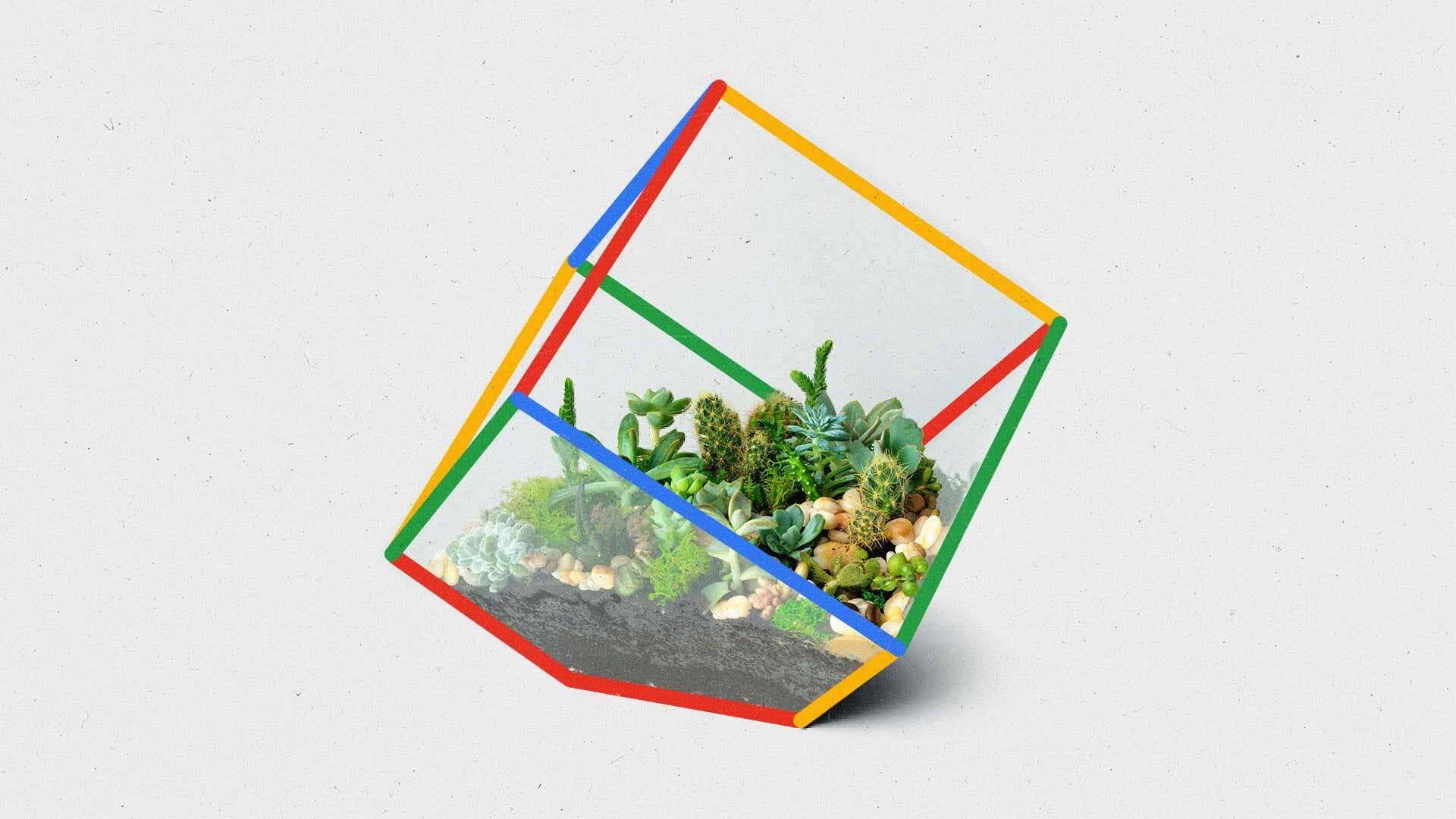
The promise of the internet has always been simple: If you have an idea and a computer, you can build a business. For decades, that’s exactly what millions of people did. Bloggers, journalists, podcasters and independent entertainers started websites, attracted audiences and earned money through advertising.
But that dynamic is not as healthy as it once was.
Today, many creators are no longer building their own websites at all — they’re building inside the walled gardens of YouTube, Instagram and TikTok. These platforms make it easy to reach audiences and earn money without thinking about hosting, analytics or ad tech.
But the trade-off is control. When you build inside a walled garden, you don’t really own your business data — the platform does.
According to data from Adobe and Linktree, over 200 million people globally now consider themselves creators — a group that has doubled in the past three years. Yet most of them choose to publish within walled platforms rather than building their own sites. The growth of creators has never been higher, but the portion of those who build on the open internet has never been lower.
Meanwhile, the economic engine that powers the long tail of the open internet — Google AdSense — has been quietly shrinking. The “Google Network” (which includes AdSense and AdMob) once represented around 20% of Alphabet’s revenue. At this pace, by the end of 2026, it could be less than 5%, with AdSense (web) potentially representing half of that. In Q3 2024, for example, Google Network revenues declined to about $7.7 billion — less than 8% of Alphabet’s $76.7 billion total revenue — continuing a steady multiyear slide.
Think about what that means: The entire economic foundation for long-tail independent creators on the open internet now sits inside a rounding error on Google’s income statement.
However, this is hardly a concern for Google executives or shareholders. As their investment in the open internet has declined, Alphabet’s company growth and revenue has never been stronger. At a market capitalization of $3.8 trillion, Alphabet is currently the third largest company by market cap. Amazon, Meta and TikTok all have the same dynamics and incentives — outsized growth is driven by the walled portion of their companies.
Underscoring this dichotomy between open and closed, in 2022, Google Ad Manager (née DFP) went down for over an hour in December, leaving the vast majority of the web with no ads and no monetization. News sites, blogs and publishers of all sizes worldwide lost their monetization at one of the most important times of the year — and while outages happen, it’s hard not to ignore the imbalance of impact. The prolonged outage hurt websites far more than it hurt Google. A particularly sore spot during the outage: Google’s own search ads kept on serving.
The imbalance of incentives doesn’t stop there. Some of the most famous creators in the world — like MrBeast (who, thanks to my kids, is very big in my household) — have built massive businesses on YouTube. Google makes far more money from those creators when their content lives inside YouTube than it would if creators owned their own websites and monetized via AdSense. Google also has far more control when creators are in their walled garden.
So what would you do if you were Google?
If you’re running a multitrillion-dollar company, it’s hard to justify propping up the lower-margin, open ecosystem when the closed one is thriving and growing. And on top of that, the open one competes for ad dollars with the closed one.
The closing arguments in the Department of Justice’s ad tech antitrust case — on Nov. 21 — underscored the stakes for the open internet. In a decision earlier this year, the Court found that Google illegally monopolized the markets for ad exchanges and publisher tools for open web display advertising. The DOJ’s proposed remedies range from structural options — such as forcing Google to divest its AdX exchange — to behavioral restrictions designed to curb self-preferencing, the court’s choice could reshape the economics of digital advertising. Whatever form the ruling takes, it will influence whether independent publishers and creators have a viable future outside of walled gardens.
Walled gardens have been stifling innovation
While the legal arguments have concluded, creators are left wondering what this means for them and their future.
The open internet — once the great equalizer for anyone with talent and an idea — is being quietly starved. Unless new solutions emerge to make it easier and more lucrative to publish independently, the next generation of creators may never even experience the open internet at all.
But here’s the twist: More companies rely on the open internet than people realize. In fact, modern generative AI is trained on the open internet. The breakthroughs of the last five years — the ones reshaping entire industries — are only possible because millions of independent creators, bloggers, publishers and educators spent decades contributing freely accessible knowledge to the web. Without the open internet, there is no GenAI. Without independent content, we can’t realize the promise of the AI-enabled world — we go backward. Just as the thriving civilization of the Roman Empire gave way to the Dark Ages, we are at risk of falling backward as well.
But there is hope for a renaissance, and perhaps sooner than you’d expect. A new generation of stakeholders outside of Google are beginning to invest in rebuilding the open internet’s economic foundation. AI companies are starting to pay for access to content on the open internet, buyers and ad tech leaders are prompting cleaner auctions, and lower intermediary fees are already emerging.
The creators aren’t sitting idle either. In November, MrBeast announced that he was hiring executives from TikTok and Snap in an effort to break out of the walled gardens. You can feel the energy shifting, and more companies than you think will show up for the challenge.
This op-ed represents the views and opinions of the author and not of The Current, a division of The Trade Desk, or The Trade Desk. The appearance of the op-ed on The Current does not constitute an endorsement by The Current or The Trade Desk.