Published May 13Edited June 17
Every May, Madison Avenue puts on its good shoes, flies to New York and pretends it’s still 1987. The upfronts — that grand annual ritual where media companies roll out the red carpet, trot out celebrities and beg advertisers to commit billions of dollars to content that hasn’t aired yet — are once again upon us. And this year, more than any year before it, the show is being run by people who didn’t grow up running ads on Gunsmoke. Welcome to the 2026 upfronts. Brought to you, increasingly, by the internet.
AI, outcomes, and the death of the impression
If there is a single word that will be uttered more than “NFL” in those presentation halls this week, it is “outcomes.” Advertisers have finally, collectively, decided that paying for eyeballs without knowing what those eyeballs did afterward is a bit like paying for a restaurant reservation and never finding out if anyone showed up for dinner. They want proof. They want results. They want the bill. They want to know if someone who saw their ad on a Thursday night streaming drama actually bought something on Saturday.
This shift toward outcome-based measurement is the most consequential structural change in the upfronts in a generation. For decades, the currency of television advertising was the GRP — a metric that measured exposure, not action. Digital platforms have spent 20 years training marketers to expect better, and that expectation has now arrived in full force at the upfronts. Streaming services that can close the loop between ad exposure and purchase behavior — using first-party subscriber data, clean-room integrations and authenticated identity graphs — hold a structural advantage that no celebrity tooting traditional TV’s horn can offset.
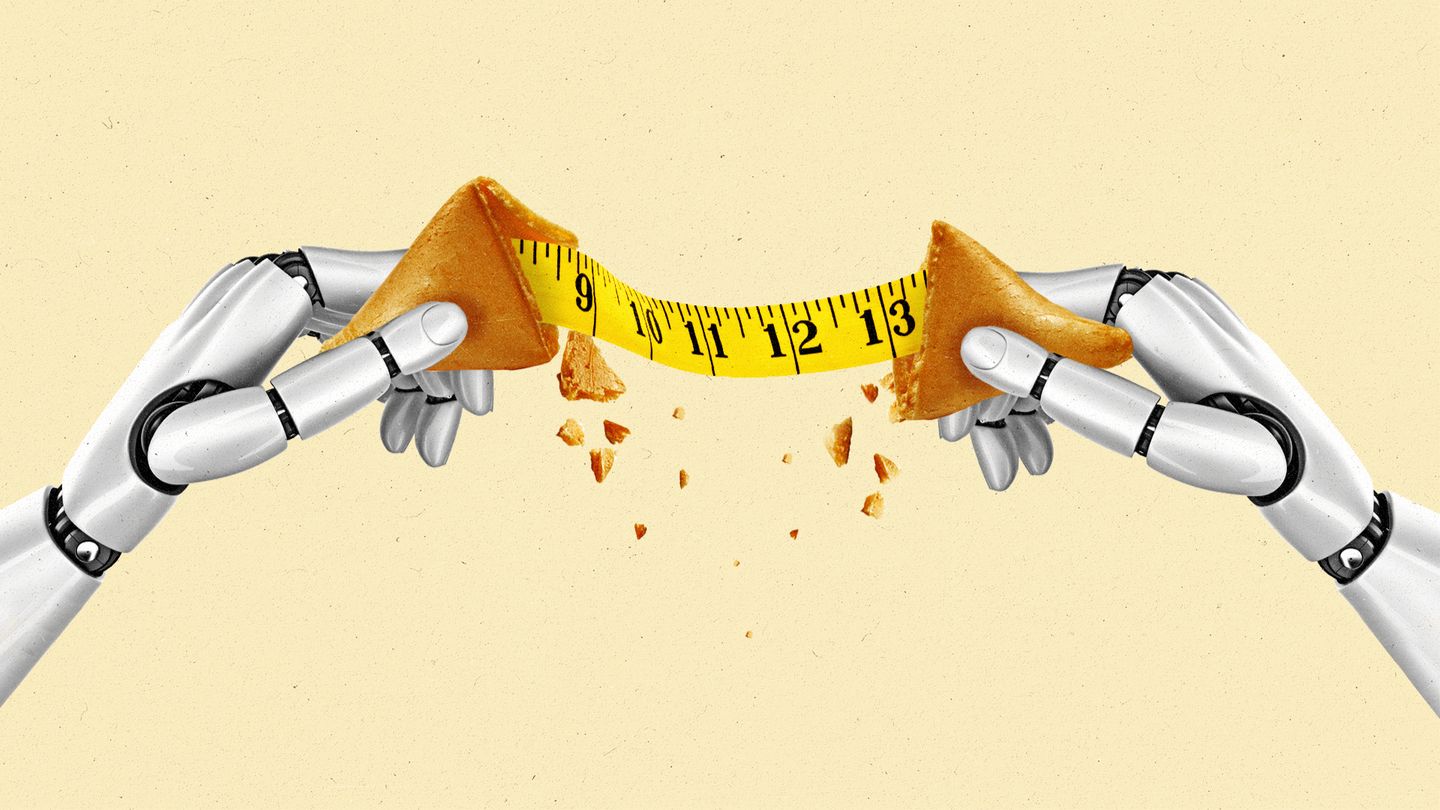
Artificial intelligence is accelerating this shift. The 2026 upfronts are the first in which AI-powered targeting, creative optimization and real-time measurement are not aspirational talking points but table-stake deliverables. Platforms that can demonstrate machine-learning-driven audience curation and transparent attribution are winning commitments that would previously have gone to whoever had the best upfront party. The party still matters — relationships in this industry always will — but the spreadsheet is catching up to the cocktail hour.
The colonization is complete
Here’s the headline that should make every legacy broadcaster quietly weep into their scatter market spreadsheet: Connected TV (CTV) upfront spending is rapidly catching up to linear TV. Linear attracted $17 billion in commitments in 2025, down for several years in a row now, whereas CTV commitments clocked in at $13 billion, up more than 60% since 2023. This year will be no different. Expect another decline in traditional TV upfront spending and another sharp increase in CTV spending. The empire that traditional TV companies built in cigarette-smoke-filled conference rooms in 1962 is being dismantled by the same people who gave us algorithmic recommendations and six-second pre-rolls.
Here is what it all means: The upfronts have not died — they have been colonized by digital. The platforms that dominate this week’s presentations are internet-native businesses playing by television’s calendar while systematically dismantling television’s business model. Legacy broadcasters are not without ammunition — live sports remain scarce, appointment viewing is gold and no one is walking away from the NFL. But the data infrastructure, measurement capabilities, first-party signals and audiences are all migrating toward platforms built for the internet age.
The upfronts are evolving from a supply-side showcase into a performance-accountability forum. Advertisers are no longer simply reserving inventory; they are negotiating outcome guarantees, data-sharing agreements and measurement standards as part of the upfront commitment. That is a fundamentally different commercial relationship than the one that defined this market for 60 years, and it favors whoever holds the best data and the most measurable inventory. In 2026, that means digital. The legacy networks know it. The advertisers know it. And the standing-room crowds at this week’s digital platform events make clear that the market has already voted.
This op-ed represents the views and opinions of the author and not of The Current, a division of The Trade Desk, or The Trade Desk. The appearance of the op-ed on The Current does not constitute an endorsement by The Current or The Trade Desk.



August 11Adam Ortman