March 12
AI companies building large language models will eventually need advertising to support their massive infrastructure costs — and some of today’s biggest tech platforms may not remain major players in the open web for long.
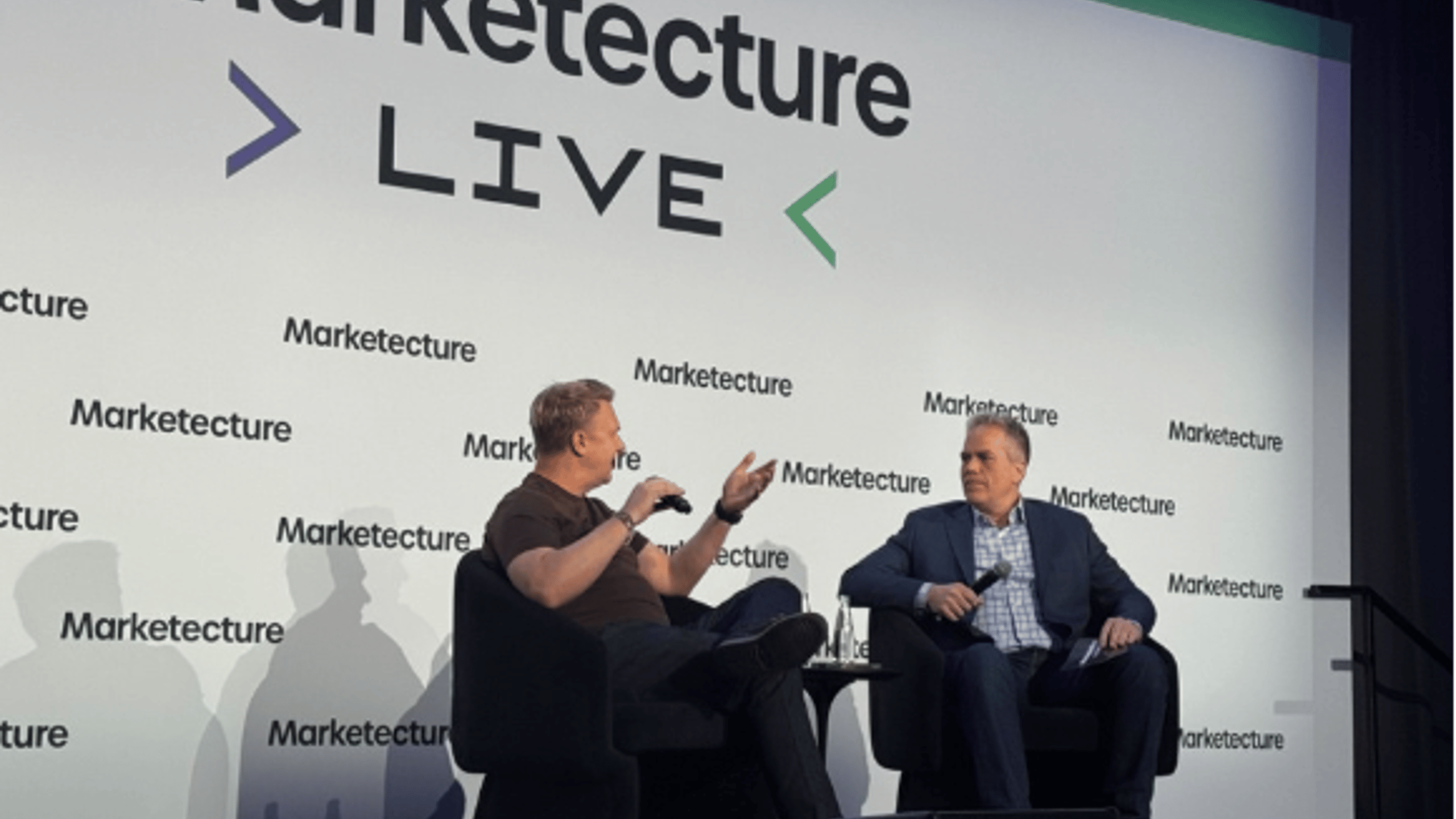
That was the message from The Trade Desk CEO Jeff Green during a conversation with Marketecture Media Founder Ari Paparo at Marketecture Live on Wednesday.
Green argued that the economics of generative AI and increasing regulatory pressure could reshape how platforms like Google and Amazon participate in the open internet.
“All of [Google’s] troubles come from the open internet, and none of the money does for them,” Green said, referencing the antitrust scrutiny tied to Google’s ad tech business.
That dynamic, he suggested, could play out at other companies as well. “I believe that Amazon’s role in the open internet will be shorter than Google’s because of the macro impacts on their business,” he said.
The conversation capped two days of programming at Marketecture Live that ranged from industry predictions delivered by LUMA Partners Founder Terence Kawaja — who took the stage as “Bad Banker,” a tongue-in-cheek riff on Bad Bunny — to a discussion with former cyclist Lance Armstrong about rebuilding reputation and brand.
AI’s monetization question
“Do you just put it into Schwab?” joked Paparo as he kicked off Green’s packed session live podcast, with a reference to Green’s recent $150 million stock purchase in his own company.
Much of Paparo’s questions focused on Green’s recent op-ed in The Current, where he explained his decision behind the TTD buy — including his view that AI expansion will expand the total addressable market (TAM), and how open will make a comeback.
In that piece, Green suggested The Trade Desk will, in time, gain access to new forms of advertising inventory — including chatbot interactions and sponsored shopping listings.
Courtesy of Ilyse Liffreing
More broadly, Green argued that many AI companies may turn to advertising as they seek sustainable revenue models. Kawaja echoed this belief with one of his 2026 predictions: AI platforms will have to lean on advertising to sustain their businesses. Even Anthropic, he said, which aired a Super Bowl spot on not bringing ads to its AI chatbot, Claude.
“In general, all of the AI companies have a serious problem in some ways,” Green said. “Their CapEx [capital expenditure] are massive, their valuations are massive, and they have really high expectations for how they will make money.”
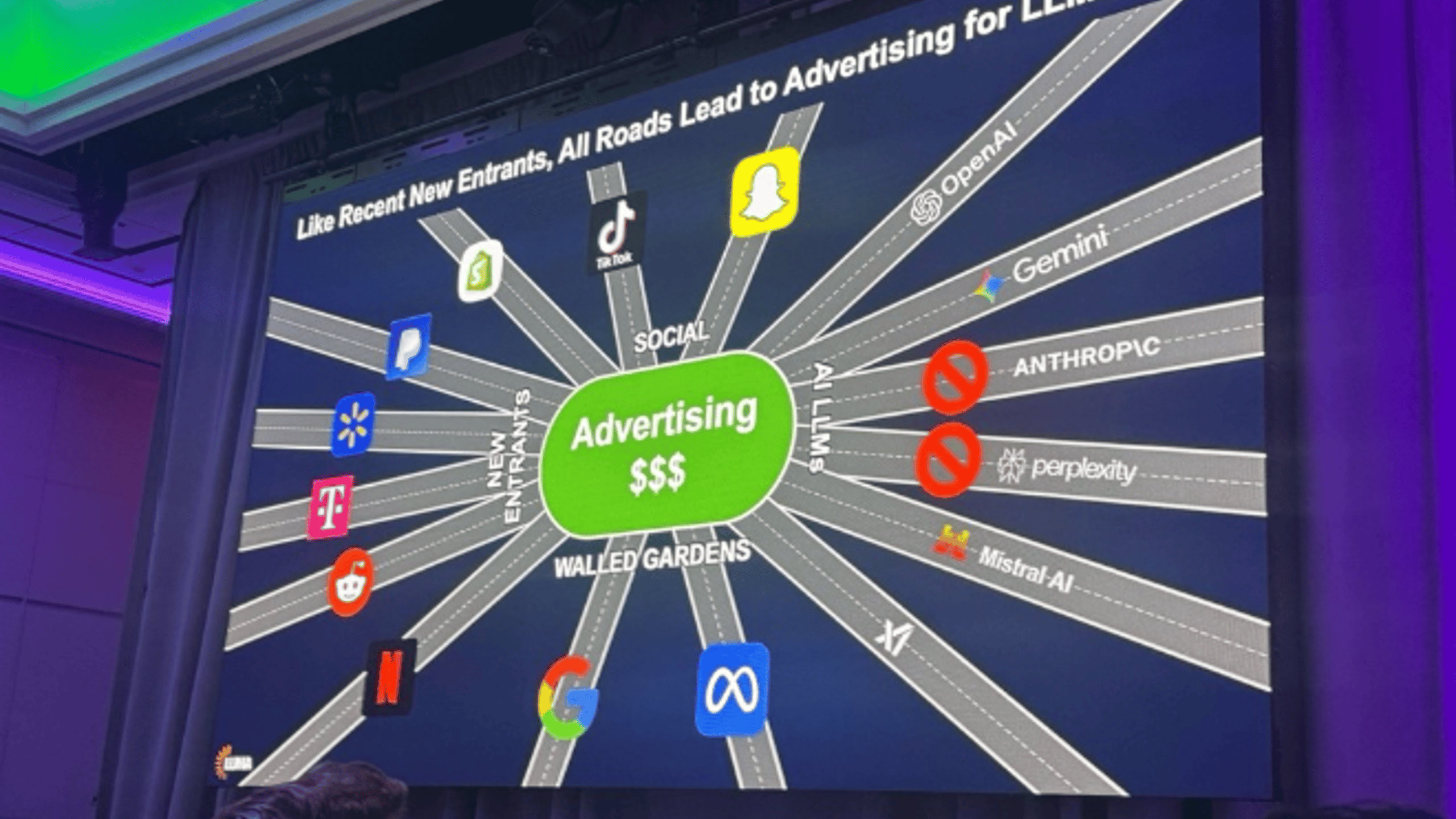
[From Kawaja’s predictions presentation] Courtesy of Ilyse Liffreing
As a result, many AI developers are already exploring how advertising could work within conversational interfaces. But Green suggested the industry is unlikely to simply replicate the model pioneered by Google’s search ads.
“Wisely, many of them are looking at it saying, ‘We’re not just going to copy and paste what Google did in AdWords before. There’s a lot more to think about.’”
Green also pushed back against the idea that the internet’s vast scale inevitably leads to commoditized advertising. Using a fashion analogy, he argued that even in a world with abundant content, premium environments will continue to command higher prices. “There are enough clothes in the world for every single person to have a wardrobe,” he said. “That doesn’t change the fact that on Fifth Avenue you can still buy a T-shirt for $500.”
The same dynamic applies to digital advertising, he said. “Most ad placements are not worth much, but there are many that are worth a tremendous amount.”
Rewiring the open web
In a conversation with Jounce Media Founder Chris Kane, Mike O'Sullivan, vice president of product at The Trade Desk and co-founder of Sincera, which The Trade Desk acquired last year, said The Trade Desk is trying to reshape the mechanics of the open web itself with OpenPath.
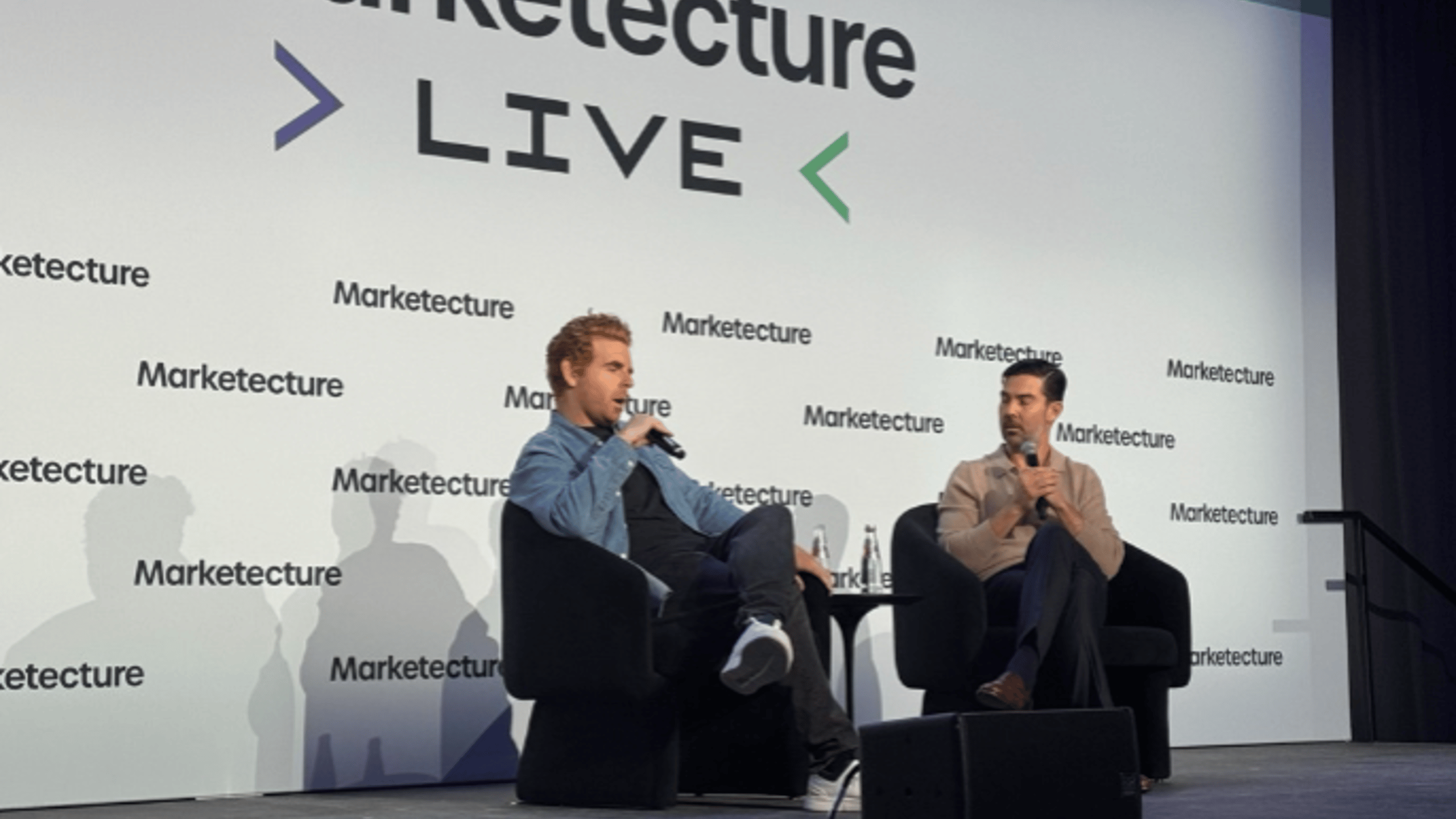
Courtesy of Ilyse Liffreing
O’Sullivan said the initiative is illuminating how programmatic advertising moves through the supply chain. “We are a canary in the coal mine,” he said. “What happens when we buy something that gets as close to the publisher ad server as possible versus [going] through an SSP or other intermediaries?”
Launched in 2022, OpenPath aims to give buyers greater visibility into the mechanics of the open internet. But O’Sullivan pushed back on the idea that the initiative is meant to pressure supply-side platforms out of the ecosystem. “I don’t know if I would say pressure is the word,” he said. “I think it’s more for us to understand what’s happening and to provide our customers with choice.”
That philosophy extends to the company’s newer wrapper product, OpenAds. Rather than mediating auctions itself, O’Sullivan said the system is designed to preserve transparency. “If four bidders return a bid,” he said, “we will pass them all in.”
Even as AI reshapes how people interact with information, The Trade Desk is betting that the open internet — and the advertising that supports it — will remain central to the digital economy.
The Current is owned and operated by The Trade Desk Inc.