March 30
London — Most CMOs will tell you brand advertising works. The challenge, as became clear across multiple stages at Advertising Week Europe last week, is proving it to the people who control budgets — and the pressure to do so is growing.
As discussion throughout the event highlighted, the rise of AI-generated content is compounding the issue. As more synthetic media floods the internet, trust in online environments is becoming harder to maintain — strengthening the case for premium media, even as measurement tools lag behind. Against that backdrop, several CMOs and senior marketers speaking at the event pointed to a practical shift: stop waiting for perfect measurement and start translating brand building into a language CFOs already speak.
Speaking the CFOs language
As Michele Rousseau, CMO at Starling, put it, when you present to the board that you’ve increased brand awareness by 15%, “that doesn't translate to what the company is understanding.”
Instead, she argued, brand impact needs to be framed in terms finance teams already recognize. “It shows in the data that when we’re not investing in upper funnel marketing, our cost per acquisition goes up. So there’s a direct correlation to it.”
In other words, the case for brand is more likely to land when expressed through acquisition costs, lifetime value and efficiency — not awareness alone. Skyscanner’s global head of brand and creative, Andre Le Masurier, added that managing ROI may be just as important as reframing how brand performance is measured.
“This is going to take minimum two or three years to see the benefits of it,” he said.
Le Masurier said it’s also important to map out how brand building works over time to ladder up to company objectives. “You’re going to see awareness increase, then you’re going to see consideration, then you’ll see [user] sessions, then you’ll see revenue. You have to show that over a period of time, you’re going to see these signals fall like dominoes.”
The pull of short-term performance
CMOs face a persistent bias toward short-term, performance-driven results, fuelled by quarterly targets and platforms that promise instant proof.
"Most of the time, short-term thinking means, can I quickly put some money in a platform and get that platform to spit me out a number which I can then put in Excel sheets and send it on to someone else and go, ‘look, job done,’” said Thomas Ives, co-founder of RAAS Labs.
But, he added, those numbers are not always impartial. “There’s a load of conversions that have been marked by a walled garden, which mark their own homework,” he said.
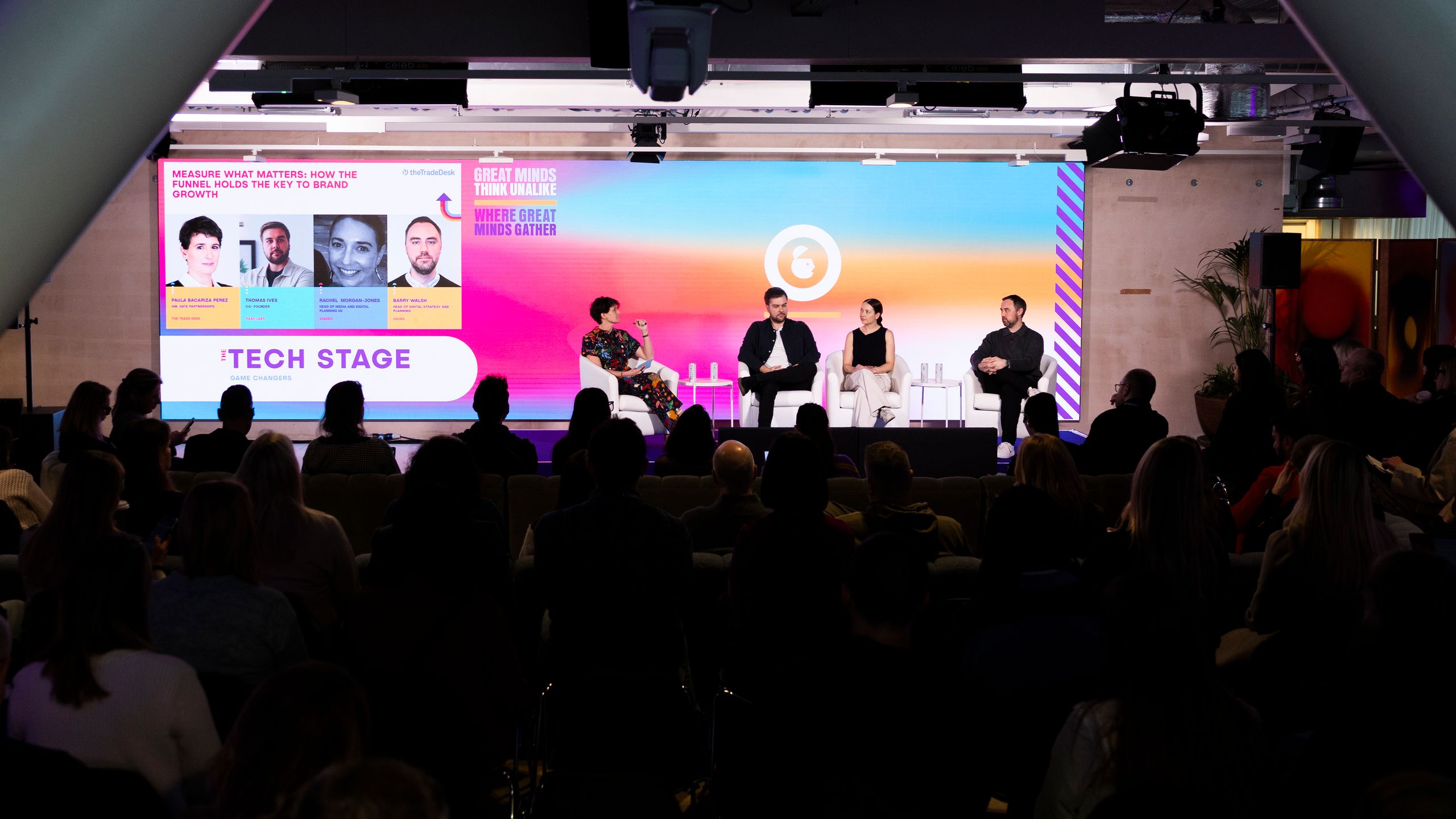
Courtesty of Bronac McNeill Photography & Film
Other speakers emphasized that performance channels still have a role — but only when supported by sustained brand investment.
"If you’re Guinness, you’ve spent 100 years on amazing brand advertising. If you see a white strip and then the rest of the ad is black, you may go, I quite fancy a Guinness,” said Barry Walsh, head of digital strategy and planning at Havas.
What audiences actually want
The measurement conversation gains more urgency when brands put down their marketing hats and start thinking like consumers.
Elsewhere at the event, on a Disney+ stage far away from the measurement debates, the conversation turned to how audiences themselves are responding to the changing media environment.
Comedian Alan Carr pointed to the growing skepticism among viewers. “We live in a world now, with AI, you don’t really know what’s real anymore. I think people do want reality, proper reality, authentic,” he said.
TV presenter Jamie Laing echoed the sentiment on the same stage. “We’re so fatigued now by this scrolling... what people are wanting is that authentic, real storytelling that feels good, rather than just that quick fix.” Neither speaker was addressing media strategy directly. But their comments reflected a theme running through the week’s discussions: that audiences are gravitating toward content they trust.
The question is whether brands will invest in those environments before every single light on the road turns green.