
May 13
Tesla’s Elon Musk once laughed at BYD’s cars — this January, BYD overtook Tesla in annual global electric vehicle (EV) sales. Chinese automakers now command equal parts fear and admiration from their competitors and larger shares of consumer wallets, from Australia to Brazil to Germany.
Fueling this growth is a perception of value — great features at fair prices — and, in some cases, splashy sports sponsorships and funny ads. Ad executives in China are turning toward brand-building as their EV companies begin aiming beyond the EV category and eyeing first place in the entire auto market.
“The big change is that Chinese EV brands are not relying on sports sponsorships alone anymore,” said Jason Du, general manager of global brand marketing at Join-Cheer Digital Group, which works with Chinese EV brands on overseas marketing.
“They’ve moved past the ‘who are these guys?’ awareness phase, so the mix has gotten way more layered, and way more focused on turning that awareness into sales. Right now, the big new channels my clients are pouring money into are connected TV (CTV) and digital out-of-home (DOOH), paired with those sports plays,” Du said.
This global coming-of-age story was on full display at the Beijing Auto Show a few weeks ago, as thousands of auto industry leaders — from competitors to dealers to press and influencers — flocked to Chery, Li Auto, XPeng and Geely booths to see how far Chinese EVs have come.
As The Current roamed the halls, it was clear that China’s tech and value was already unmatched; though that has been clear for a while, with influencers around the world showing off high-tech Chinese cars that cost much less than many entry-level vehicles in the U.S. and Europe.
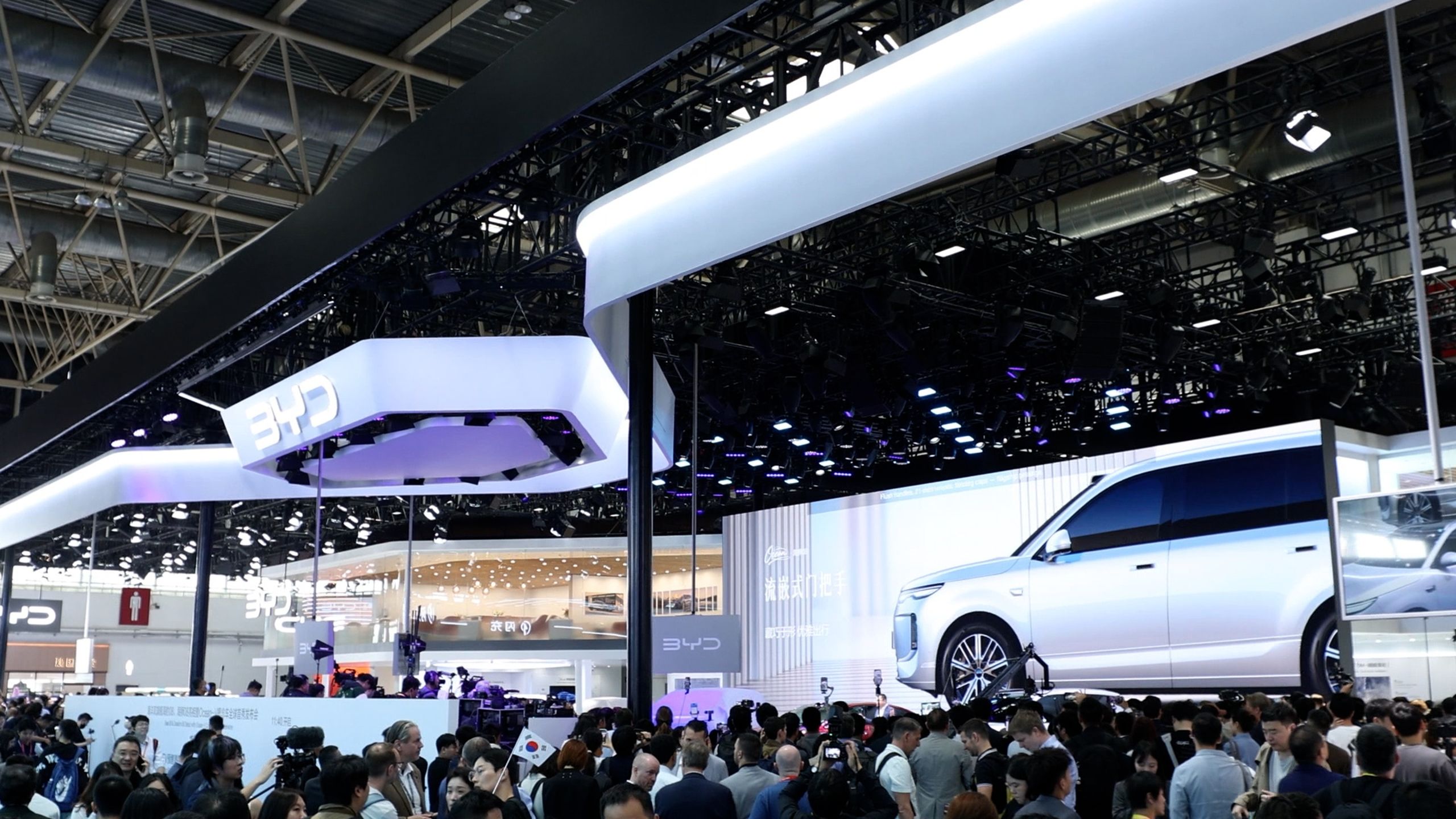
Image courtesy of Zac Wang
What’s not as clear is whether tech alone will help Chinese EVs sway deep-seated consumer perceptions around the “Made in China” label to truly become household names.
The next phase of growth
As more Chinese automakers expand across global markets, brand-building is becoming essential for them to stand out not only from brands like Ford and BMW, but also among each other.
“There is a fundamental issue: Chinese electric vehicles have already demonstrated the technical capability to set lap records at the Nürburgring, so why do they still struggle to break into the ‘high-end club’ in the minds of global consumers? The gap lies in their ability to craft a compelling brand narrative,” said Chris Chen, CEO of Sevens, an ad agency that works with Chinese carmakers.
There are signs that China’s EV companies are taking brand-building more seriously compared to even a couple of years ago, when their journey to global markets was just starting.
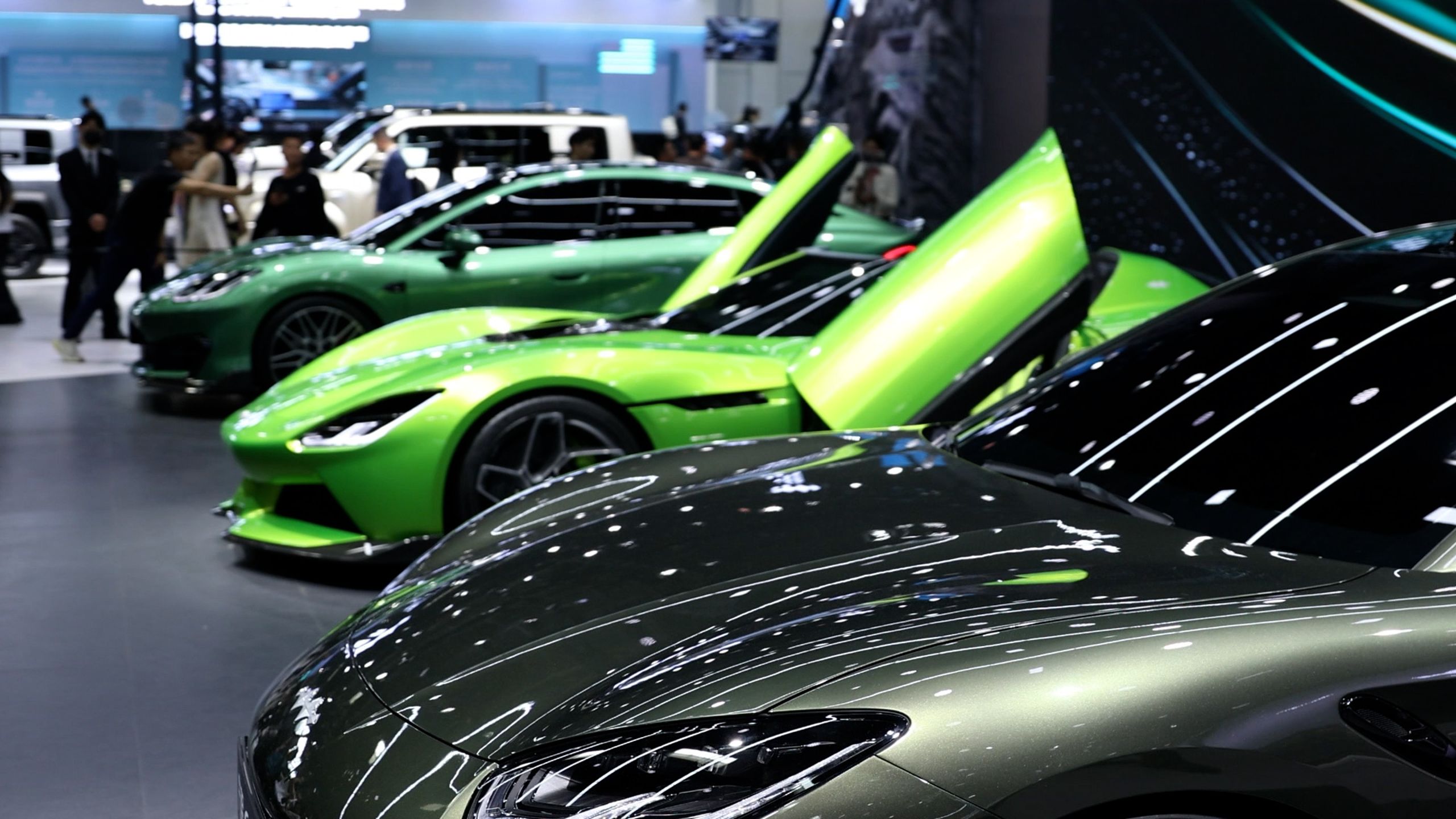
Image courtesy of Zac Wang
Chen said that media budget allocations have shifted among the agency’s EV clients: Whereas two years ago, performance ads accounted for over 70% of spending, many EV makers now allocate 40% to 50% of their budgets to brand advertising.
“Electric vehicles are high-ticket items; users must first develop trust and anticipation for the brand before subsequent conversions can be sustained. Otherwise, customer acquisition costs will continue to rise,” Chen said.
To win hearts and minds, the agency is turning to a time-tested method to build brand power: TV advertising. In markets like Germany and Italy, Chen said it allocates over 60% of its brand budgets to video and large-screen formats and that CTV now accounts for the largest share of incremental budgets.
“The priority order has shifted to: connected TV and YouTube, then outdoor digital billboards, then industry-specific media and influencer recommendations, and then search,” Chen said.
Du has also seen a similar shift among his agency’s clients. “Two years ago, everyone was obsessed with follower counts on TikTok and Instagram, like that was the end-all, be-all. Now, clients are asking, ‘OK, we’ve got 100,000 followers, how many of those are actually buying cars?’ They’re shifting budget to open internet channels that can track actual sales, not just likes.”
“We’ve got a couple other clients testing programmatic CTV in Europe, too, for their tech-focused brands, targeting people who watch tech reviews or car content on streaming platforms,” Du added.
A new performance strategy
As Chinese EV brands invest more heavily in brand, the way they approach performance ads is changing too.
Retail media is evolving into a critical tool for targeting high-net-worth individuals, Chen said. “This targeting isn’t limited to the retailer’s app or website; it can extend to the entire open internet. You can precisely deliver ads related to family travel and electric vehicle lifestyles to these high-value users while they’re browsing news or listening to music.”
While you may not able to buy a BYD Seal on Tesco or Carrefour, a brand can use signals like consumer searches for charging equipment, floor mats and child safety seats to target purchase intent.
This sophistication stands in contrast to treating cars as oversized consumer electronics and pursuing low-cost lead conversions on platforms like Google Search and Meta’s Facebook and Instagram.
“Savvy brand CMOs have realized that this approach depletes the brand’s long-term value,” Chen said. “Performance advertising is like renting a house. Brands that only rent and never buy will eventually find themselves with almost no digital assets of their own overseas.”
“The first-party data that should be used to understand users, integrate channels and drive growth is instead taken by the platforms, effectively tying their own hands in the overseas market,” Chen added.
Telling the best story
While there is momentum, growing pains mean that some EV brands are still running on old media playbooks.
One key reason is organizational: “Many are still working on developing strong local media expertise,” said Christine Wang, media strategy director at Mediaplus China. “As a result, Chinese EV brands continue to rely heavily on performance media because it delivers immediate, trackable results.”
A key challenge is measurement and establishing a credible link between brand investment and commercial outcomes.
As a result, brand-building is often delayed, which can limit long-term pricing power and differentiation in competitive international markets, Wang said. “That said, we are seeing growing internal alignment and preparation, and we expect more structured brand investment from Chinese EV brands to materialize from next year as part of their next phase of global expansion.”
This brings to mind campaigns like Volkswagen’s “Think Small” or BMW’s “The Ultimate Driving Machine,” which help shift market sentiment and build their advertisers into iconic automakers. Could a memorable campaign be in the cards, too, for this new breed of carmakers?
“I believe the focus has shifted. Previously, it was about exporting products. Now, it’s about exporting brands,” Chen said. “The winner is the one who tells the best story, translating technological advancements into values and lifestyles that resonate with global consumers. This is the crucial lesson to learn as we transition from ‘Made in China’ to global brands.”